
A uric acid test serves the important purpose of understanding kidney disorders in a person based on the uric acid levels in their blood or urine. In that connection, the uric acid report format plays a significant role in aiding pertinent healthcare professionals in understanding the results and ensuring the authenticity and quality of patient healthcare. That is why discussing the standards of uric acid report formatting and structuring is important for upcoming pathologists and specialised medical personnel.
What is Uric Acid Test
Uric acid is produced in the body during the metabolic breakdown of food purines. There is a normal range for uric acid amounts in the blood. A uric acid test measures the amount of uric acid in a person's blood through blood or urine sampling. The test is requested to diagnose health conditions such as kidney stones, gout, and the effects of chemotherapy or radiation. It is also used to monitor general kidney function and disorders after a disease or injury.
A uric acid test report mentions the uric acid levels in a patient, prescribed normal values, and comparison. Any deviations indicate a possible health disorder.
Guide to Uric Acid Report Format
Patient Identification: Identify the uric acid test report with the patient's name, age, gender, and unique identifier number. Ensure accurate demographic information while maintaining patient confidentiality and adherence to data privacy rules.
Reference Doctor Identification: In the uric acid test report, mention the referring doctor's name, clear contact info, and speciality. Incorporate the doctor's official letterhead. This strengthens collaboration and communication between labs and healthcare providers.
Sample Information: Clearly state the specimen's name, volume, and sampling method along with specimen labels. Indicate traceability and accountability in specimen handling.
Test Name and Methodology: A standardised uric acid report format must delineate the test methodology, test name, and coded identifiers. Comprehensive uric acid report formats ensure transparency, easy interpretation for medical personnel, and trust.
Test Results: Highlight the test results using a suitable uric acid report format clearly and concisely, along with units of measurement. Ensure the results are accurate, and ensure quick assessment of a patient's health condition and timely decision-making.
Provide Reference Values: ICMR (Indian Council of Medical Research) mandates providing reference values for uric acid tests and comparative assessment. This enables easy identification of deviations from the normal range values.
Interpretation & Equipment: Expertly interpret test results in the uric acid test report. Specify the instrumentation and technology used to enhance the transparency of the test procedure and foster the reliability of findings.
Attestation: Mark a designated space for the signature of the responsible healthcare professional along with the issuance date. A uric acid test report format must assure compliance with regulatory requirements and traceability of results.
QR Codes: Implement QR codes and barcodes in the uric acid report format to securely verify report authenticity. This streamlines retrieval and archiving processes while maintaining data security. QR codes are super helpful for laboratories' onboarding and digitisation.
Laboratory Info: Provide detailed information about the diagnostic laboratory, such as accreditations and certifications. Use logos, QR and relevant barcodes for an appealing uric acid report format technque.
Uric Acid Report PDF Sample
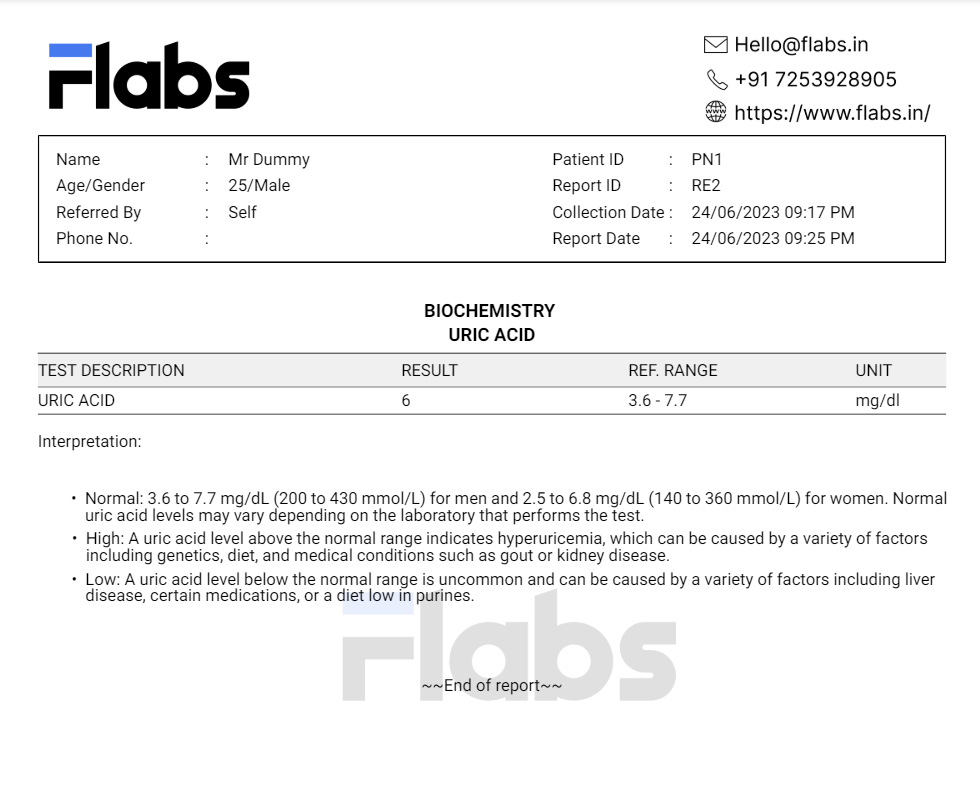
You can download the uric acid test report sample from the link below to understand the uric acid report format in detail.

Uric Acid Level Reference Range
The table below shows the uric acid test's normal range values. However, the values differ between countries, diagnostic laboratories, etc. As can be seen, a person's age, gender, and health condition are the main factors influencing the uric acid test normal ranges.
Uric Acid Level Chart
| Category | Uric Acid Levels (mg/dL) | Uric Acid Levels (mmol/L)* |
|---|---|---|
| Adult Male | 4.0 - 8.5 | 0.24 - 0.51 |
| Adult Female | 2.7 - 7.3 | 0.16 - 0.43 |
| Elderly | Slight increase possible | Slight increase possible |
| Child | 2.5 - 5.5 | 0.12 - 0.32 |
| Newborn | 2.0 - 6.2 | N/A** |
| Physiologic Saturation Threshold | >6 | >0.357 |
| Therapeutic Target for Gout | <6 | <0.357 |
| Possible Critical Value | >12 | N/A |
*For knowing uric acid normal range umol/L values, use the factor 1000 with mmol/L values.
**N/A indicates Not Available
Conclusion
In conclusion, strict adherence to the clinical guidelines for the Uric Acid Test Report Format not only ensures accurate diagnostics but also builds trust and transparency. The format also organises information, enhances patient safety and informed decision-making. Above all, it highlights the diagnostic laboratory's dedication to precision and quality healthcare.
Get Started at ₹1!
Try Flabs for a full month for just ₹1.
Follow us on