Government healthcare programs influence how diagnostic services operate across India. Among them, the Central Government Health Scheme (CGHS) stands out for scale, structure, and reliability. Introduced more than six decades ago, CGHS delivers complete healthcare services to central government employees, pensioners, and eligible dependents across major cities.
Today, nearly 42 lakh beneficiaries across 80 cities access medical services under the scheme. The coverage spans the Legislature, Judiciary, Executive, and Press, reflecting a broad public service ecosystem. For diagnostic providers and pathologists, participation in CGHS networks brings consistent patient flow and structured compliance.
Government employees and pensioners rely on CGHS-linked diagnostic labs for dependable testing services that align with scheme policies, standardised pricing, and verified quality benchmarks.
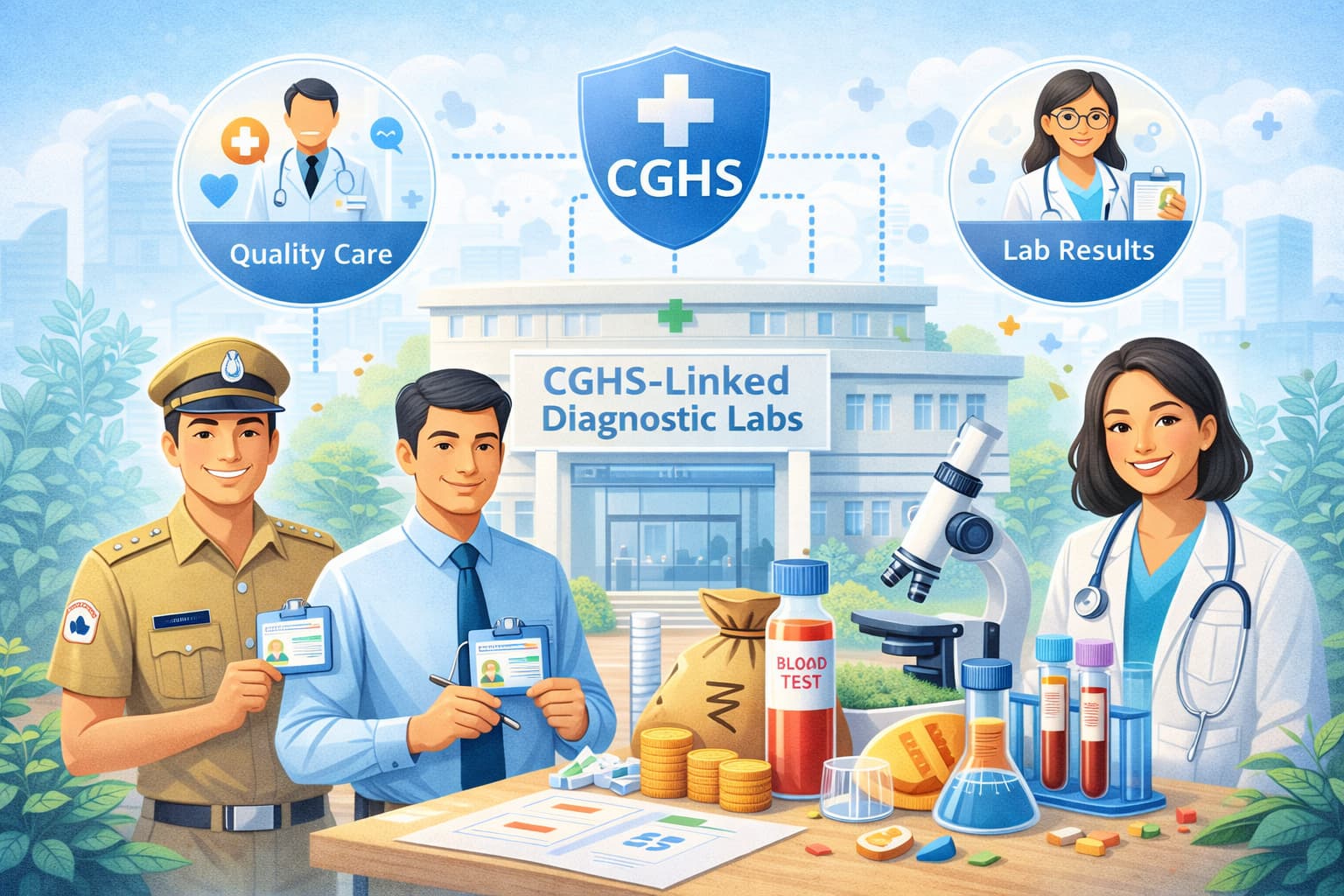
CGHS-Linked Diagnostic Labs for Government Employees
Government beneficiaries rely heavily on CGHS-linked diagnostic labs due to structured policies, regulated pricing, and access through recognised healthcare facilities. Each lab empanelled under the scheme undergoes verification to ensure alignment with national quality and operational standards.
The Central Government Health Scheme delivers preventive, promotive, and curative services through a network of wellness centres, hospitals, and CGHS-Linked diagnostic labs. Patients receive laboratory investigations after referrals from CGHS doctors or specialists at government hospitals.
Such integration creates a dependable diagnostic ecosystem within India's broader network of healthcare providers.
Core Services Provided Under CGHS
- OPD consultation at CGHS Wellness Centres.
- Specialist consultation at government hospitals and empanelled facilities.
- Medical tests at CGHS-linked diagnostic labs.
- Cashless treatment for pensioners at empanelled hospitals.
- Reimbursement for emergency treatments.
- Maternity and family welfare services.
- Access to AYUSH medicines, e.g., Ayurveda, Unani, Siddha, and Homoeopathy.
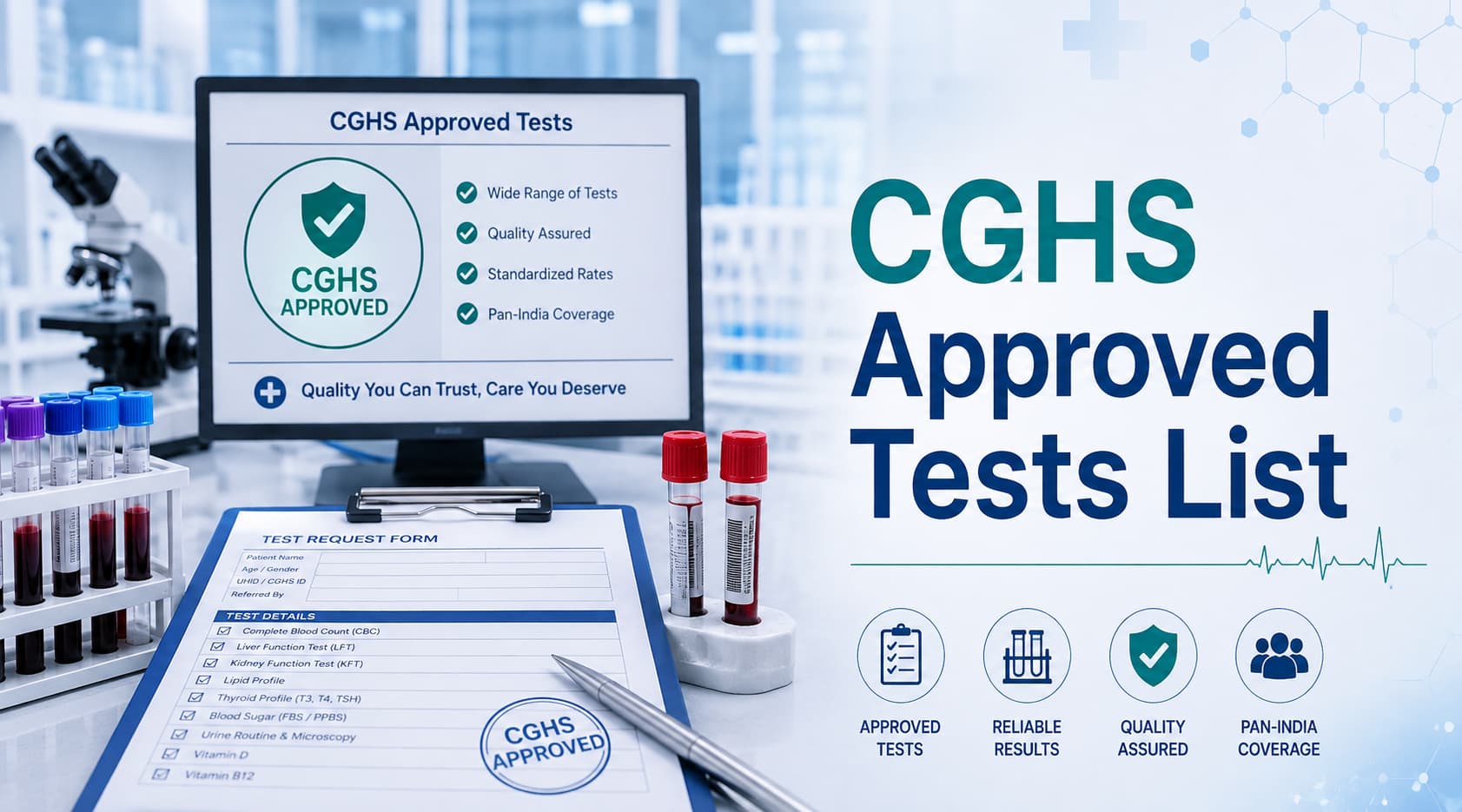
Medical tests form a major component of patient care under the scheme. Pathology services, imaging studies, and specialised tests get routed through CGHS-linked diagnostic labs.
Structured Quality Standards
Government employees expect uniform diagnostic accuracy. As a result, CGHS-linked diagnostic labs operate under strict empanelment and accreditation conditions.
Laboratories must align with recognised quality frameworks followed across pathology labs in India. Accreditation requirements often involve certification by bodies affiliated with NABL accreditation.
Many empanelled facilities maintain recognition through NABL labs programs and may also comply with NABH CGHS integration requirements when attached to hospitals. Such frameworks reinforce quality, standardisation, and regulatory oversight.
For pathologists and lab owners, compliance with these standards strengthens credibility within the public healthcare ecosystem.
Diagnostic Access Within the CGHS Referral System
Government beneficiaries rarely approach laboratories directly under CGHS. Instead, physicians at CGHS wellness centres initiate referrals. Medical tests are then sent to CGHS-linked diagnostic labs.
The referral-based model ensures:
- Appropriate clinical evaluation before testing.
- Controlled diagnostic expenditure.
- Uniform quality benchmarks.
- Standardised reporting practices.
Physicians at central government health scheme hospitals rely on these laboratories for routine pathology tests, advanced biochemical investigations, microbiology studies, and specialised diagnostics.
For laboratories, participation in CGHS-linked diagnostic labs networks ensures consistent case volumes generated through institutional referrals.
Role of Empanelled Facilities in Healthcare
CGHS operates through a large network of empanelled healthcare institutions. Many professionals new to the system frequently ask about the meaning of the empanelled hospital.
An empanelled facility refers to a hospital or diagnostic centre formally approved by CGHS authorities to deliver medical services to beneficiaries under predefined guidelines.
Both hospitals and CGHS-linked diagnostic labs undergo periodic verification before inclusion. Authorities review infrastructure, quality certifications, staffing standards, and reporting capabilities.
Once approved, laboratories become part of the CGHS ecosystem.
Standardised Pricing and Transparency
Government healthcare programs emphasise predictable pricing. Diagnostic costs under CGHS follow structured rate lists defined under CGHS guidelines.
Such pricing frameworks reduce variability across cities and institutions. Government employees receive diagnostic services through CGHS-linked diagnostic labs without negotiating individual test prices.
| Parameter | CGHS Diagnostic Network | Non-Empanelled Private Labs |
|---|---|---|
| Pricing structure | Fixed under the CGHS rate list | Market-driven |
| Patient referral | Doctor referral required | Direct patient access |
| Payment model | Cashless for pensioners/reimbursable | Direct payment |
| Quality verification | Empanelment review + accreditation | Varies |
| Diagnostic reporting | Standardised compliance | Independent protocols |
Consistency in Diagnostic Reporting
Government healthcare systems depend heavily on reliable laboratory reporting. Physicians require uniform test interpretation and documentation.
CGHS-linked diagnostic labs maintain structured reporting formats aligned with regulatory requirements and institutional protocols.
Quality systems in laboratories accredited under NABL accreditation enforce strict internal controls that support diagnostic accuracy. Participation in such frameworks strengthens laboratory performance within the CGHS ecosystem.
For pathologists managing medical labs, participation in CGHS-linked diagnostic lab networks demands adherence to validated processes.
- Sample collection protocols.
- Equipment calibration.
- Internal quality control.
- External quality assurance programs.
- Standardised report formats.
Financial Security for Government Beneficiaries
Government employees and pensioners expect financial protection during medical care. CGHS addresses that expectation through reimbursement mechanisms and cashless facilities.
Diagnostic services routed through CGHS-linked diagnostic labs fall under predefined reimbursement structures approved under CGHS guidelines.
Pensioners and eligible beneficiaries receive cashless diagnostic services when referred through authorised channels. In emergency situations, beneficiaries may claim reimbursements if medical tests occur outside the network.
For diagnostic providers, participation in CGHS-linked diagnostic labs programs ensures predictable billing frameworks and institutional partnerships.
Expanding Reach Across Indian Cities
CGHS services currently cover more than 80 cities across India. Authorities continue expanding coverage to improve access to government healthcare services.
As coverage grows, demand for reliable laboratory partners increases. Many advanced pathology labs in India pursue empanelment to participate in government diagnostic programs.
Laboratories joining the CGHS-linked diagnostic labs networks gain exposure to large beneficiary populations across metropolitan and tier-2 cities.
Such expansion strengthens diagnostic infrastructure supporting government healthcare delivery nationwide.
What Pathology Labs Should Know
Laboratories planning participation in CGHS programs must evaluate operational readiness and accreditation requirements.
- Compliance with infrastructure norms.
- Alignment with NABL accreditation standards.
- Qualified laboratory professionals and pathologists.
- Equipment validation and calibration systems.
- Reporting workflows aligned with CGHS requirements.
Meeting such standards enables diagnostic centres to qualify as CGHS-linked diagnostic labs, creating opportunities for collaboration with government healthcare institutions.
Conclusion
The Central Government Health Scheme remains one of India's largest structured healthcare programs serving millions of beneficiaries. Its network enables patient care through regulated referrals, standardised pricing, and verified quality benchmarks.
Government employees rely on CGHS-linked diagnostic labs for dependable testing services. For pathologists and diagnostic providers, participation in them strengthens credibility.
As CGHS expands across more cities, the role of CGHS-linked diagnostic labs will continue growing within India.
Check this - Difference Between CGHS and Non-CGHS Diagnostic Rates: A Comparative Analysis
Get Started at ₹1!
Try Flabs for a full month for just ₹1.
Follow us on