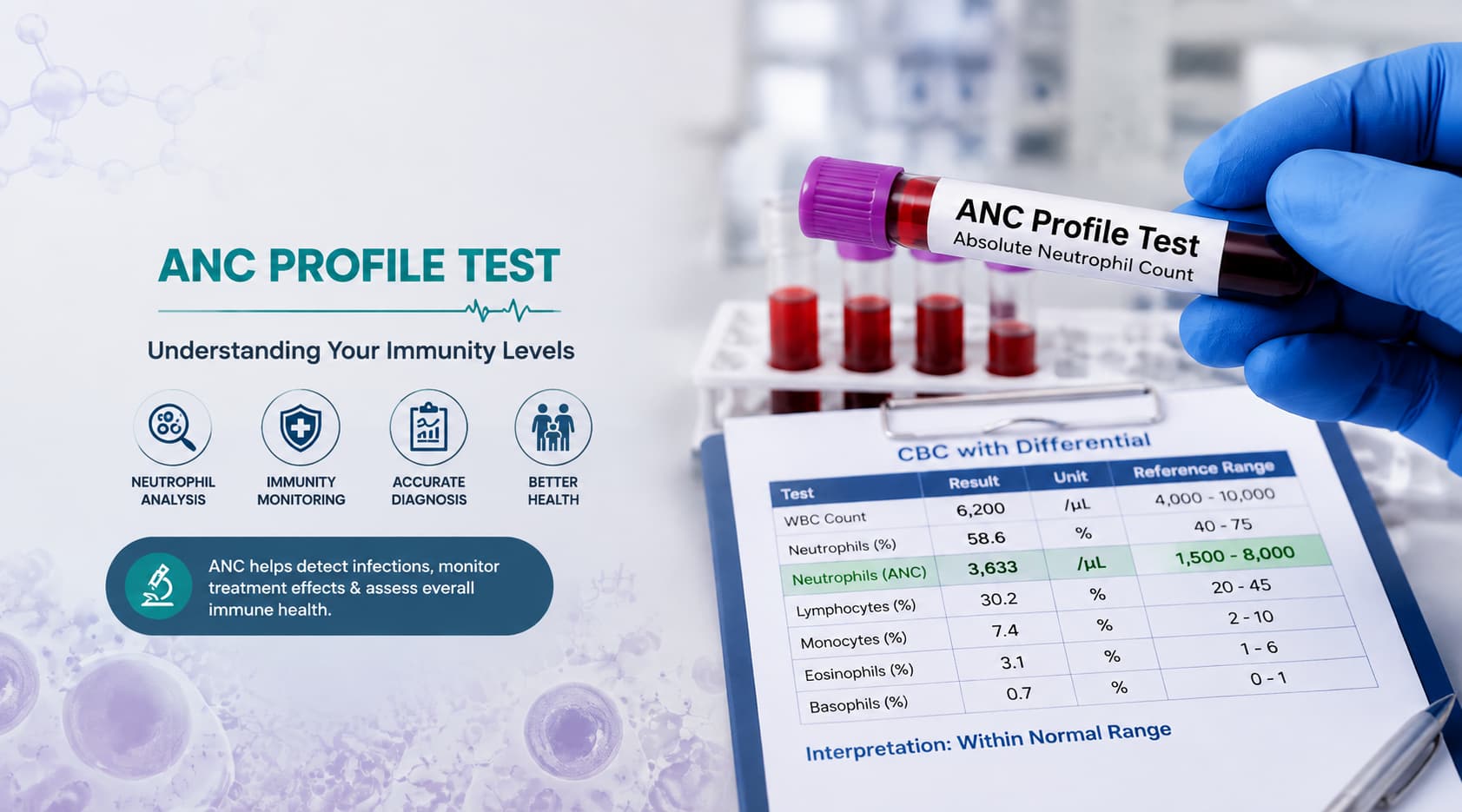
If you're on the frontline of laboratory diagnostics, you understand that the CBC is the cornerstone of clinical lab testing. It's an indispensable facet in the vast realm of medical investigations. While Complete Blood Count is vital to medical investigations, presenting this complex data in a clear, concise, and clinically valuable format is equally crucial.
A clear, Complete Blood Count Report Format communicates critical information that informs patient care decisions. The nuances of an expertly structured CBC report elevate your lab's reputation as a bulwark of quality in healthcare diagnostics. This guide explains the key sections, parameters and reporting checks that make a CBC report easier to read and verify.
What Is a Complete Blood Count (CBC) Report Format?
A Complete Blood Count (CBC) report format is a structured document that shows the results of a blood test used to evaluate a person’s overall health. It measures different components of blood, including red blood cells, white blood cells, haemoglobin, and platelets. The report helps doctors identify conditions such as anaemia, infections, inflammation, and other blood-related health issues.
A typical CBC report format includes:
- Haemoglobin (Hb) level
- Red blood cell (RBC) count
- White blood cell (WBC) count
- Platelet count
- Hematocrit (HCT/PCV)
- RBC indices such as MCV, MCH, MCHC, and RDW
- Differential white blood cell count
- Reference ranges for each parameter
The results are compared with standard reference ranges to understand whether blood values are within the expected range.
What Should a CBC Report Format Include?
A complete blood count report format should clearly show the patient details, sample details, test parameters, result values, units, reference ranges, abnormal flags, laboratory details and authorized signatory information.
A well-structured CBC report usually includes hemoglobin, RBC count, WBC count, platelet count, hematocrit, red blood cell indices such as MCV, MCH and MCHC, and differential WBC count where applicable.
The report should also mention the sample type, collection date, report date, method or analyzer details where required, and a clear note that results should be interpreted by a qualified healthcare professional.
Guidelines for a Complete Blood Count Test Report Format
Here are ten simple rules of a complete blood count report format in your lab:
1. Patient Details
- Add the patient's name, birth date, sex, and ID number.
- Record the time of CBC test.
- List the name and logos of the doctor and medical centre.
- Check that patient info matches everywhere.
2. CBC Elements
- Name each CBC part tested (e.g., white blood cells, red blood cells, haemoglobin).
- Show normal value ranges with units.
- Make sure ranges follow your lab's rules.
- If needed, update ranges for the patient's age or sex.
3. Sample Info
- Talk about the collection method of the sample requirement for a complete blood count (like from a vein or a fingertip).
- Note any tips for kids or older patients.
- Explain why handling the sample right is critical to avoiding hemolysis.
- Mention if fasting is needed.
- Detail the sample's container, anticoagulant, and label
4. Results Layout
- Put the CBC results in a precise order.
- Use titles for each part to make it easy to read.
- Try to use a table or chart.
- Add units (like cells/L, g/dL) with every number.
- Keep the look the same throughout the cbc report.
5. Quality Steps
- Describe your lab's checks to make sure the CBC test results are correct.
- Mention how the lab maintains analyzer calibration, internal quality checks and result-review workflows.
- List accreditation standards and testing proficiency.
- List possible test mistakes and how you avoid them.
- Underline getting correct and detailed CBC results.
6. Understanding Results
- Explain results considering the patient's health.
- Show any results that are off.
- Share how abnormal results might affect health.
- Discuss what might cause these changes (like anaemia or infection).
-Add notes only where appropriate and avoid replacing doctor interpretation.
7. Age-Related Info
- Discuss how results may vary by age.
- Highlight different expected values for kids and elders.
- Explain how kids growing up can change results.
- Give tips on reading results in these age groups.
- Mention anything specific to consider for age.
8. Report Wrap-Up
- Sum up the main points.
- Repeat why CBC parameters matter.
- Talk about more tests if needed.
- Ensure communication between lab technicians and doctors.
- Stress how the CBC helps in diagnosing and treating patients.
9. Flagging Abnormal Results
- Outline how to share abnormal test results.
- Explain how doctors will receive notifications when needed.
- Focus on the need for quick communication to help patients.
- List ways to reach out for urgent talk or advice.
- Tell your lab the steps for abnormal reports.
10. Final Note
- Add a note mentioning the intended audience of the report.
- Give your lab's contact details and open hours.
- Offer emergency contact details.
- Make sure to include the official signature of the CBC report.
- Date the report to show it's recent.
Complete Blood Count Sample Report

Complete Blood Count Report Format PDF
You can download the Complete Blood Test Report Sample PDF format from the link below.
This sample PDF shows how CBC parameters, result values, units, reference ranges and signatory details can be arranged in a professional lab report.

The Necessity of CBC Test
- For general health checkups and examinations for anaemia or leukaemia.
- To discover the causes of symptoms like fatigue, weakness and fever, bruising, bleeding, swelling, and pain.
- To keep a check on medical conditions affecting blood cell counts.
- To monitor medications affecting blood cell counts and possible side effects.
CBC Report Format: Key Sections to Include
A professional complete blood count report format should include the following sections:
| Section | What to Include | Why It Matters |
|---|---|---|
| Patient details | Name, age, gender, patient ID, contact details | Helps avoid patient-record mismatch |
| Doctor / referral details | Referring doctor, clinic or hospital name | Supports clinical follow-up |
| Sample details | Sample type, collection date, report date, barcode or lab number | Improves traceability |
| CBC parameters | Hb, RBC, WBC, platelets, HCT, MCV, MCH, MCHC, RDW and differential count | Presents the actual test results |
| Units | g/dL, cells/mcL, fL, pg or lab-defined units | Helps doctors read values correctly |
| Reference ranges | Normal range based on lab, age and gender where applicable | Helps compare patient values |
| Abnormal flags | High, low or critical value indicators | Helps identify values needing review |
| Remarks / notes | Technical comments or clinical correlation note | Adds context without overdiagnosis |
| Authorization | Pathologist name, signature, digital signature or approval status | Confirms report release |
| Lab details | Lab name, address, contact, accreditation details if applicable | Builds trust and report authenticity |
CBC Normal Reference Range Table
The values below are commonly used adult reference ranges for CBC reports. Actual reference ranges may vary by laboratory, analyzer, method, age, sex, altitude and clinical context. Always follow your laboratory’s validated reference intervals and ask a doctor to interpret abnormal values.
| CBC Parameter | Common Adult Reference Range | Common Unit |
|---|---|---|
| Hemoglobin - Male | 13–18 | g/dL |
| Hemoglobin - Female | 12–16 | g/dL |
| RBC Count - Male | 4.6–6.2 million | cells/mcL |
| RBC Count - Female | 4.2–5.4 million | cells/mcL |
| WBC Count | 4,500–11,000 | cells/mcL |
| Platelet Count | 150,000–400,000 | /dL |
| Hematocrit - Male | 40–55 | % |
| Hematocrit - Female | 36–48 | % |
| MCV | 80–100 | fL |
| MCH | 27–32 | pg/cell |
| MCHC | 32–36 | g/dL |
Important: This table is for general educational reference only. A CBC report should not be used for self-diagnosis. Your doctor will interpret the results along with symptoms, medical history, medicines and other tests.
How to Read a CBC Report Format
When reading a CBC report, start by checking whether the patient details, sample date and report date are correct. Then review each test parameter along with its unit and reference range.
A simple way to read the report is:
- Check hemoglobin, RBC count and hematocrit to understand red blood cell-related values.
- Check WBC count and differential count to review immune-cell-related values.
- Check platelet count to review clotting-related values.
- Look for high, low or critical flags.
- Read any remarks or notes added by the laboratory.
- Discuss abnormal values with a doctor before taking any action.
A CBC report may help doctors evaluate infections, anemia, inflammation, blood disorders or treatment response. However, abnormal values do not always confirm a disease. Clinical interpretation is always required.
CBC Report Template Checklist for Pathology Labs
Before finalizing a CBC report template, pathology labs should check whether the format includes:
- Lab name, logo and contact details
- Patient name, age, gender and ID
- Referring doctor details
- Sample type and collection date
- Report date and report ID
- CBC test parameters
- Units for every value
- Age- and gender-specific reference ranges where applicable
- Abnormal-result flags
- Critical-value alert process
- Pathologist approval section
- Signature or digital signature
- QR code or barcode for report verification
- Notes for clinical correlation
- Clear print and PDF layout
A CBC report format should be easy for doctors to scan quickly and structured enough for lab teams to maintain consistency across reports.
Create CBC Reports Digitally with FLABS
If your pathology lab creates CBC reports manually or edits report formats repeatedly, FLABS can help you manage reporting workflows more efficiently.
With FLABS pathology reporting software, labs can create configurable report templates, manage test parameters, add reference ranges, review results, approve reports and deliver final reports through supported digital channels.
FLABS also helps labs connect reporting with patient registration, sample tracking, analyzer result capture, billing and report delivery workflows.
- Labs that want to create CBC reports digitally can use FLABS pathology reporting software to manage report templates, reference ranges, approvals and report delivery from one workflow.
- View Pathology Report Formats
Conclusion
Remember that the cornerstone of exceptional patient care lies within the nuances of a well-structured Complete Blood Count (CBC) report format. By adhering to our outlined format, you solidify the reliability of your diagnostics. The final act of effective communication, flagging irregularities and wrapping up cogent report summaries, must be considered.
CBC Results Should Be Reviewed by a Doctor
A complete blood count is an important screening and monitoring test, but it is not a final diagnosis by itself.
CBC values can change due to many reasons, including infection, anemia, inflammation, medicines, dehydration, nutritional deficiencies, chronic disease or recent treatment. Sometimes a slightly high or low value may not be serious, while in other cases it may need urgent medical review.
Patients should not interpret CBC results in isolation. A doctor or qualified healthcare professional will review the CBC report along with symptoms, medical history, physical examination and other test results before making clinical decisions.
Related reading- ESR report format
Get Started at ₹1!
Try Flabs for a full month for just ₹1.
Follow us on