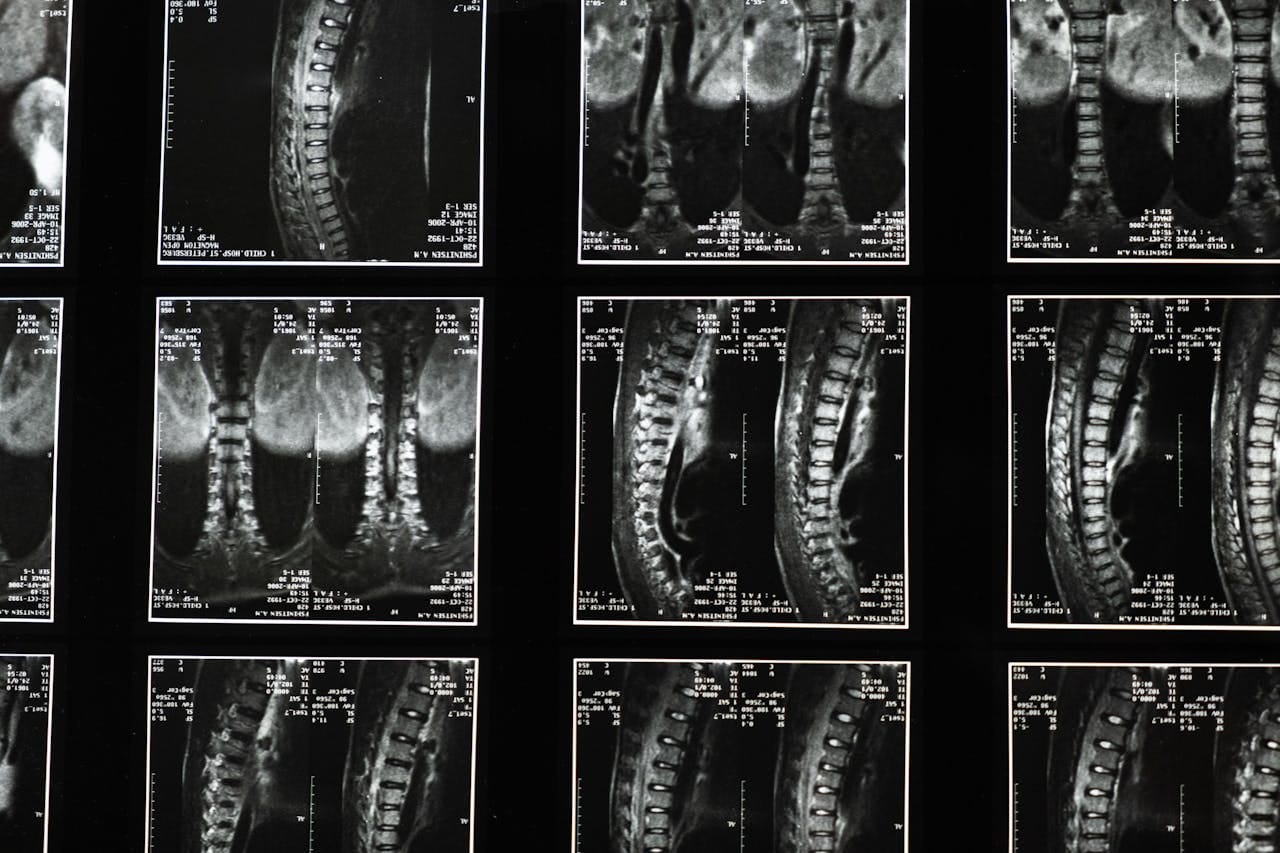
A Dorsal Spine X-Ray is a powerful tool to diagnose various conditions associated with back pain. When the normal medications and treatment methods are inadequate to relieve your back pain, you might have to undergo the dorsal spine x-ray on your physician’s suggestion. It will detect abnormalities in spinal structure that might be causing back pain. Typically, two views of x-ray are used for diagnosis: Anteroposterior and lateral. The two views are compared to detect a number conditions, through a systematic radiography study.
When considering dorsal spine x-ray, every radiologist needs to learn about the reasons, testing procedure, interpretation of results, etc. The knowledge is also helpful for patients to ask the right questions to their physicians or radiologists.
When do you Need a Dorsal Spine X-Ray
A back pain that doesn’t respond to conservative care and medication requires further evaluation of symptoms. That is when a dorsal (thoracic) spine X-ray is requested. It identifies the cause of thoracic spinal pain or back pain. Some of the causes are:
Injuries or strains due to accidents, sports injuries, or spinal infections.
- Congenital Spinal Conditions.
- Abnormal Spinal Curves.
- Arthritis
- Osteoporosis
- Scoliosis
- Kyphosis
- Spinal Tumours.
Sitting in a single posture for long times, poor posture, carrying heavy backpacks, and lack of muscular strength can also lead to back pain, which may be less severe. When the pain is persistent, it calls for a Dorsal Spine X-Ray imaging.
Dorsal Spine X-Ray: The Procedure
The quality and operational condition of X-Ray equipment is ensured periodically. So no adjustments are done at the time of X-Ray imaging. They’re operated by qualified staff who wear protective glasses and stand behind a lead-lined wall.
Preparation
There are no special preparations required for dorsal spine X-Ray procedure, except the common precautions of X-Ray imaging. For example, you will be asked to remove jewellery, metal objects, and electronic devices from your body. You may have to wear a hospital gown.
While there are no fluid or medication restrictions, pregnant women are required to specify their state of pregnancy. Every patient will have to specify their health history, ongoing medications, and other medical conditions that may be relevant to the X-Ray procedure.
Also, body parts that are not being imaged will be covered with a lead apron (shield) to avoid exposure to radiation.
During Thoracic X-Ray
A dorsal X-Ray for back pain is requested in three views to evaluate thoracic spine and surrounding areas in a detailed view: Anteroposterior (AP), Lateral (LAT) and Oblique.
Anteroposterior view is the most common for dorsal imaging in X-Ray. Patients have to lie flat on their back and x-ray beams go from front to back, in anteroposterior motion.
A dorsal lateral view is the side view of the thoracic spine, which requires patients to lay on their side.
An oblique dorsal X-Ray is useful for assessing axillary ribs, thoracic facet joints, and pneumothorax.
After Procedure
Patients can leave the testing facility without any suggestions on fluid, food or medication restrictions. Results are usually available within 24-48 hours. The risk of radiation exposure is minimal, and can be ignored unless the patient is a pregnant woman. If you have any concerns, you can consult the referring physician for clarification.
Study of Thoracic Spine X-Ray
The radiographic study of the thoracic spine requires both lateral and anteroposterior views of the x-ray. It can also include the oblique view if required. When evaluating the condition of the spine, there are a few steps in order.
It is easy to begin the evaluation with the lateral view of the x-ray. Spinal curvature and vertebral height are assessed in the dorsal spine lateral X-ray. It checks overall bone densities also. But lamina and spinous processes are not well seen due to rib projection.
Anteroposterior view of Dorsal spine x-ray helps assess spinal alignment, vertebral height, and disc spaces. Any focal bulge may indicate a fracture. AP radiographs also show pedicles which appear like headlines on vertebral bodies.
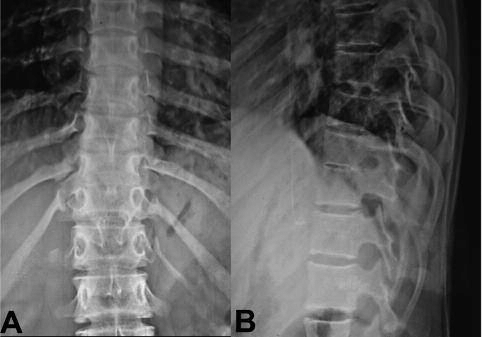
Normal Dorsal Spine AP LAT X-Ray
Interpretation of Results
After the results are out, your radiologist views the images. They look for abnormalities in the spine, facet joints, ribs, costovertebral joints, lung and heart, to diagnose your back pain.
While dorsal spine x-rays are powerful tools to detect bone abnormalities, they are also helpful to detect problems related to heart and lungs to some extent.
- It can detect Thoracic Disc Degeneration wherein disc heights are narrowed.
- Irregular bone growth formations that are indicative of instability.
- A condition called Spondylolisthesis, which involves abnormal slippage of the vertebral body due to fracture.
- Any dislocations, or fractures in ribs.
- Pneumonia.
- Spinal Stenosis leading to narrowing of the spinal canal.
- The x-ray images are useful to find out if there is any thoracic Facet Overgrowth.
Bone related injuries are easily visible in an X-Ray, including fractures and bone density. It is not effective for understanding the condition of surrounding soft tissue, muscles, and ligaments. If there are any abnormalities related to them, your physician may suggest going for MRI or CT scans for further insight into the reason for your back pain.
Risks and Common Considerations
The obvious risk of Dorsal spine X-ray is exposure to radiation. Especially pregnant women are at more risk. It can affect the unborn child.
Also, a Dorsal spine X-Ray is not a complete test to diagnose causes of back pain. It may not fully evaluate many structures that may be causing the thoracic spinal pain.
For example, the condition of thoracic discs can’t be clearly evaluated from a thoracic X-Ray. Similarly, thoracic facet joints, costovertebral joints, condition of ligaments, connected muscles, and nerves is not visible in a dorsal spine X-Ray clearly, if not completely. They call for a thoracic MRI.
Conclusion
A Dorsal Spine X-Ray is a crucial diagnostic tool for identifying spinal issues causing back pain. Understanding the procedure, preparation, and limitations empowers patients to make informed decisions about their healthcare. Always consult your physician for personalised advice and follow-up tests if necessary.
Related read: Understanding Coccyx X-Ray
Get Started at ₹1!
Try Flabs for a full month for just ₹1.
Follow us on