Eosinophils are a type of white blood cell crucial for controlling parasitic infections and moderating allergic inflammation.
Disruptions in eosinophil activity influence respiratory illnesses, autoimmune conditions, and several immunologic disorders. With respiratory allergies rising in India, understanding eosinophil behaviour and interpreting the Eosinophils blood test enables proper diagnosis and subsequent treatment.
Early detection of abnormal levels gives clinicians a chance to intervene before complications escalate.
What the Eosinophils Blood Test Measures
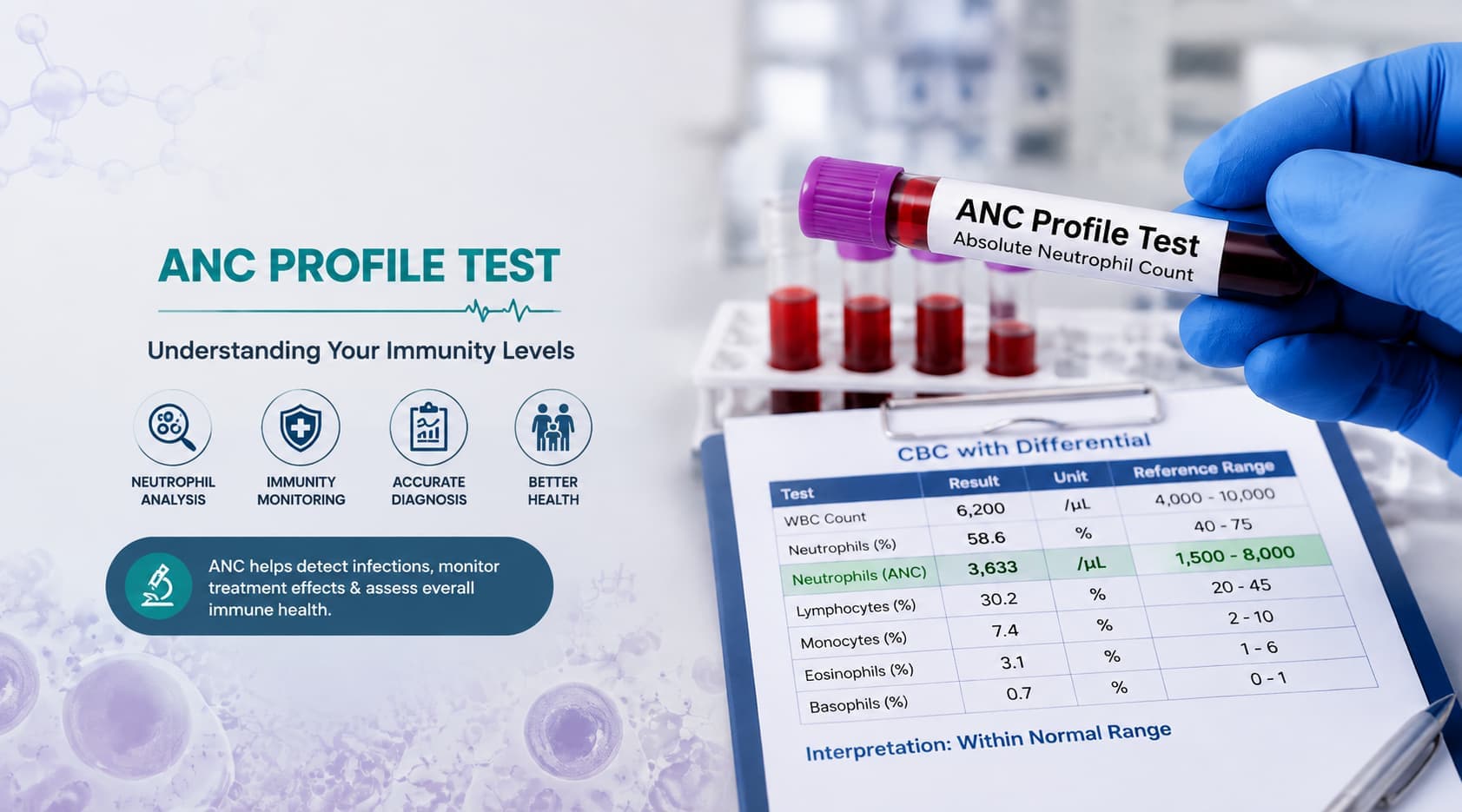
The Eosinophils blood test quantifies the proportion and absolute count of Eosinophils circulating in peripheral blood. The test supports clinical decisions in respiratory medicine, immunology, infectious diseases, and haematology. It is routinely included as part of a complete blood count.
Pathologists use the Eosinophils blood test to assess inflammatory activity, allergic status, parasitic infections, drug reactions, and specific systemic disorders.
As demand for accuracy rises, labs using advanced platforms such as Flabs LIS are improving standardisation, automation, and interpretation quality.
Eosinophils Meaning in Blood Test
Interpreting Eosinophils requires context. Eosinophils originate from bone marrow and migrate to tissues, mainly the respiratory and gastrointestinal tracts. Elevated or reduced counts hint at underlying immune activity.
A raised count signals hypersensitivity reactions, parasitic infections, drug responses, or chronic inflammatory diseases.
A low count reflects suppression of bone marrow or physiologic variations.
Blood Collection Procedure and Turnaround Time
| Step | Description |
|---|---|
| Sample collection | Peripheral venous blood, EDTA tube |
| Pre-analytical check | Patient identification, vial labelling, barcode tagging |
| Processing | Automated haematology analyser |
| Quality control | Instrument calibration, reagent checks, and flagged parameter verification |
| Reporting | Digital report generation with interpretations |
After the test, turnaround time for results ranges from a few hours to same-day reporting depending on workload and automation level.
Eosinophils Blood Test Normal Range
The Eosinophils blood test range varies slightly across labs. Most pathology labs in India adopt INR-based or standardised international formats.
| Parameter | Reference Value |
|---|---|
| Percentage Eosinophils | 1–6% of total WBC |
| Absolute eosinophil count (AEC) | 0–500 cells/µL |
| Mild eosinophilia | 500–1,500 cells/µL |
| Moderate eosinophilia | 1,500–5,000 cells/µL |
| Severe eosinophilia | >5,000 cells/µL |
Causes of High Eosinophil Levels
Interpreting Eosinophils blood test high results requires clinical correlation. Common triggers include the following.
- Allergic rhinitis, dermatitis, and respiratory allergy.
- Parasitic infections.
- Drug-induced hypersensitivity.
- Autoimmune disorders.
- Pulmonary eosinophilic syndromes.
- Endocrine dysfunctions such as adrenal insufficiency.
An absolute Eosinophils blood test with a high result may indicate significant immune overactivity.
| Category | Examples |
|---|---|
| Allergic conditions | Asthma, atopic dermatitis |
| Infectious causes | Helminthic infections |
| Drug reactions | Antibiotic-associated hypersensitivity |
| Systemic diseases | Vasculitis, connective tissue disorders |
| Respiratory disorders | Eosinophilic pneumonia |
Eosinophilic asthma blood test results in particular guide targeted inhaled corticosteroid therapy and biologics selection.
Causes of Low Eosinophil Levels
A Eosinophils blood test with a low result is less common but clinically relevant.
- Acute infections
- Physiologic stress
- Cushing’s syndrome
- Corticosteroid exposure
- Bone marrow suppression
Treatment for Eosinophils blood test with a low result focuses on correcting the underlying trigger and monitoring recovery.
Abnormal Eosinophil Levels & Symptoms
- Persistent cough
- Wheezing
- Nasal congestion
- Skin rashes
- Fatigue
- Gastrointestinal discomfort
Eosinophils Blood Test During Pregnancy
Pregnancy induces immune and hormonal shifts, which influence eosinophil distribution. Physicians monitor trends rather than isolated numbers. Significant abnormalities may require evaluation for parasitic infections, drug reactions, or pre-existing respiratory disease.
Clinical Uses of the Test
- Optimising allergy and asthma management.
- Monitoring parasitic infection treatment response.
- Identifying drug-related eosinophilic syndromes.
- Supporting autoimmune disease evaluation.
- Guiding respiratory care decisions.
- Tracking disease progression in chronic inflammatory disorders.
Lab Automation With Modern LIS Platforms
Modern diagnostic operations rely on standardisation, automation, and traceability. Solutions such as the NABL-accredited workflows strengthen quality across labs.
Flabs LIS supports clinicians and lab teams with the following capabilities.
- AI-powered interpretations.
- Real-time TAT (Turnaround Time) management.
- Bulk actions for high-volume labs.
- Multi-referral tracking and automated commission management.
- Integrated finance management for accurate billing.
- Dynamic QR-coded reports for data integrity.
- Automated quality control aligned with regulatory standards.
- An AI voice reporting that converts findings into structured narratives.
- Digital signatures for multi-department authorisation.
Reporting in High-Volume Settings
Scalability is a core requirement for urban and semi-urban pathology networks. Automated batching, instant barcoding, and consolidated dashboards improve efficiency. The ability to track every Eosinophils blood test from registration to dispatch is imperative for labs.
With Flabs LIS, diagnostic labs benefit through:
- Reduced manual data entry.
- Rapid approval workflows.
- Uniform reference values.
- Streamlined patient communication via SMS, WhatsApp, and email.
- Configurable patient detail panels and test result layouts.
Further: When to Repeat the Test
Symptoms change or escalate.
Treatment effectiveness needs evaluation.
Parasitic infections are being monitored.
Drug therapy adjustments are planned.
Chronic inflammatory conditions show new activity.
Consistent tracking through laboratory information systems removes ambiguity and maintains longitudinal clarity.
Final Takeaways
- The Eosinophils blood test is essential for evaluating immune activity, respiratory illness, parasitic infections, and drug reactions.
- Understanding Eosinophils meaning in blood test interpretation supports accurate clinical decision-making.
- Both high and low results require context, clinical correlation, and sometimes repeat evaluation.
- Accurate reporting relies on consistent methodology, quality checks, and dependable LIS infrastructure.
- Labs equipped with AI-driven platforms such as Flabs LIS strengthen standardisation and reporting quality for clinicians across India.
Ready to augment your lab operations?
Start Your 5-Day Free Trial of Flabs LIS
Also check - Insulin Resistance Test: How It Works and Benefits
Get Started at ₹1!
Try Flabs for a full month for just ₹1.
Follow us on