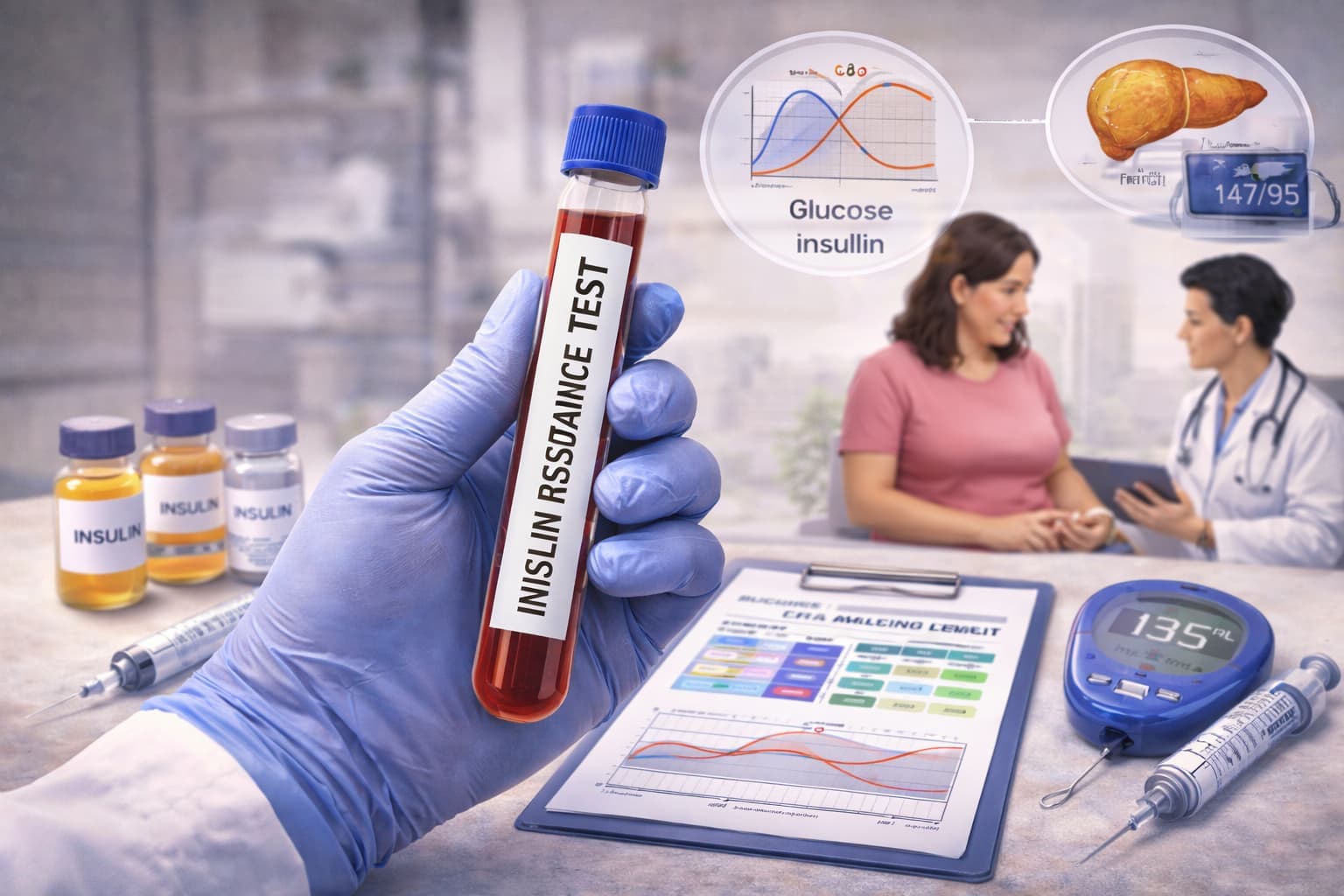
Insulin resistance arises when muscle, fat and liver cells respond inadequately to insulin’s signal, forcing the pancreas to increase insulin output to maintain stable glucose levels. Over time, persistent hyperinsulinemia drives rising blood glucose, advancing toward hyperglycemia, prediabetes and Type 2 diabetes. For laboratories, identifying this metabolic shift early has clinical value across endocrinology, cardiometabolic care and preventive screening.
The insulin resistance test (especially HOMA-IR) has become a practical tool for assessing impaired insulin sensitivity using routine fasting parameters. Below is a structured, clarity-first guide tailored for pathologists and healthcare professionals.
The Insulin Resistance Test in Clinical Practice
The insulin resistance test allows laboratories to quantify how effectively the body responds to insulin using paired fasting glucose and fasting insulin values.
When cells react inadequately to insulin, glucose remains circulating instead of entering cells for energy or storage. Persistent elevation pushes the pancreas to release additional insulin, producing sustained metabolic strain.
Because no single standalone test universally diagnoses insulin resistance, HOMA-IR is widely adopted where early metabolic risk needs evaluation without complex procedures.
What Insulin Resistance Involves
When insulin signals lose their effectiveness, energy-utilising tissues require disproportionately high insulin levels to clear glucose. As pancreatic output increases, blood sugar stays in range until the beta-cell reserve weakens. Clinical progression includes the following.
- Increased insulin output (hyperinsulinemia).
- Gradual rise in fasting glucose.
- Shifting HbA1c values toward impaired glycemia.
- Greater cardiometabolic burden over time.
Risk contributors include excess abdominal adiposity, low physical activity, processed carbohydrate intake, medications such as steroids, endocrine disorders (Cushing’s syndrome, acromegaly, hypothyroidism) and genetic predisposition.
Symptoms may be absent in early stages. With rising glucose, patients may report fatigue, thirst, polyuria, blurred vision, skin tags or acanthosis nigricans.
Types of Insulin Resistance Tests
- Fasting glucose
- Fasting insulin
- HOMA insulin resistance test (calculated)
- Lipid panel
- HbA1c
Among these, HOMA-IR strikes a balance between feasibility and clinical insight. It is the most scalable insulin resistance lab test for routine use.
How the HOMA-IR Insulin Resistance Test Works
The insulin resistance blood test uses fasting samples to calculate an index that estimates insulin sensitivity.
Formula: HOMA-IR = (Fasting Glucose × Fasting Insulin)/22.5
Interpretation
| HOMA-IR Value | Interpretation |
|---|---|
| < 1.0 | High insulin sensitivity |
| 1.0–2.5 | Moderate sensitivity |
| > 2.5 | Insulin resistance |
Insulin Resistance Test Procedure
- 8–12 hours fasting.
- It is a blood collection procedure that draws venous blood for glucose and insulin.
- Minimal risks: mild discomfort, transient dizziness or bruising.
Sample Processing
- Serum separation under standard conditions.
- Quantitative insulin measurement via immunoassay.
- Glucose is measured via enzymatic methods.
HOMA-IR Calculation
- Automated within LIS or manually verified.
- Included in the final report with interpretation criteria.
Turnaround time for the test depends on workflow, immunoassay platform and batching protocols. NABL-accredited labs maintain strict quality control and standardisation for consistency across instruments.
What Is Normal Insulin Resistance Test Range?
The insulin resistance test normal range varies slightly across populations, assay types and reference strategies.
- < 1.0: Strong insulin sensitivity
- 1.0–2.5: Acceptable range for many adults
- 2.5: Insulin resistance
When communicating with clinicians, consistency in reference intervals is important in multi-lab networks.
Difference Between Blood Glucose Test and Insulin Resistance Test
A single blood glucose value shows current circulating glucose but does not quantify insulin signalling efficiency.
The insulin resistance test integrates insulin levels with glucose to reflect metabolic workload. It highlights dysfunction that may remain invisible when glucose appears normal.
- Blood glucose test → Measures glycemia.
- Insulin resistance test → Measures response to insulin and metabolic strain.
Role of HbA1c and Other Tests
Though primarily used to assess long-term glycemia, some clinicians use the HbA1c test and insulin resistance to contextualise metabolic risk. HbA1c alone does not measure insulin sensitivity. But elevated values paired with high HOMA-IR indicate more advanced metabolic impairment.
A fasting insulin resistance test combined with lipid markers, anthropometric data and clinical history provides more reliable metabolic stratification.
Clinical Conditions Linked to Elevated HOMA-IR
- Prediabetes and Type 2 diabetes.
- Metabolic syndrome.
- PCOS.
- NAFLD.
- Cardiovascular risk states.
- Obesity-associated metabolic dysfunction.
Management Approaches After Testing
There is no specific medication designed solely for insulin resistance. Management focuses on reducing metabolic load and improving cellular responsiveness.
- Nutritional patterns emphasising unprocessed foods.
- Physical activity to improve insulin signalling.
- Weight reduction where indicated.
- Pharmacologic support for co-existing conditions (metformin, statins, blood pressure therapy).
Awareness of the glycemic index also supports dietary choices.
High-GI foods (white bread, potatoes, sugary beverages) rapidly raise glucose levels, increasing insulin demand.
Low-GI foods (leafy greens, nuts, beans, berries) promote steadier metabolic responses.
Why Early Detection Matters
- Insight into early-stage metabolic dysfunction.
- A quantifiable parameter for monitoring interventions.
- A tool to classify risk before irreversible beta-cell decline.
How Labs Can Streamline Testing with Flabs LIS
Laboratories handling high-volume metabolic testing benefit from structured workflows, automated calculations and intelligent report management. Flabs provides capabilities designed for operational accuracy and efficient turnaround.
Functional Areas for Reporting
AI-Powered Interpretation: Automated insights, pattern recognition and parameter-level interpretation for metabolic tests, including HOMA-IR.
AI Test Suggestion & AI Flagger: Flags abnormal fasting glucose, fasting insulin or HbA1c combinations and proposes relevant metabolic panels.
AI Smart Report: Formats the insulin resistance test output with clear HOMA-IR calculation, reference ranges and clinician-friendly interpretation.
TAT Management: Real-time tracking for every insulin resistance sample batch, within/out of TAT metrics visible immediately.
Quality Control Automation: Ensures assay reliability and consistency required for NABL-accredited operations.
AI Voice Reporting: Enables efficient dictation for metabolic profile comments and notes.
Bulk Actions: Bulk approvals, downloads, invoicing and report sharing accelerate workflow for repeated metabolic testing.
Dynamic QR Codes & Barcoding: Secure, traceable insulin resistance reporting with instant digital access.
Customisable Templates: Labs can structure fasting glucose, fasting insulin, HOMA-IR and interpretation fields to match reporting standards.
Summary
The insulin resistance test is a practical way for laboratories to evaluate impaired insulin sensitivity using fasting parameters. The HOMA-IR index strengthens early metabolic risk detection before hyperglycemia becomes established. Clear reference ranges, streamlined sample processing and precise interpretation are essential for reliable reporting.
With robust LIS capabilities such as AI interpretation, automated workflows, TAT tracking and NABL-oriented QA, Flabs supports laboratories aiming to deliver clear, timely and clinically actionable insulin resistance assessments.
Ready to automate your lab operations? Start Your 5-Day Free Trial of Flabs Today.
Also check - G6PD Test: Purpose and What It Detects
Get Started at ₹1!
Try Flabs for a full month for just ₹1.
Follow us on