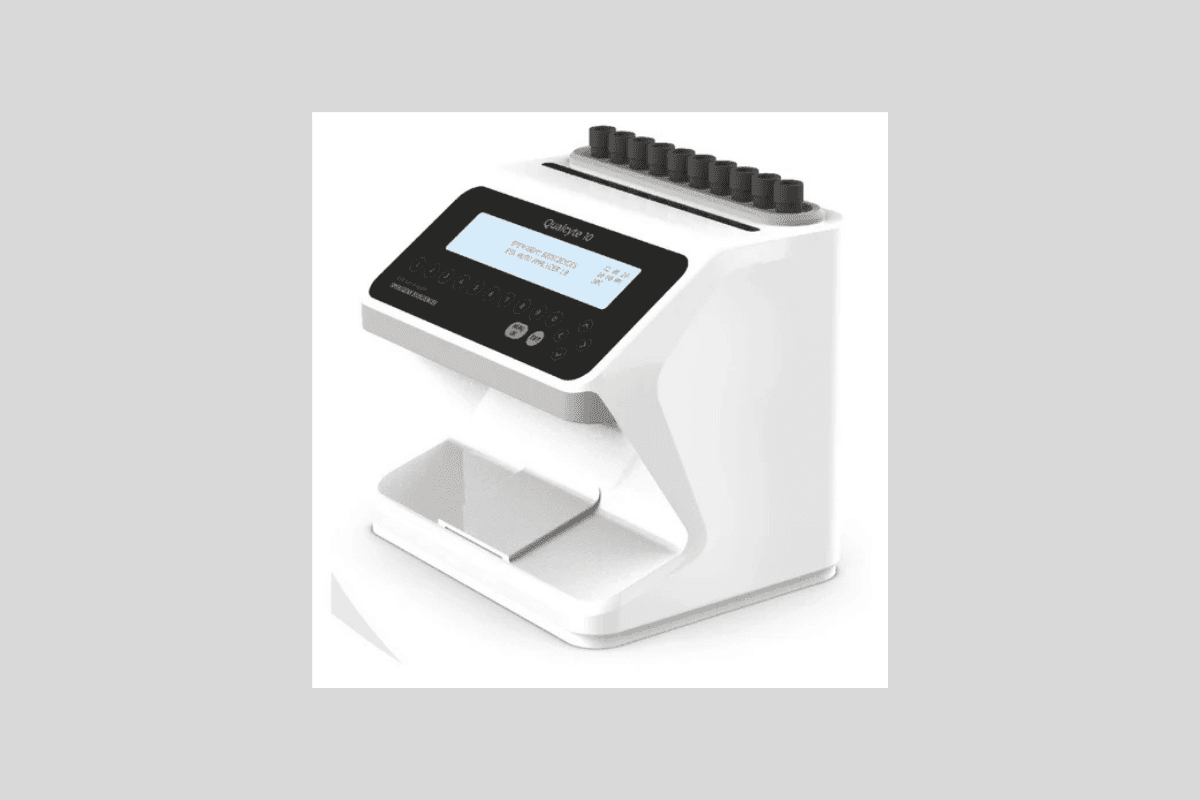
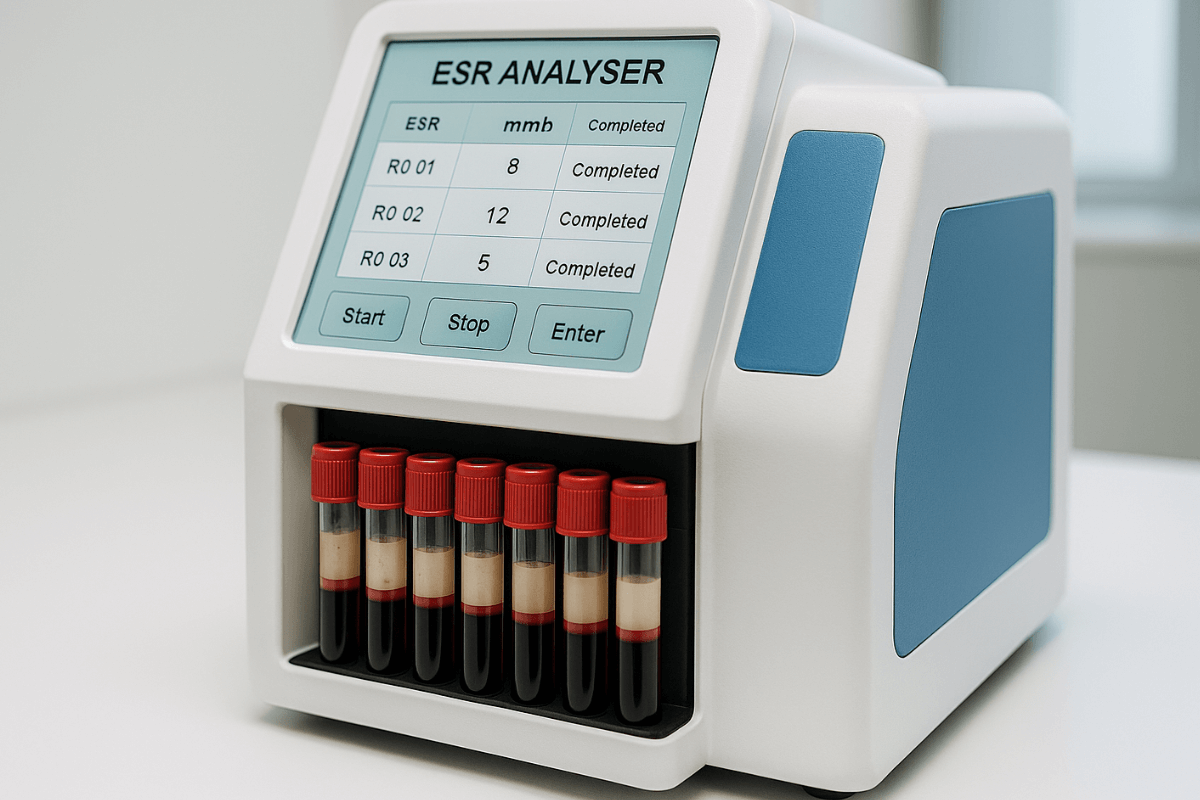
An ESR analyser is a laboratory instrument used to measure the erythrocyte sedimentation rate (ESR)—the rate at which red blood cells settle at the bottom of a test tube over a specific period. It is a non-specific marker of inflammation widely used in diagnosing and monitoring conditions such as infections, autoimmune disorders, and chronic inflammatory diseases. In clinical practice, ESR analysers streamline the whole process with improved precision and faster turnaround times.
What is an ESR Analyser?
An ESR analyser is a pathology lab equipment designed to automate the measurement of erythrocyte sedimentation rate in blood samples. It quantifies the rate at which red blood cells (erythrocytes) settle in a vertical column of anticoagulated blood over a fixed period, typically reported in millimetres per hour (mm/hr). It reflects the presence and intensity of an inflammatory response in the body.
Modern ESR analysers use optical, infrared, or capillary photometric methods to detect sedimentation without manual observation. Many systems are calibrated against the Westergren method—the gold standard for ESR measurement.
The Science Behind ESR Testing
The automated ESR analyser principle is based on the phenomenon that when inflammation is present in the body, certain proteins in the blood cause red blood cells to stick together. They form heavier aggregates that settle more quickly. The increased sedimentation rate correlates with inflammatory activity.
In normal conditions, erythrocytes settle slowly due to their negative surface charge that creates repulsion between cells. During inflammation, however, the increased production of acute-phase proteins, particularly fibrinogen, neutralises this charge, allowing cells to form rouleaux (stack-like formations) that sediment more rapidly.
Traditional vs. Automated Methods
While the traditional Westergren method has been the gold standard for ESR testing since its development in 1918, automated systems have addressed several limitations of manual procedures.
Why ESR Testing
ESR testing provides valuable diagnostic information across numerous clinical scenarios:
- Inflammatory conditions monitoring: Particularly rheumatoid arthritis, systemic lupus erythematosus, and tuberculosis.
- Diagnosis: Essential for conditions like giant cell arteritis and polymyalgia rheumatica.
- Infection assessment: Evaluate the presence and severity of infectious processes.
- Cancer screening: Higher values in the ESR test report may indicate malignancies in specific clinical contexts.
- Treatment response: Sequential measurements can assess therapeutic efficacy.
The ESR analyser uses extend beyond rheumatology to include general medicine, infectious disease, oncology, and geriatric care. As a non-specific marker, ESR results are typically interpreted alongside clinical findings and other laboratory parameters for comprehensive patient assessment.
Types of Automated ESR Analysers
Modern laboratories can choose from several types of automated systems.
Westergren-Based Automated Systems
These systems maintain the traditional Westergren methodology while automating the measurement process. They use infrared technology to track erythrocyte sedimentation in standardised tubes precisely. Results correlate strongly with the reference Westergren method.
Alternative Method Systems
Some advanced ESR analyser machines employ modified approaches.
Centrifugation Techniques: These accelerate the sedimentation process, providing results in minutes.
Photometric Analysis: Continuous monitoring of blood sample opacity changes during sedimentation.
Microfluidic Technologies: Newer systems may use miniaturised testing environments for rapid analysis.
Selecting an ESR Analyser
| Category | Feature | Details |
|---|---|---|
| Technical Specifications | Throughput Capacity | Ranges from 20 to 120 samples per hour. |
| Time to Result | Standard: 30–60 mins; Rapid: 5–30 mins. | |
| Sample Volume | Usually 25μL to 1.5mL. | |
| Correlation with the Westergren Method | Higher correlation ensures better clinical reliability. | |
| Quality Control Features | Automated documentation and statistical reporting. | |
| Operational Considerations | Footprint and Space Requirements | Benchtop vs. standalone models |
| Integration Capabilities | LIS connectivity support | |
| Sample Identification | Barcode reader or manual entry | |
| Maintenance Requirements | Calibration frequency and servicing needs | |
| Safety Features | Biohazard protection and blood containment systems | |
| Economic Factors | ESR Analyser Machine Price | ₹50,000 to ₹2,00,000 (India) |
| Per-Test Operational Costs | Costs for reagents, consumables, and maintenance | |
| Warranty and Service Agreements | After-sales support and service coverage. | |
| Training Requirements | Staff familiarity and training expenses |
The ESR Analyser Price in India
The ESR analyser price in India varies considerably based on technology, capacity, and features.
- Elemental automated ESR analysers range from ₹50,000 to ₹75,000.
- Advanced features and higher throughput models cost between ₹75,000 and ₹1,50,000.
- Fully-automated, high-capacity systems may range from ₹1,50,000 to ₹2,00,000.
Several domestic and international ESR analyser manufacturers serve the Indian market. When evaluating automated ESR analyser price options, laboratories should consider long-term operational costs alongside the initial investment.
Advantages of Automated ESR Systems
| Feature | Benefit |
|---|---|
| Standardised methodology | Improves result consistency. |
| Reduced manual handling | Minimises exposure to biohazardous materials. |
| Faster turnaround time | Enables rapid clinical decision-making. |
| Higher throughput | Accommodates growing testing volumes. |
| Automated documentation | Ensures compliance with quality standards. |
| Temperature correction | Eliminates environmental variables affecting results. |
Simplify ESR Workflow with Flabs Pathology Software
Using an ESR analyser is only part of the lab workflow. While it provides accurate inflammatory markers, turning those results into actionable insights, labs need a reliable way to manage data, including reporting and communication. That’s where Flabs Pathology Software adds value.
Flabs LIS ensures that what happens after the test is just as efficient. It enables faster result entry, from automated sample tracking to direct integration with your ESR analyser. Flabs LIS can achieve structured report generation and data storage. With built-in LIS compatibility, labs can reduce transcription errors and maintain traceable audit trails for compliance.
Patients can receive their ESR results directly via a secure portal without the need for a physical visit, and labs can automate notifications directly through WhatsApp. Whether you're operating a single diagnostic lab or scaling across locations, Flabs is adaptable. It adapts to your needs with a user-friendly interface and powerful backend support.
Ready to explore the features of Flabs LIS more?
Start your 5-day free trial today.
Conclusion
Incorporating ESR testing into diagnostic workflows also supports retrospective patient evaluations and long-term disease tracking through electronic health records. By integrating ESR results with clinical history and other inflammatory markers like CRP or procalcitonin, you can gain a more nuanced understanding of disease progression and treatment response.
Standardising ESR reporting formats across departments also improves interdepartmental communication. Pathologists can further refine diagnosis by pairing ESR data with condition-specific panels for targeted assessment.
Also check - How the HbA1c Machine Improves Diabetes Monitoring in Labs
Get Started at ₹1!
Try Flabs for a full month for just ₹1.
Follow us on