In the world of microscopes and specimen slides, pathology laboratories are the beating heart where precision and efficiency are critical. Enter the knight in shining armour: Laboratory Information Management Systems (LIMS). As the backbone of modern labs, LIMS software has transformed the tables of data and walls of records into a symphony of streamlined operations.
Laboratory information management systems can change chaos into order, complexity into clarity, and every second that counts in the race to save lives. Let’s explore how LIMS is revolutionising the workflow of pathology labs in various domains.
Understanding Laboratory Information Management Systems (LIMS)
LIMS tools are often used to streamline manual tasks, making them faster and better organised. LIMS are similar to tech teams using CRM software for automating customer interactions, HR departments using SAP or Oracle to manage their work effortlessly, keep up data accuracy and compliance. But LIMS are used for managing patient information, keeping test records, report printing, etc.
Research teams have their own special programs to help with creating, trying out, and checking new products, keeping track of important data and making sure they meet standards. These are managed with tools known as Laboratory Information Management Systems (LIMS), sometimes called Laboratory Information Systems (LIS) or Laboratory Management Systems.
Role of LIMS in Healthcare
The lab management system in healthcare began as a way to record details of test samples, results, and information about the patients. At first, it was all done by hand with labels and paperwork, which changed when computers found use in healthcare.
Since then the Laboratory Information Management Systems have been getting better and better. As computers got more advanced, so did the LIMS software. Today's laboratory information management systems are so good that once a sample is taken and labelled, either at the lab or at a person's home, it's very unlikely it will get lost. The software can keep track of the testing's progress and can quickly add the results to the system as soon as they are known.
Laboratory Information Management Systems for Streamlining Lab Operations
LIMS continues to transform the lab operations by enabling speed, scalability and accuracy in test reports. They facilitate a number of operations apart from test reporting. The following detail guides labs when conducting laboratory information management systems procurement.
Improves Work and Output
Laboratory Information Management Systems (LIMS) make work automatic from start to end, boosting how much gets done and how well. They cut down on the need for hands-on work and lower manual errors. Labs then do more with their staff's brainpower for their customers. Some of the tasks that LIMS accomplishes are:
Sample Management: LIMS keeps records precise, safe and prevents data loss during department transfers. Plus, it updates the sample's record for each move, showing who has it and where it is.
Inventory Management: The inventory control feature in a LIMS is key to daily lab operations. It keeps tabs on things like chemicals and supplies. When items run low, it pings a warning to order more, helping labs run smoothly without hitches from missing items. It also tracks gear, flagging when it's time for a fix-up or an upgrade.
Test Management: Laboratory information management systems streamline test processes, ensuring they're controlled and exact. It helps manage batch sample tests, simplifies recording outcomes, oversees accuracy of results, and report creation. Additionally, it manages test elements and assigns tasks to particular users.
Reporting: Reporting is vital in a LIMS, giving labs a complete picture of their data, spotting trends and cutting down on report-related work. With LIMS, you can easily create reports on samples, tests, inventory, and more, simplifying lab management.
Document Management: A LIMS streamlines document handling like SOPs, manuals, policies and consent forms by managing revisions, assigning reviews, safeguarding sensitive records per staff role, and keeping documents well-organised to prevent loss.
Keeps Up with Compliance
Labs follow certain rules, medical codes, and changing compliance guidelines. Laboratory Information Management Systems come with in-built compliance rules and auto-upgradation features everytime there is a change. It helps labs stick to good practices leading to better-quality data.
Facilitates Integration
Laboratory information management systems can be set up and connected to a lab's tools easily, such as pH metres, barcode readers, and a host of other lab instruments. Such integration is crucial as the labs scale up, to keep up speed and accuracy. But, labs need to choose one that has the features they need, suits budget, and meets their requirements.
Data Entry
LIMS simplifies how patient and research info is put in and kept by making it uniform and together in one place, reducing manual work and fewer isolated bits of data.
Works Well with Other Tools
Top-notch LIMS can work together with different lab tools and programs to manage certain tasks and share info. This teamwork can be managed to keep data safe and secure. It can also work with other systems for resources and accounting, making things run smoother.
Saves Money
LIMS cuts costs by making processes automatic, using staff better, lowering the chance of making mistakes or breaking rules, and sorting out usual slow points like making reports and bills. Labs can also pay for a SaaS version, which is a very money-saving choice.
Limited Integration
Not all lab tools and software are ready to work with a LIMS. If they're not a good match, you might need to come up with some creative solutions or put in extra work to facilitate integration.
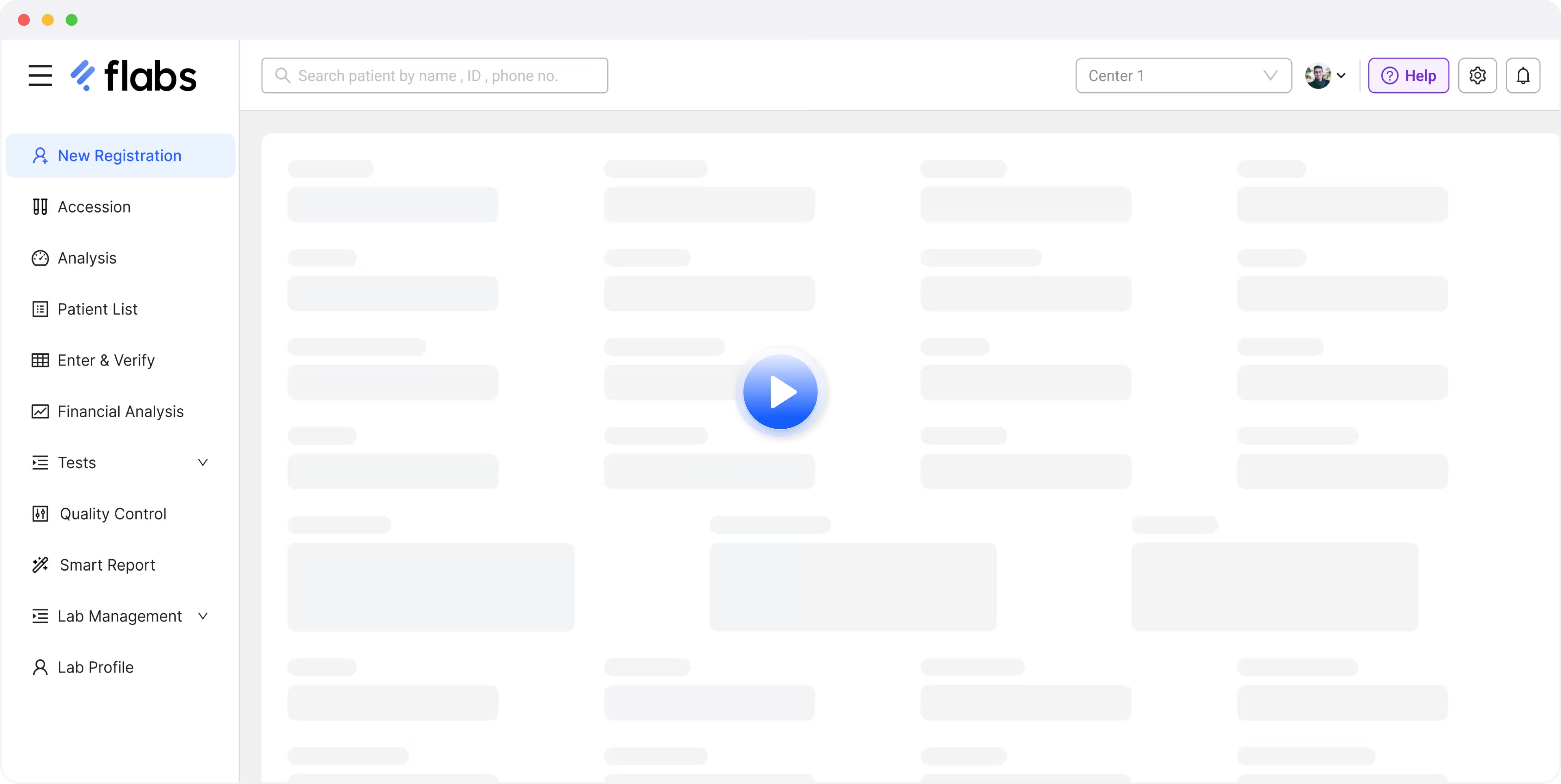
Flabs LIMS overcomes most of the challenges presented including data security, integration with a range of healthcare infrastructure. Flabs LIMS software framework is designed for strict adherence to medical standards, regularly adapting to new changes.
Improve Laboratory Workflows with LIMS Software
Efficient LIMS software for laboratory workflows helps labs manage samples, automate processes, track data, and improve reporting accuracy. Flabs Laboratory Information System Software enables diagnostic laboratories to streamline operations, reduce manual tasks, and manage workflows through a centralized digital platform.
Learn more about Flabs Laboratory Information System Software and how it can support modern laboratory management.
Conclusion
To conclude, remember that the integration of Laboratory Information Management Systems (LIMS) is more than just an upgrade. It’s revolutionising the way pathology laboratories function. They have ushered in an era of precision and efficiency in lab operations, turning potential disorder into well-orchestrated clarity.
By ensuring that critical information flows seamlessly and that every test and result finds its precise place, LIMS stands as a testament to the innovation driving healthcare forward. For laboratories committed to the swift and accurate delivery of life-saving data, LIMS is an indispensable ally in the noble quest to safeguard human health.
Get Started at ₹1!
Try Flabs for a full month for just ₹1.
Follow us on