Sample management is a regular task in laboratories. Sample collection, storage and retrieval are needed in large-scale labs. In other words, they handle volumes of sample inventory daily. They're often manually labelled and stored, which is prone to errors. Indeed, incorrect data entry is the reason for 30-40% of inventory-related discrepancies.
That's where the adoption of barcode systems in labs has gained prominence. They make the process accurate and rapid and automate it, saving both time and money.
What are Barcode Systems for Labs
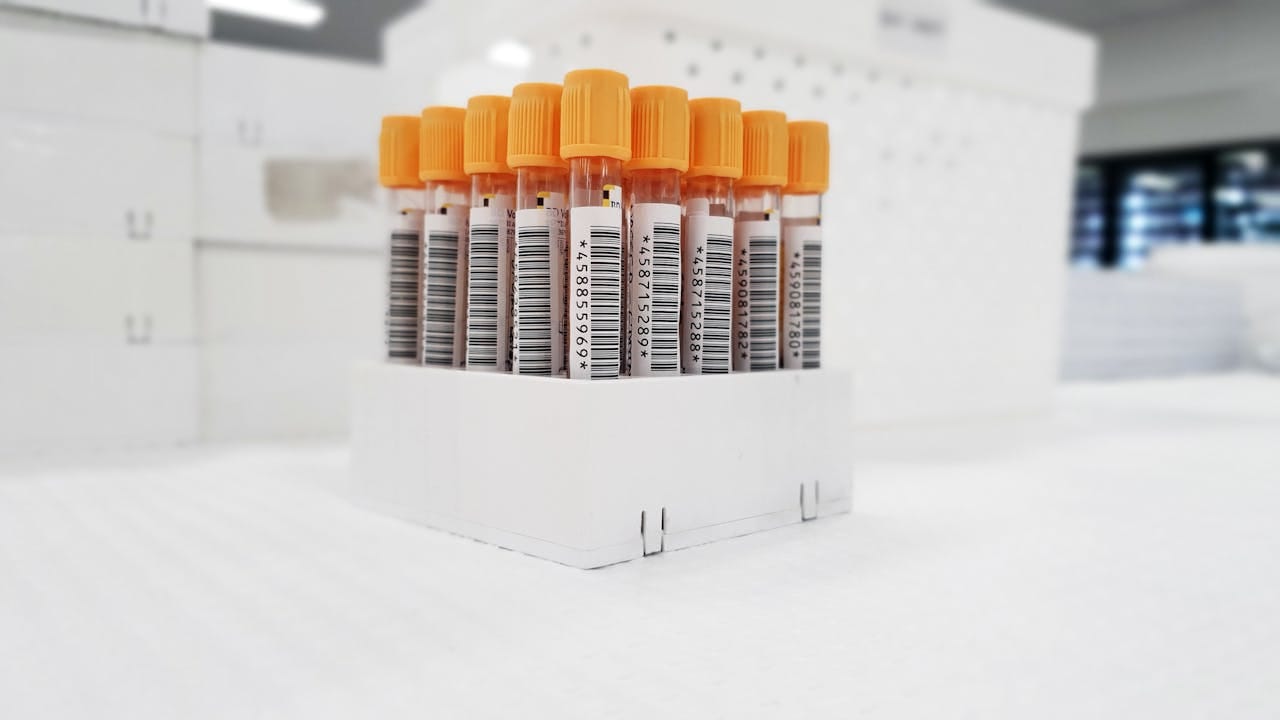
Barcode-based sample management systems are extensively used in many R&D and sample-handling labs. They're used in inventory management, sample labelling, tracking different objects etc. A barcode-based sample management system consists of barcode labels and barcode scanners, which replace manual labour in identifying and labelling various objects and materials.
Barcode labels are machine-readable patterns of lines and spaces that encode unique numbers and characters, allowing items or materials in the lab to be labelled and tracked efficiently.
Barcode scanners from the other end of barcode-based sample management systems. They are tools to read and decode the information stored in a barcode or QR code, e.g. sample date, patient name, type of reagent, etc.
Applications of Barcoding in Sample Labs
Sample Tracking and Identification: Barcoding enables rapid and accurate identification of samples, reducing errors and streamlining the sample testing process across various experiments and projects.
Inventory Management: Barcodes help lab personnel efficiently monitor the inventory of raw materials, reagents, and equipment. Effective inventory management ensures necessary supplies are available and minimising waste.
Data Integration with LIMS: Barcoding systems can integrate with Laboratory Information Management Systems (LIMS) to automatically update sample status, location, and usage, promoting data consistency and accessibility.
Efficient Workflow Management: By allowing doctors to quickly locate samples and equipment, barcoding minimises time spent searching for items, resulting in smoother, more organised lab workflows.
Audit and Compliance: Barcode records provide a traceable history of sample handling and movement, supporting compliance with regulatory standards and simplifying audit processes.
Benefits of Barcode Sample Management Systems
Barcodes are a tremendous automation tool for the repetitive task of identifying, storing and retrieving any item from labs. The benefits of barcode systems are not just about speed and rapidity, but one that lies in adhering to global regulations for labs.
Sample Traceability
Traceability is a huge problem in large-scale labs, where they handle high volumes of samples every day. Marking each and every sample manually is also not practical. When barcode-based sample management systems are used, they identify, store and enable easy retrieval whenever needed. It also optimises the time required otherwise, while eliminating the possibility of cross-contamination.
Offsets Human Errors
Data entry is an indispensable task for any lab, which is repetitive in nature. When it comes to manual work, errors are only to be expected. For example, inputting incorrect numbers, missing lines, omissions, etc. It could also be illegible handwriting that can lead to many other mistakes later on. Now, considerable time is invested in spotting errors and minimising them. Barcode-based sample management systems do away with these aspects at once.
Reproducibility
The necessity to reproduce experimental results has gained prominence. especially in Cancer research. The reproducibility has a direct impact on the efficacy of treatments and their development. And barcode-based sample management systems make it possible seamlessly.
Creating a detailed list of the stock used with barcode systems, with all necessary information included, simplifies the process of replicating an experiment. It enables recording the type of reagent used, and how it was kept and reproduced. With the help of a good LIMS like Flabs, you can even store full-fledged and more accurate information, as the data is all available in a single place.
Seamless Coordination
Sample barcoding is an effective tool that promotes clear communication and organisation within a laboratory, particularly when samples are used across multiple experiments and shared by various team members and collaborators. Scientists can quickly identify a sample, determine its exact location, and mark it as consumed once used, and so on. It reduces the risk of misplacement. It curbs disruptions among collaborators and supports a structured workflow.
Barcode Integration in Flabs LIMS
Flabs proprietary LIMS utilises barcode technology to streamline lab processes, making patient registration, sample tracking, and report access more efficient. It employs QR code technology. By generating barcoded reports, Flabs allows patients to securely access and download their results via a unique portal, simply by logging in with their phone number.
Flabs is also integrated with WhatsApp, which sends automated updates, cutting down communication time and improving patient experience. The cloud-based infrastructure reinforces the utility of QR-code integrated systems no matter where labs or patients are located.
With sophisticated barcode integration, Flabs enables efficient report sharing and organised tracking for both patients and lab staff. Onboarding Flabs LIMS rich with advanced features allows for unlimited scalability of your lab operations as well.
Conclusion
As barcode technology advances, labs can leverage emerging tools like AI-driven data analysis and predictive inventory tracking to further streamline operations. These features go beyond basic tracking, offering labs actionable insights into supply needs, peak usage times, and optimised sample handling protocols.
Adopting a forward-thinking barcode system, such as Flabs, positions labs to stay agile, scalable, and equipped with real-time data capabilities for smarter decision-making and efficient growth.
Also read: LIMS vs. QMS
Get Started at ₹1!
Try Flabs for a full month for just ₹1.
Follow us on