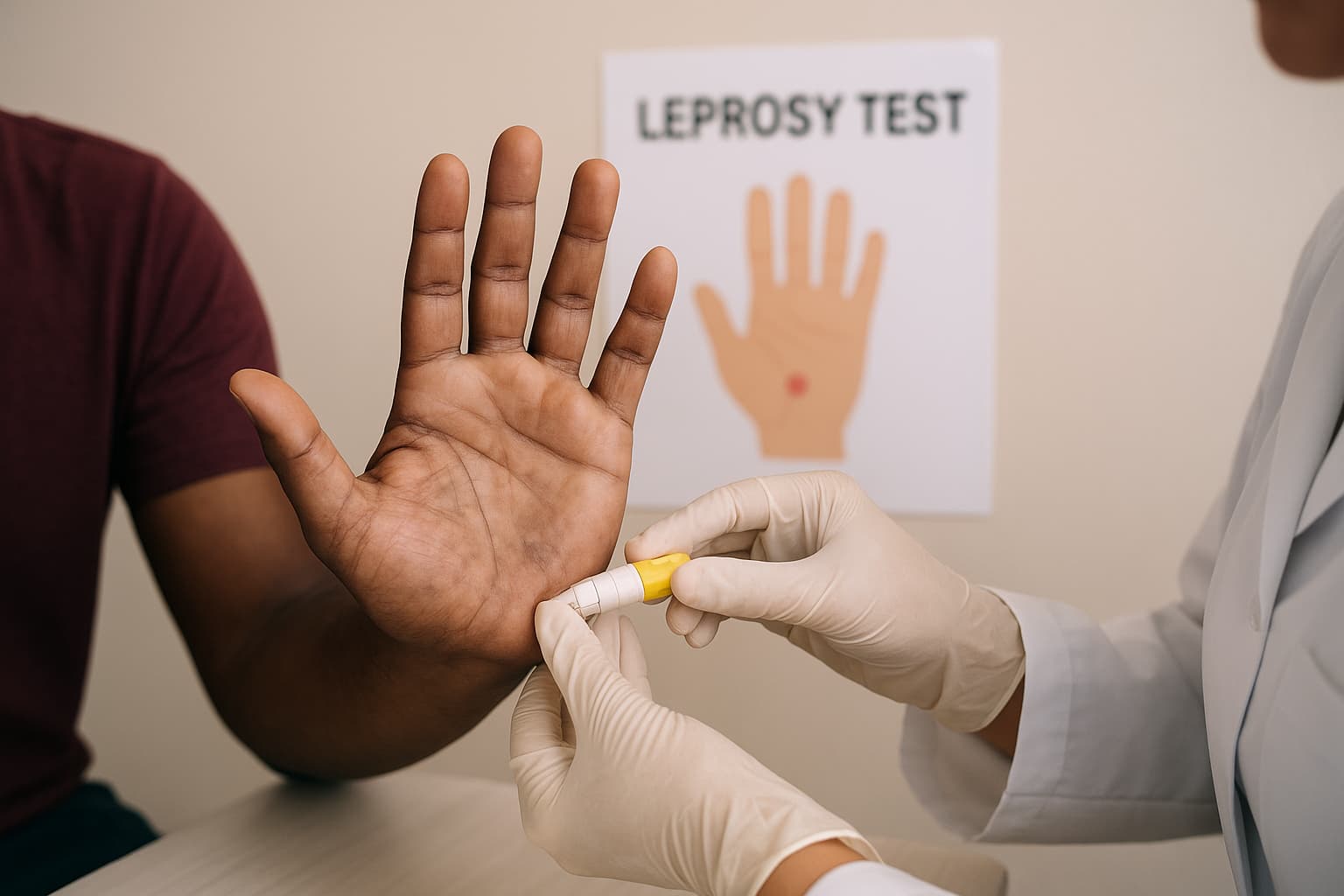
Leprosy is a chronic infectious condition caused by Mycobacterium leprae. It is also known as Hansen’s disease. Although no longer a major global health threat, early recognition through reliable diagnostic methods remains critical to prevent disability and control transmission. For pathologists and healthcare professionals, understanding the range of diagnostic leprosy tests is essential for accurate detection, clinical management, and research.
The Need for Early Leprosy Testing
Leprosy progresses slowly, often with subtle signs in the skin and peripheral nerves. Because it cannot be cultured on conventional agar, laboratory diagnosis relies on indirect tests. Clinical suspicion alone is insufficient; definitive confirmation requires a combination of microbiological, histological, and immunological methods. Early use of a leprosy test ensures timely treatment, reducing the risk of complications such as nerve damage, deformity, and social stigma.
Common Test for Leprosy: Clinical and Laboratory Approach
The common test for leprosy begins with clinical examination of skin lesions and sensory changes. However, laboratory-based methods provide objective confirmation.
Skin Smear Test for Leprosy: Direct demonstration of acid-fast bacilli in slit-skin smears.
Leprosy Skin Test (Lepromin Test): An immunological tool used for classification and prognosis, not for diagnosis.
Histopathology: Skin or nerve biopsy for visualisation of granulomas and bacilli.
Molecular Methods: RT-PCR and other nucleic acid-based tests detecting M. leprae DNA.
Skin Smear Test for Leprosy
The skin smear test for leprosy is one of the most widely practised diagnostic methods. It involves making small slit incisions at sites of suspected lesions or earlobes, followed by Ziehl-Neelsen staining. Demonstration of acid-fast bacilli provides a confirmatory diagnosis. The bacterial index (BI) and morphological index (MI) derived from smears help monitor treatment response.
Histopathology and Biopsy
A punch biopsy of skin lesions remains an important diagnostic test for leprosy. Biopsies should include deeper dermal tissue and fat to capture nerve involvement. Histological findings vary with type:
- Tuberculoid Leprosy: Granulomas with epithelioid cells and sparse bacilli.
- Lepromatous Leprosy: Dense infiltration with foamy macrophages, abundant bacilli, and diffuse involvement.
- Borderline Cases: Mixed features depending on host immunity.
Histopathology is invaluable in distinguishing leprosy from mimicking dermatoses and for staging the disease.
Blood Test for Leprosy
While there is no routine blood test to detect leprosy, serological assays targeting M. leprae–specific antigens such as phenolic glycolipid-I (PGL-I) have been developed. These tests can be performed using ELISA or rapid diagnostic strips. Although not definitive alone, they are useful in screening high-risk contacts and supplementing clinical diagnosis.
The RT-PCR blood test for leprosy provides more sensitive detection of bacterial DNA. The cost of the RT-PCR leprosy test in India varies, generally ranging from ₹2,000 to ₹5,000 depending on laboratory facilities.
Lepromin Test and Classification
The lepromin skin test is not a diagnostic test for leprosy. But it plays an important role in classification and prognosis.
Positive Reaction – Suggests strong cell-mediated immunity, seen in tuberculoid leprosy.
**Negative Reaction **– Associated with poor immunity, as in lepromatous cases.
The classification of leprosy on the basis of the lepromin test helps determine disease spectrum (tuberculoid, lepromatous, or borderline) and guides treatment.
Histamine Test in Leprosy
The histamine test in leprosy evaluates nerve involvement by assessing cutaneous vascular and sensory responses. A lack of histamine flare response in lesions indicates peripheral nerve damage. Though less commonly used in modern practice, it remains a simple adjunctive method for functional assessment.
Role of Modern Diagnostic Kits
Advances in molecular biology have led to the availability of leprosy test kits that employ PCR or serological methods. These provide faster turnaround time and are particularly valuable in endemic areas for surveillance. A leprosy test report generated from such kits includes bacterial detection, DNA confirmation and immunological markers.
Blood vs Skin Tests: Comparative Value
Blood Tests – Useful in detecting subclinical infections and monitoring contacts but limited by variable sensitivity.
Skin Smear & Biopsy – Remain gold standards for direct confirmation of bacilli and histological changes.
Molecular Tests (PCR/RT-PCR) – Offer high sensitivity, valuable in indeterminate and early cases where bacilli are sparse.
For a comprehensive evaluation, combining methods provides the most reliable diagnosis.
Early Diagnosis in Indeterminate Leprosy
Indeterminate leprosy presents with ill-defined patches and minimal sensory loss. Because bacilli are sparse, diagnosis is challenging. In such cases:
- Biopsy with careful search for bacilli in nerves is crucial.
- PCR techniques improve sensitivity for early detection.
- Contact history supports clinical suspicion.
Prompt testing at this stage can prevent progression to more advanced forms.
Challenges in the Interpretation of Tests
- False negatives in smear and biopsy due to paucibacillary disease.
- Serological variability depending on host immune response.
- Cross-reactivity in antibody-based assays with other mycobacteria.
- Cost and availability of advanced molecular tests in low-resource settings.
Pathologists must integrate clinical, histological, and laboratory data for accurate conclusions.
Emerging Trends in Leprosy Diagnosis
- Next-generation sequencing (NGS) to study strain diversity and drug resistance.
- Point-of-care molecular kits for rapid field detection.
- Multiplex assays combining antigen, antibody, and DNA detection.
- Digital pathology to standardise histological interpretation.
These advances hold promise for more accessible and precise diagnostic workflows.
Conclusion
The leprosy test remains a cornerstone in the early detection of Hansen’s disease. While the skin smear test for leprosy and biopsy continue to be mainstays, molecular diagnostics and immunological assays expand the range of available tools. For healthcare professionals, choosing the appropriate diagnostic test for leprosy depends on clinical presentation, resource availability, and disease stage. Early and accurate diagnosis is central to breaking the transmission chain and preventing lifelong complications.
Also check - Inhibin B Test: What It Reveals About Fertility
Get Started at ₹1!
Try Flabs for a full month for just ₹1.
Follow us on