Phlebotomy, the practice of drawing blood from a patient for medical testing, treatments, or donation, is a fundamental procedure in healthcare that plays a critical role in patient care and diagnosis. Mastering the phlebotomy procedure is essential for healthcare professionals, as it not only involves technical skill and knowledge of anatomy but also requires a high degree of precision, patience, and the ability to ensure patient comfort and safety.
This step-by-step guide aims to provide healthcare professionals with a comprehensive overview of phlebotomy, covering everything from the basics of what phlebotomy is to the detailed procedure, the correct order of draw, and the integral role of phlebotomy technicians in healthcare settings. By delving into the nuances of the phlebotomy procedure and emphasising best practices, this article seeks to equip healthcare workers with the knowledge and skills needed to perform phlebotomy effectively, thereby enhancing the quality of patient care and contributing to the accurate diagnosis and treatment of various medical conditions.
What Is Phlebotomy?
Phlebotomy is a medical procedure that involves the puncturing of a vein, usually in the arm, to draw blood from a patient for diagnostic testing, treatments, or blood donation.
This procedure is a fundamental practice in healthcare, serving as a critical first step in the diagnosis and management of various diseases and conditions. Performed by trained professionals known as phlebotomists, phlebotomy requires not only technical skills to safely and effectively draw blood but also the ability to interact with patients compassionately, easing any anxieties they may have about the process. Proper technique and procedure are crucial to ensure the quality of the blood sample and minimise the risk of complications, such as infection or bruising. As a cornerstone of patient care, phlebotomy enables healthcare providers to obtain the vital information needed to make informed decisions about patient diagnosis, treatment, and overall health management.
Demystifying the Phlebotomy Procedure
The phlebotomy procedure involves several steps to ensure the safe and efficient collection of blood samples from patients. Here's a detailed overview:
1. Patient Preparation
The process begins with the phlebotomist greeting the patient and explaining the procedure to them, addressing any concerns or questions they may have. The patient's identity is confirmed, and relevant medical history, such as allergies or medication use, is noted.
2. Selection of Vein
After selecting an appropriate site for venipuncture, typically in the antecubital area of the arm, the phlebotomist assesses the veins' suitability for blood draw. Factors such as vein size, visibility, and condition are considered.
3. Preparation of Equipment
The phlebotomist gathers the necessary equipment, including a tourniquet, alcohol swabs, blood collection tubes, needles, and adhesive bandages. All equipment is checked for sterility and proper functioning.
4. Tourniquet Application
A tourniquet is applied around the patient's upper arm to temporarily restrict blood flow, making the veins more prominent and more accessible.
5. Cleaning the Site
The phlebotomist cleans the selected venipuncture site with an alcohol swab to disinfect the area and reduce the risk of infection.
6. Venipuncture
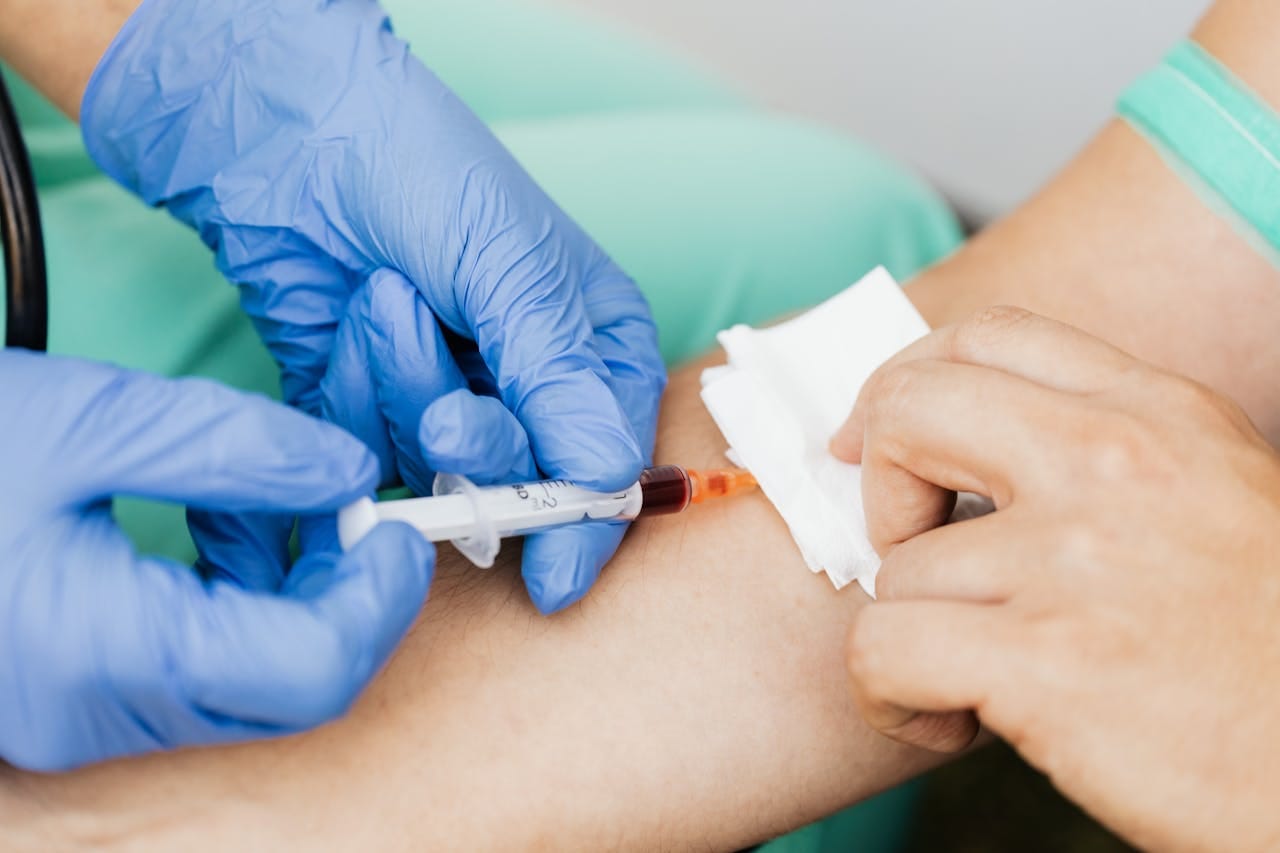
Using a sterile needle attached to a vacuum tube or syringe, the phlebotomist performs the venipuncture by inserting the needle into the vein at a slight angle. Once the needle is properly positioned within the vein, blood is drawn into the collection tubes by vacuum pressure or manually aspirated into the syringe.
7. Tube Collection
Multiple blood collection tubes may be used to obtain different types of blood samples for various tests. Each tube is labelled with the patient's information and the kind of test to be performed.
8. Needle Removal and Bandaging
After the blood draw is complete, the phlebotomist removes the needle, applies pressure to the puncture site with gauze to stop bleeding, and secures the site with an adhesive bandage.
9. Post-Procedure Care
The patient is instructed to keep the puncture site clean and dry and to apply pressure if bleeding continues. Patients may experience mild bruising or discomfort at the puncture site, which typically resolves quickly.
10. Labeling and Transport
Once the blood samples are collected, they are labelled accurately, following standard protocols, and transported to the laboratory for analysis.
Correct Order of Draw Phlebotomy
The "order of draw" in phlebotomy is a critical protocol that minimises cross-contamination and interference between different additives in collection tubes during the blood draw process. This sequence ensures the integrity of blood samples and the accuracy of laboratory results. The order is critical when multiple tubes are drawn in a single venipuncture session. Following is the standard order of draw recommended by the Clinical and Laboratory Standards Institute (CLSI):
- Blood Culture Bottles or Tubes: If blood cultures are required, these are collected first to avoid contamination of the culture with additives from other tubes.
- Coagulation Tubes (Light Blue Top): These tubes contain sodium citrate, an anticoagulant that preserves the coagulation factors for accurate coagulation testing.
- Serum Tubes with or without Clot Activator/Gel (Red, Gold, or Speckled Tops): Tubes without anticoagulants, allowing blood to clot, are drawn next. The serum obtained after centrifugation is used for various chemistry tests, hormone levels, and antibody screening.
- Heparin Tubes (Green Top): Heparin acts as an anticoagulant, preventing blood from clotting and is used for chemistry tests requiring plasma or whole blood.
- EDTA Tubes (Lavender or Pink Top): EDTA binds calcium, preventing blood from clotting, making it suitable for complete blood count (CBC) and other haematology tests.
- Glycolytic Inhibitor Tubes (Gray Top): These tubes contain additives that prevent the breakdown of glucose by cells in the sample and are used for glucose tolerance tests and lactate measurement.
What Is the Role of a Phlebotomy Technician?
A phlebotomy technician, also known as a phlebotomist, plays a crucial role in the healthcare system, specialising in the collection of blood samples from patients for laboratory testing, transfusions, research, or blood donations. Their responsibilities extend beyond the technical aspects of drawing blood to encompass a wide range of duties that ensure patient safety, comfort, and the integrity of the blood sample. Key responsibilities include:
Patient Interaction
Phlebotomists often serve as the initial point of contact between the patient and the healthcare system, requiring them to possess excellent communication skills. They must explain procedures to patients, address any concerns, and provide instructions for post-collection care, all while maintaining a compassionate and professional demeanour.
Vein Selection and Blood Draw
One of the primary duties is to identify the most suitable vein for blood draw, perform the venipuncture procedure efficiently, and collect the required volume of blood with minimal discomfort to the patient.
Sample Handling and Processing
After collection, phlebotomy technicians are responsible for correctly labelling samples, ensuring that they match the patient's identification and processing or preparing them for transport to the laboratory according to specific protocols.
Infection Control and Safety
Maintaining strict adherence to infection control and safety guidelines to protect themselves and their patients from the transmission of infectious diseases is critical. This includes the proper disposal of sharps and the use of personal protective equipment (PPE).
Record Keeping and Documentation
Accurate documentation of each blood draw, including the time, date, and any relevant patient information, is essential for maintaining the integrity of the testing process and ensuring that results are accurately attributed to the correct patient.
Phlebotomy technicians must be highly skilled and knowledgeable about anatomy, phlebotomy techniques, and the handling of blood samples. Their work directly impacts the accuracy of laboratory results and, consequently, patient diagnosis and treatment. Through their expertise and interaction with patients, phlebotomy technicians contribute significantly to the overall quality of care within the healthcare system.
What Is the Role of Phlebotomy in Healthcare?
Phlebotomy plays a pivotal role in healthcare, serving as a fundamental procedure for collecting blood samples that are critical for diagnostic testing, disease monitoring, and treatment evaluation. This essential function impacts various aspects of patient care and medical research:
Diagnosis
Blood tests are among the most common and informative diagnostic tools available to healthcare providers. Through the analysis of blood samples obtained via phlebotomy, clinicians can diagnose a wide range of conditions, from superficial infections to complex diseases like diabetes, cancer, and heart disease.
Monitoring
Regular blood draws are vital for monitoring the progress of diseases and the effectiveness of treatments. For patients with chronic conditions, such as those requiring anticoagulation therapy or undergoing chemotherapy, phlebotomy enables healthcare providers to adjust treatments in response to changes in the patient's condition.
Screening
Phlebotomy is used in screening programs to detect diseases at an early, often asymptomatic stage, where intervention can be most effective. Examples include screening for high cholesterol, diabetes, and certain cancers.
Transfusion and Donation
Blood collected through phlebotomy can be used for transfusions, a lifesaving procedure for patients who have lost significant amounts of blood due to trauma or during surgery. Phlebotomy also facilitates blood donation, where collected blood is stored in blood banks to be used for transfusions as needed.
Research
In the realm of medical research, phlebotomy allows scientists to collect blood samples for studies investigating the causes of diseases, the effectiveness of new treatments, and the development of innovative diagnostic tests.
Conclusion
Phlebotomy is a critical component of healthcare, underpinning the diagnostic process that informs nearly every aspect of patient care and treatment. The precise collection and handling of blood samples through phlebotomy procedures directly impact the accuracy of laboratory results, which in turn guides diagnosis, monitoring, and therapeutic decisions. Understanding the intricacies of phlebotomy—from the fundamental principles and techniques to the roles and responsibilities of phlebotomy technicians—is essential for healthcare professionals to ensure the highest standards of patient care.
Moreover, the role of phlebotomy extends beyond individual patient interactions, contributing to broader healthcare goals such as disease screening, research, and the safe collection of blood for transfusions. As healthcare continues to advance, the importance of phlebotomy remains constant, highlighting the need for skilled practitioners and adherence to best practices in specimen collection.
Get Started at ₹1!
Try Flabs for a full month for just ₹1.
Follow us on