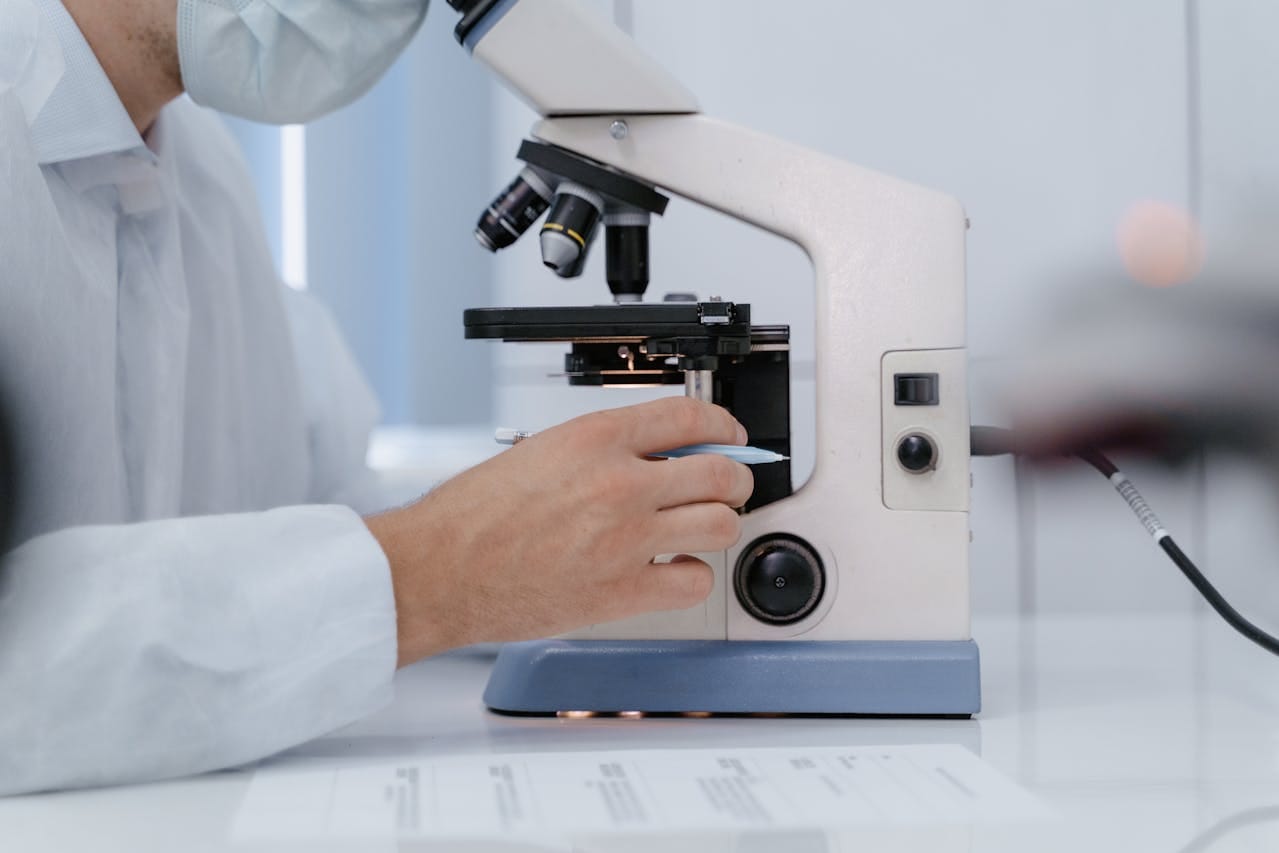
The emerging role of AI in pathology is redefining medical diagnostics, pushing the boundaries of what's possible in disease detection and patient care. Beyond mere image analysis, AI and machine learning in pathology is now venturing into multi-modal data integration, fusing insights from genomics, proteomics, and clinical records to facilitate a holistic picture of patient health.
This convergence of AI and big data is giving rise to "computational pathology," a field that promises to uncover subtle disease patterns invisible to the human eye.
Furthermore, AI is catalysing a shift towards "digital pathology twinning," where virtual replicas of tissue samples can be manipulated and studied in ways impossible with physical specimens. As these technologies mature, Artificial intelligence in pathology and laboratory medicine has a primary role to play.
Workflow Efficiency
There are many repetitive tasks in pathology laboratories that can be taken over by Artificial Intelligent systems. For example, quantifying biomarkers, measuring cell densities, etc. Use of AI in pathology for such tasks even improves consistency and eliminates human error. Moreover, advanced AI pathology systems can also pre-screening slides, highlight areas of interest for closer examination, assisting pathologists in the process. Given the scarcity of pathologists in any region, they can focus on more complex tasks with the help of AI in pathology.
Remote Diagnosis and Collaboration
Globally, there is scarcity of qualified pathologists, let alone their availability in remote areas. Earlier, pathologists would travel to different healthcare facilities to perform their duties. Thanks to AI in pathology, remote collaboration has made even complex diagnosis available anywhere in the world.
Healthcare professionals can share samples and sample images to qualified pathologists anywhere in the world and obtain diagnosis in very less time; if necessary, obtain second-opinions from expert pathologists. This opportunity will decrease mortality rate dramatically, even among those with complex disease conditions.
Accuracy of Diagnosis
AI is revolutionising medical imaging analysis by enhancing the capabilities of pathologists. Advanced AI algorithms can examine digital pathology images with remarkable precision, helping doctors identify tissue abnormalities, cancerous cells, and infectious agents more efficiently.
AI in pathology doesn't replace human expertise but rather complements it. By combining the analytical power of AI in diagnostics with the experience and judgement of medical professionals, it is possible to catch diseases earlier.
Personalised Treatment
Despite the similarity of symptoms, treatments differ from one person to another. Identifying individual factors is a complex task. There are AI pathology systems which today can trace specific molecular and genetic markers related to some diseases. They can also identify personal DNA factors that may influence the medication. This information can guide personalised treatment and therapies tailored to individual patients.
For example AI in pathology can examine cancer cells' genetic changes, helping doctors pick the best targeted treatments. This improves treatment effectiveness, reduces side effects, and leads to better results for patients.
Predictive Analytics and Prognosis
AI in Pathology is transforming how doctors forecast patient health by analysing vast amounts of medical data. These smart systems can sift through digital pathology images, patient histories, and lab results to spot patterns humans might miss. For example, in cancer care, AI combined with machine learning in pathology might predict how aggressive a tumour will become or how well a patient will respond to chemotherapy. In cardiology, it could estimate the risk of heart attacks or strokes based on imaging and lifestyle data.
By providing these predictions, AI pathology systems create more tailored treatment plans. This data-driven approach not only improves individual care but also helps hospitals allocate resources more effectively, potentially leading to better outcomes for entire patient populations.
Training and Education
By providing access to vast digital libraries of pathology images, AI in pathology systems allow students and practising pathologists to gain exposure to a wide range of rare and complex cases. These platforms can simulate real-world diagnostic scenarios, offering immediate feedback and explanations for correct and incorrect assessments.
AI-powered tools can track individual learning progress, identifying areas where more practice is needed and tailoring educational content accordingly. Furthermore, AI can generate realistic synthetic images for training purposes, helping to overcome limitations in available real patient data. This technology also facilitates remote learning and collaboration, enabling experts to share knowledge globally and standardise pathology education across institutions.
Future of AI Pathology
AI's role in pathology is poised for transformative growth. As algorithms become more sophisticated through machine learning and deep learning advances, their precision and dependability will increase. The synergy between AI and technologies like digital imaging and telepathology promises to broaden its applications and influence. The ongoing development of AI opens doors to reimagining diagnostics and driving personalised medicine forward.
Conclusion
As AI continues to reshape pathology, the field stands at the cusp of a transformative era. The potential for improved patient outcomes, more efficient healthcare systems, and groundbreaking discoveries is immense. However, realising this potential requires active engagement from pathologists, researchers, and healthcare institutions.
Embrace the AI pathology revolution by participating in training programs, contributing to data sharing initiatives, and collaborating on AI development projects.
Suggested read: Learn more about the Future of Pathology in India
Get Started at ₹1!
Try Flabs for a full month for just ₹1.
Follow us on