Laboratory information systems are designed to handle medical testing data in written form. On the other hand, Radiology departments have to deal with large amounts of medical imaging data. PACS takes care of that. It is a technology that stores, processes, and retrieves medical images. Compared to laboratory information systems, PACS require more sophistication and investment. Understanding the functioning and components of PACS helps to have better control over them in medical facilities.
PAC Full Form in Medical Testing
PACS full form in medical terminology is a Picture Archiving and Communication System. It is a medical imaging technology to store, maintain and retrieve medical images using Radiology information systems. Picture archiving and communication systems eliminate the need to handle physical files and help healthcare facilities become more digital.
While the PACS system helps with administrative tasks, it has also greatly enhanced clinical safety, diagnostic accuracy, and speed.
Functioning of PACS System
The Picture Archiving and Communication System (PACS) stores and transfers medical images using DICOM (Digital Imaging and Communications in Medicine) format. DICOM is an international standard that also prescribes standards for integration with RIS (Radiological Information System) and other medical data storage software.
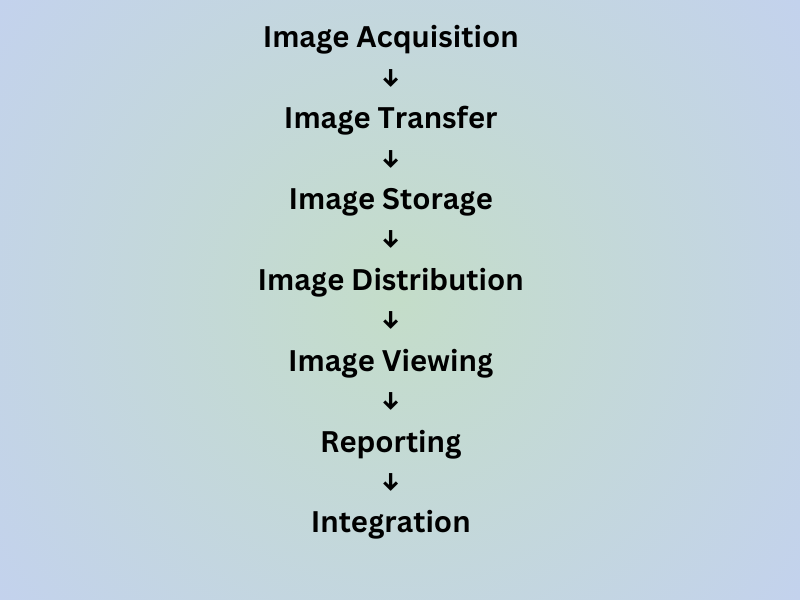
Image Acquisition: Medical images from various imaging modalities (X-ray, CT, MRI, etc.) are captured digitally following DICOM standards.
Image Transfer: The digital images are transmitted from the imaging devices to the PACS server.
Image Storage: The PACS server stores and archives the received images in a central database.
Image Distribution: Radiologists and other authorised clinicians can access and view the stored images from any PACS workstation connected to the network.
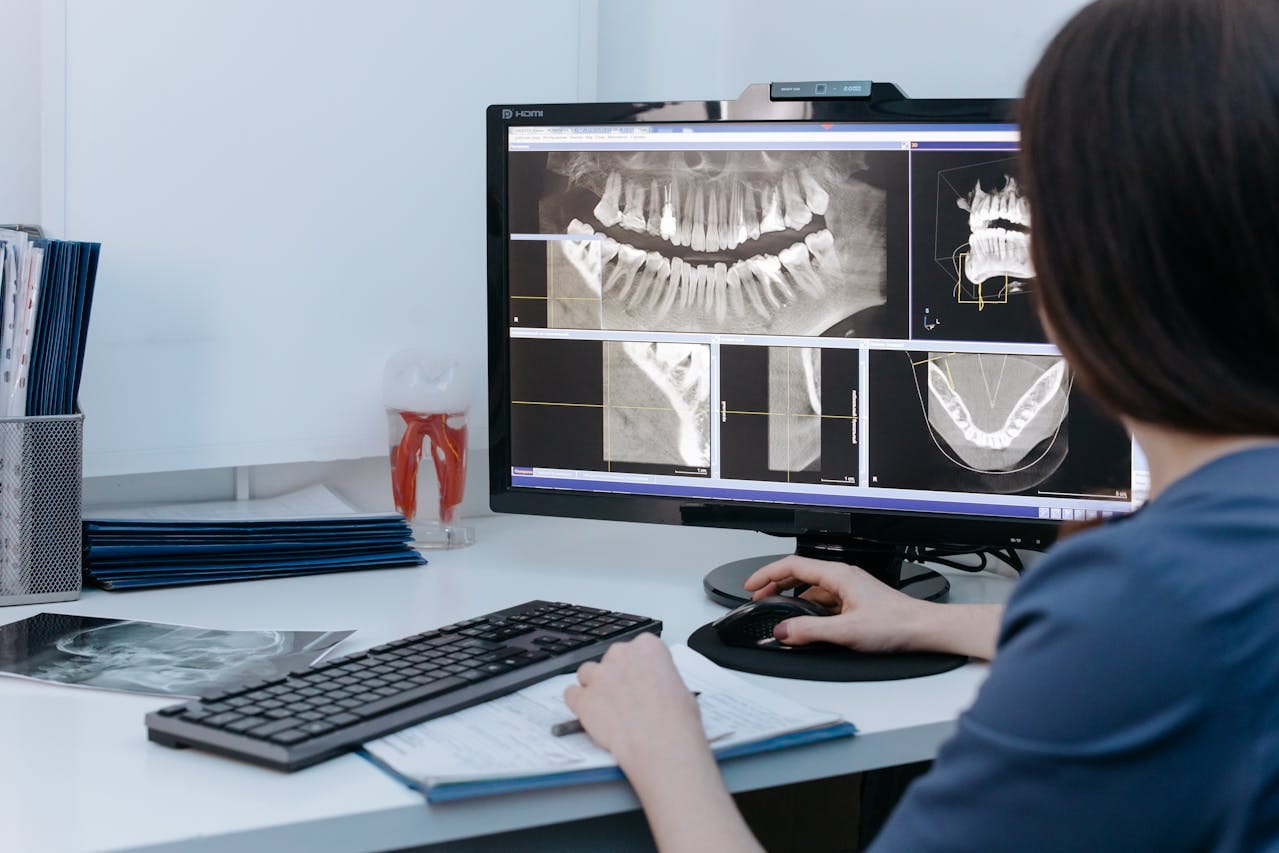
Image Viewing: The PACS workstations provide tools for displaying, manipulating, and interpreting medical images.
Reporting: Radiologists can create and store diagnostic reports associated with the images within the PACS.
Integration: PACS systems can integrate with other systems, such as RIS (Radiology Information System) and EMR (Electronic Medical Record), for seamless data exchange.
Components of a PACS System
Main Server: The central server is the most vital part of a PACS system. It contains the data structure, RIS interface, web servers, image distribution servers, and interfaces.
Database: The place where all the critical information related to patient study and testing is stored and saved.
HL7: It refers to health level 7. HL7 is part of the server that receives all information fed by RIS and forwards it to PACS..
A PACS system also includes image modalities involved with the actual scanning. There are workstations where doctors view and study the captured radiological images. PACS archives are where the images and documents are stored for retrieval at a later stage. A strong network connection is also a part of the PACS system. It requires either a local server or a global server for PACS to work.
The radiation exposure is also very low, with no side effects. With advanced features like 3D imaging, chronological history of events, remote access, Artificial intelligence, and Machine learning-powered automation, PACS systems are seeing new avenues every day.
Integration Capabilities of PACS
Radiology Information System (RIS): Integrating PACS with RIS allows for bi-directional communication between the two systems, enabling the exchange of patient demographics, scheduling information, and order details. RIS sends patient and procedure data to PACS, while PACS sends back the acquired images and reports. It establishes a smooth and coordinated radiology workflow.
Electronic Health Record (EHR): PACS integration with Electronic Health Record (EHR) facilitates the sharing of patient data and diagnostic images across different departments and healthcare providers. Clinicians can access and view relevant medical images directly from within the EHR. It helps with informed decision-making and improved patient care coordination.
Vendor Neutral Archive (VNA) Integration: VNAs are centralised repositories for storing medical images and related data from various imaging modalities and vendors. PACS systems can integrate with (VNAs) for consolidated storage, access, and management of these resources.
Advanced Visualization and Post-Processing Tools: Modern PACS systems can accommodate 3D rendering, computer-aided detection (CAD), and other specialised software. It enables advanced image analysis, measurements, and reconstructions in radiology.
Conclusion
PACS have evolved over the years to accommodate many modern technologies, such as AI, ML, and cloud computing. They have made working in radiology labs simpler, requiring minimal staff training. They have made healthcare facilities secure and reliable while enhancing diagnostic accuracy and speed. Every forward-looking radiology laboratory must contemplate getting an efficient PACS to offer better healthcare.
Get Started at ₹1!
Try Flabs for a full month for just ₹1.
Follow us on