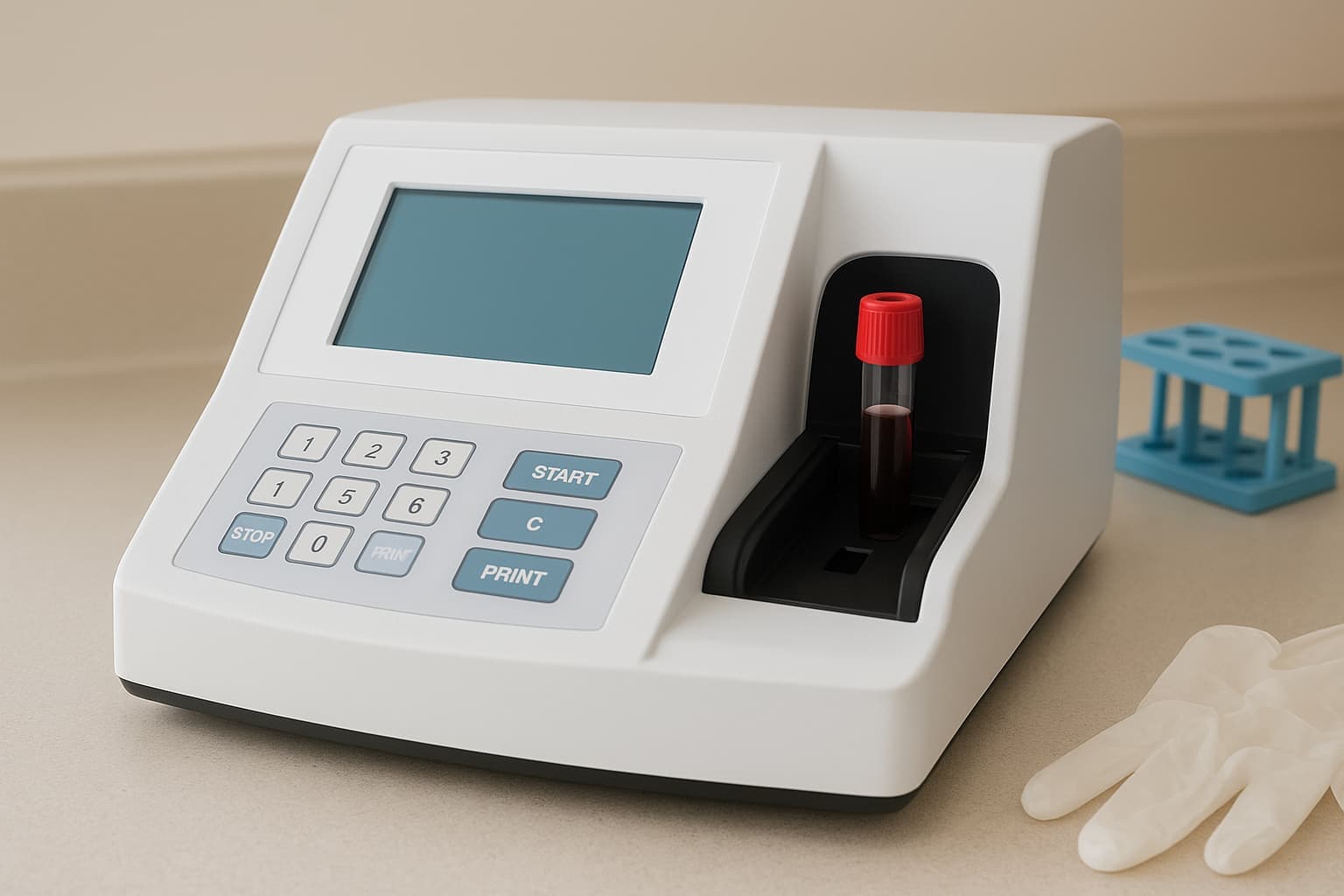
A coagulometer is a laboratory instrument that measures how quickly blood clots. The device evaluates the function of the coagulation cascade, especially when diagnosing bleeding disorders or monitoring anticoagulant therapy. It works by analysing the clotting time of plasma and can perform a variety of coagulation assays such as Prothrombin Time (PT), Activated Partial Thromboplastin Time (APTT), and Thrombin Time (TT).
Learning about coagulation starts with recognising it as a process involving complex pathways—namely the intrinsic and extrinsic systems—that ultimately lead to the formation of a fibrin clot. When blood vessels are injured, tissue factor is released, initiating a chain of enzymatic reactions that activate clotting factors. Disorders in the system can lead to either excessive bleeding or thrombosis.
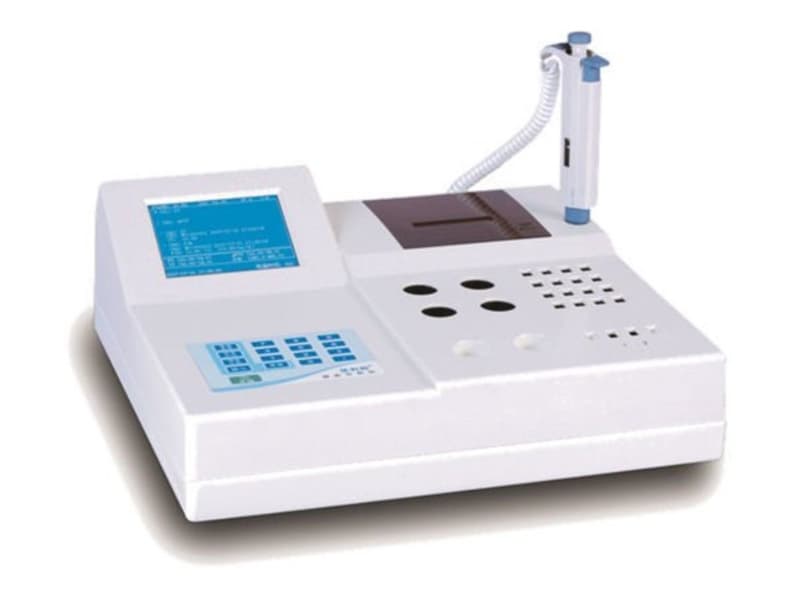
Source - IndiaMart
Working Principle of a Coagulometer
The principle of the coagulometer in haematology generally revolves around either mechanical or optical methods. In the photo-optical clot detection technique, the analyser monitors changes in the optical density of plasma as it forms a clot. A beam of light passes through the sample, and as fibrin strands develop, they scatter the light, causing measurable changes. The instrument detects these fluctuations to determine clotting times.
Alternatively, mechanical coagulometers rely on the movement of a steel ball or similar object within a cuvette of plasma. As clotting begins, the movement is impeded. The time taken for the change is recorded.
Automated vs. Semi-Automated Coagulometers
A semi-automated coagulometer requires manual pipetting and sample preparation. Although more affordable for low-volume laboratories, it demands trained personnel with a higher risk of variability. On the other hand, an automated coagulometer integrates sample handling, reagent addition, and result interpretation. It improves standardisation and throughput, making it more suitable for high-volume or reference laboratories.
Fully automated systems support multiple assays simultaneously and often come with features like barcode scanning, LIS (Laboratory Information System) connectivity, and onboard quality control. They also support dual test modes—manual and automated sampling—to accommodate different workflow requirements.
Applications in Haematology and Beyond
The coagulometer finds broad application across haematology departments. It is routinely used to generate a coagulation panel, which is a panel of tests designed to evaluate the different components of the clotting system. These results help diagnose conditions such as haemophilia, von Willebrand disease, liver dysfunction, and disseminated intravascular coagulation.
It is also used in therapeutic monitoring. Patients on anticoagulant medications like warfarin, heparin, or newer agents like DOACs require regular assessment to maintain their dosage. The coagulometer can avoid under- or over-anticoagulation.
Technological Features and Advancements
Modern coagulometers include LED-based lighting systems for photo-optical detection, touchscreen interfaces, and duplex communication with LIS. They are often equipped with multi-point calibration and built-in quality control modules.
Several models also have open reporting formats, enabling laboratories to customise how results are presented. With features like programmable test parameters and simultaneous multiple test processing, today's coagulometers are designed to improve lab efficiency.
Top Coagulometer Manufacturers
Numerous coagulometer manufacturers cater to both small and large diagnostic setups. Some of the notable names include:
- Siemens Healthineers
- Sysmex Corporation
- Horiba Medical
- Erba Mannheim
- Tulip Diagnostics
Each brand offers variations ranging from compact, bench-top semi-automated coagulometers to fully automated analysers with advanced integration features.
Coagulometer Price List in India
The cost of a coagulometer in India varies widely based on automation level, brand, and feature set. A basic semi-automated coagulometer may start around INR 1,00,000, whereas high-end automated models can range up to INR 10,00,000 or more. When budgeting, labs must also consider the recurring cost of reagents, calibration kits, and maintenance contracts.
| Tier | Channel Type | Model / Brand | Company / Provider | Approx. Price (INR) | Notes |
|---|---|---|---|---|---|
| Entry-Level | Single Channel | Coagulometer Basic Model | Micro Lab Instruments | ₹60,000 | Suitable for small labs & clinics |
| Single Channel | Yumizen G200 (Semi-Auto) | Royal Diagnostic & Surgical | ₹89,000 | Basic automation; compact setup | |
| Single Channel | Basic Coagulometer (2.5W Plastic Body) | TradeIndia Listings | ₹78,000 | Budget-friendly with manual handling | |
| Mid-Tier | Dual Channel (2-Chamber) | Blood Coagulometer (Automatic) | DevYasi India | ₹1,45,000 | Automated with moderate throughput |
| Dual Channel | Mispa Clog Coagulometer | Agappe Diagnostics | ₹85,000 | Semi-auto; good for routine diagnostics | |
| Premium | Four Channel | Four-Channel Coagulometer (Semi-Auto) | TradeIndia Listings | ₹1,75,000 | Better throughput; semi-automated features |
| High-End | Four Channel | ABM‑2720CG Automated Analyzer | Abron Exports | ₹2,24,100 | Fully automated; high-end lab settings |
Maintenance and Calibration
Regular maintenance of a coagulometer includes cleaning the cuvettes, ensuring the reagent system is functioning properly, and validating temperature stability. Periodic calibration with control plasma and standards is necessary to maintain the accuracy of test results. Instruments typically come with built-in alerts or prompts for routine checks and calibration runs.
Service support availability and response time are other factors to consider, especially in busy diagnostic environments. Many manufacturers provide remote diagnostic tools and service training for in-house technicians to handle minor issues.
Conclusion
The coagulometer remains an integral component in the workflow of haematology and pathology laboratories. Whether for evaluating a coagulogram or tracking anticoagulant therapy, the device contributes to precision testing with reproducible outcomes. As laboratory demands grow, the adoption of automated coagulometers with photo-optical clot detection is expected to rise. With multiple models now available in the Indian market, selecting the right coagulometer depends on budget, workload, and diagnostic requirements.
By understanding the coagulometer principle and operational features, pathologists and lab professionals can make informed decisions that align with both technical needs and cost considerations.
Also check - Automated Stainers for Efficient Tissue Staining in Pathology
Get Started at ₹1!
Try Flabs for a full month for just ₹1.
Follow us on