For pathologists and lab owners, precision is the currency of trust. When a sample arrives at the bench, the numbers generated do more than fill a spreadsheet. They dictate treatment plans, flag silent diseases, and, in the case of renal health, define the timeline between management and failure.
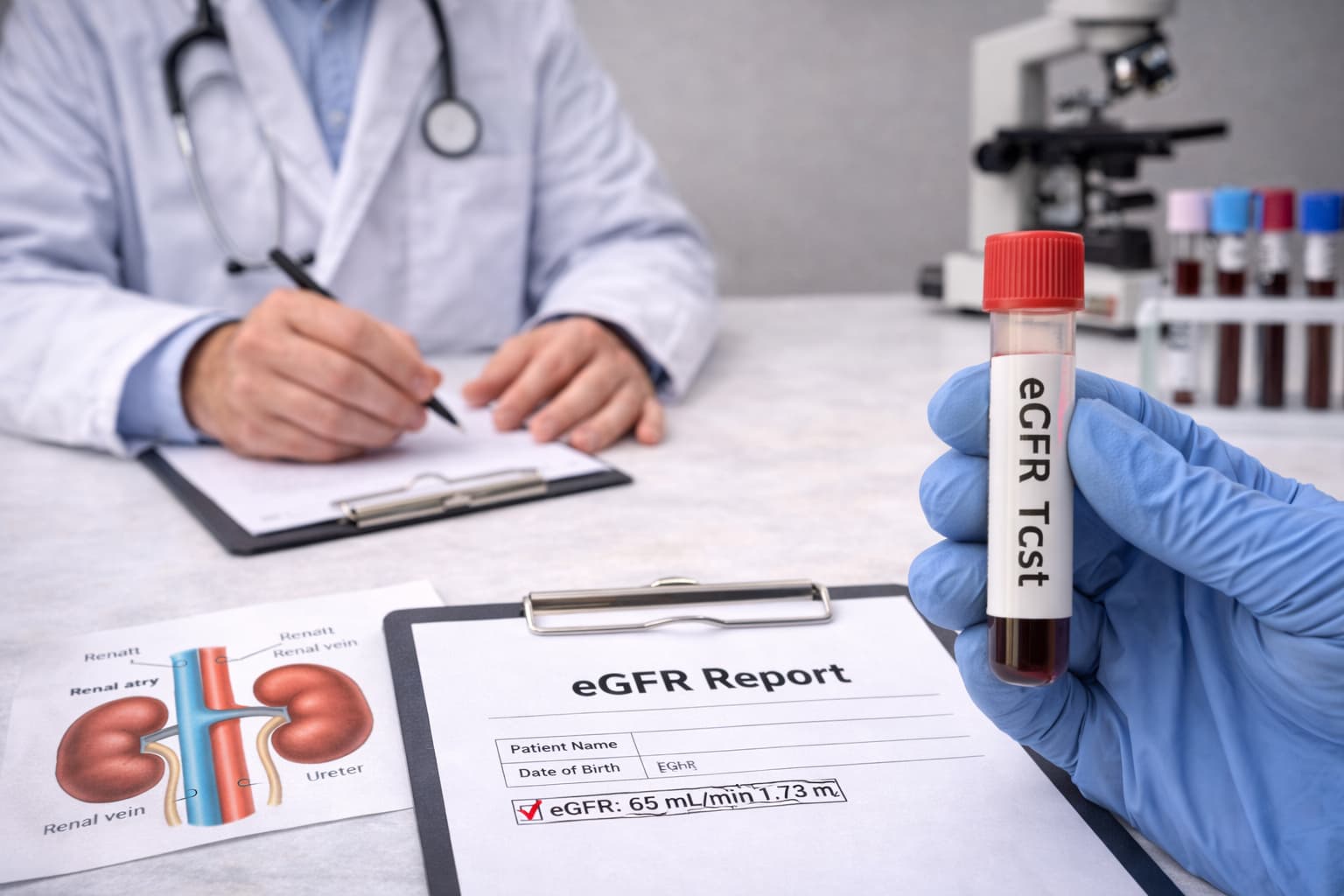
The eGFR test (Estimated Glomerular Filtration Rate) is the primary metric for assessing kidney health, surpassing serum creatinine alone in both sensitivity and clinical utility.
Chronic Kidney Disease (CKD) is notoriously silent. Symptoms rarely manifest until damage has occurred. By the time a patient feels fatigue or notices swelling, they might already face late-stage renal insufficiency. Consequently, reliance on calculated filtration rates has become standard practice in pathology labs in India and worldwide.
What is the eGFR Test?
The glomerular filtration rate describes the flow rate of filtered fluid through the kidney. Since measuring the exact filtration rate requires invasive techniques or cumbersome exogenous markers like inulin, we rely on estimation equations.
The creatinine eGFR test utilises serum creatinine as the primary biomarker, a waste product of muscle metabolism.
Creatinine levels remain fairly stable if muscle mass is constant and kidney filtration works correctly. When filtration drops, creatinine rises.
However, creatinine alone is a flawed marker. A muscular young man and a frail elderly woman might have the same serum creatinine level, yet their actual kidney function could differ wildly.
That is why, the eGFR calculation adjusts the creatinine value based on,
- Age
- Sex
- Height and Weight
- Cystatin C (in confirmatory testing)
Modern pathology software and pathology lab equipment now automate the calculation, utilising the CKD-EPI (Chronic Kidney Disease Epidemiology Collaboration) equation, which enables better accuracy than the older MDRD study equation.
Procedure and Pre-Analytics
The eGFR test procedure is a blood collection method. While the calculation happens post-hoc, the pre-analytical phase determines the validity of the input data.
Patients might be asked to fast or avoid cooked meat prior to the draw, as heavy meat consumption can temporarily elevate serum creatinine. Hydration status also plays a role. Dehydration mimics renal impairment where none exists.
Labs must clearly communicate these prerequisites. A comprehensive eGFR test report should note if the sample was fasting or random.
The Role of Cystatin C
In cases where creatinine is unreliable measuring Cystatin C has an alternative, e.g., in bodybuilders, amputees, or patients with severe malnutrition. This protein is produced by all nucleated cells and is less influenced by muscle mass. Using Cystatin C alongside creatinine improves precision.
Interpreting eGFR Test Results
The eGFR blood test results categorise renal function into specific stages.
The eGFR test normal range generally sits above 90 mL/min/1.73m². However, "normal" is relative to age. A healthy 20-year-old might have an eGFR of 116, while a healthy 70-year-old might sit closer to 75.
The natural decline does not necessarily indicate disease but rather the physiological ageing of the renal organs.
CKD Staging Guide
| Stage | eGFR (mL/min/1.73m²) | Notes |
|---|---|---|
| Stage 1 | ≥ 90 | Normal or high function (if other signs of damage are present) |
| Stage 2 | 60 – 89 | Mildly decreased function; observation required |
| Stage 3a | 45 – 59 | Mild to moderate loss of function |
| Stage 3b | 30 – 44 | Moderate to severe loss of function |
| Stage 4 | 15 – 29 | Severe loss of function; preparation for dialysis |
| Stage 5 | < 15 | Kidney failure (End-Stage Renal Disease) |
A single abnormal result does not confirm CKD. The definition requires a persistent eGFR <60 for at least three months.
Limitations
Pathologists know that no assay is perfect. The renal function test eGFR has blind spots.
- Pregnancy: The hemodynamic changes during gestation alter filtration rates, making standard equations unreliable.
- Extremes in Body Size: The formula assumes a standard body surface area (1.73m²). Very obese or very muscular individuals may receive inaccurate estimates.
- Acute Illness: In Acute Kidney Injury (AKI), creatinine levels lag behind actual changes in GFR. An eGFR calculation during an acute crisis might overestimate function.
- Medications: Certain drugs, such as trimethoprim or cimetidine, interfere with tubular secretion of creatinine, raising serum levels without actually affecting filtration.
Historically, race was a variable in these equations. Medical consensus has shifted. The inclusion of race in algorithms is no longer recommended, as it lacks a biological basis and can delay diagnosis in specific populations. Ensure your Laboratory Information System (LIS) uses the updated, race-neutral 2021 CKD-EPI creatinine equation.
Integrating Tech into Pathology
Managing the flow of data from the eGFR test procedure to the final dispatch requires robust digital tools. Manual calculations are prone to error. Manual reporting is slow.
This is where your choice of Laboratory Information System (LIS) impacts your bottom line.
Streamline Your Renal Reporting with Flabs
Modern labs require modern solutions. Flabs Pathology Software transforms how you handle high-volume testing like renal profiles.
- Automated Calculations: Flabs eliminates manual math. The system auto-calculates eGFR based on patient demographics entered at registration, ensuring adherence to the latest formulas.
- Smart Reports: Generate QR-coded reports that patients and doctors can access instantly. No more printing delays.
- WhatsApp Integration: Send the eGFR test results directly to the patient’s phone. It cuts down on inquiry calls and improves the patient experience.
- Scalability: As you expand your footprint, Flabs scales with you. It is a cloud-based solution that unifies data across multiple locations.
Your data remains secure with industry-standard encryption, and regular backups ensure you never lose patient history.
Clinical Relevance
Why is the assessment of eGFR test values requested so frequently? It acts as a sentinel for systemic health.
- Cardiovascular Risk: The heart and kidneys are hemodynamically linked. A decline in eGFR is an independent risk factor for cardiovascular events.
- Diabetes Management: Diabetic nephropathy is the leading cause of renal failure. Regular monitoring allows for early intervention with SGLT2 inhibitors or ACE inhibitors.
- Medication Safety: Many drugs are cleared by the kidneys. Pharmacists and doctors rely on accurate eGFR to dose antibiotics, anticoagulants, and chemotherapy agents effectively.
Final Thoughts
The transition from simple creatinine monitoring to eGFR reporting represented a massive leap forward in nephrology. For the lab professional, the responsibility is twofold: ensuring the analytical accuracy of the creatinine measurement and ensuring the computational accuracy of the reported rate.
By maintaining high standards in lab equipment maintenance and utilising advanced LIS software like Flabs, labs contribute directly to better patient outcomes. You allow the doctor to see the silent decline well ahead.
Diagnosing CKD early changes lives. It allows for lifestyle modifications that can halt progression. Your lab report is the first step in that journey.
Upgrade Your Lab Digital Operations
Upgrading your LIS is about staying ahead. An affordable and user-friendly interface means your technicians spend less time wrestling with software and more time on quality assurance.
Ready to modernise your lab operations?
Start Your 5-Day Free Trial of Flabs LIS Now!
Transform your workflow with AI-powered efficiency.
Also read - Complete Guide to Semen Analysis Test for Male Fertility
Get Started at ₹1!
Try Flabs for a full month for just ₹1.
Follow us on