The Central Government Health Scheme (CGHS) provides medical care to millions of government employees and pensioners across India. The scheme covers consultations, medicines, hospitalisation, and medical testing through approved facilities.
For pathologists and healthcare professionals, familiarity with the CGHS process matters. Many patients arrive with CGHS cards, referral slips, or reimbursement queries. A clear view of the system ensures smoother operations inside labs and diagnostic centres.
The scheme also connects beneficiaries with empanelled diagnostic facilities, including NABL labs and accredited centres. However, many patients tend to be unsure about referral requirements, booking procedures, reimbursement rules, and diagnostic approvals.
The following content explains how to avail diagnostic services under CGHS, from eligibility to testing, documentation, and reimbursement. Healthcare professionals can use it to guide patients through the process.
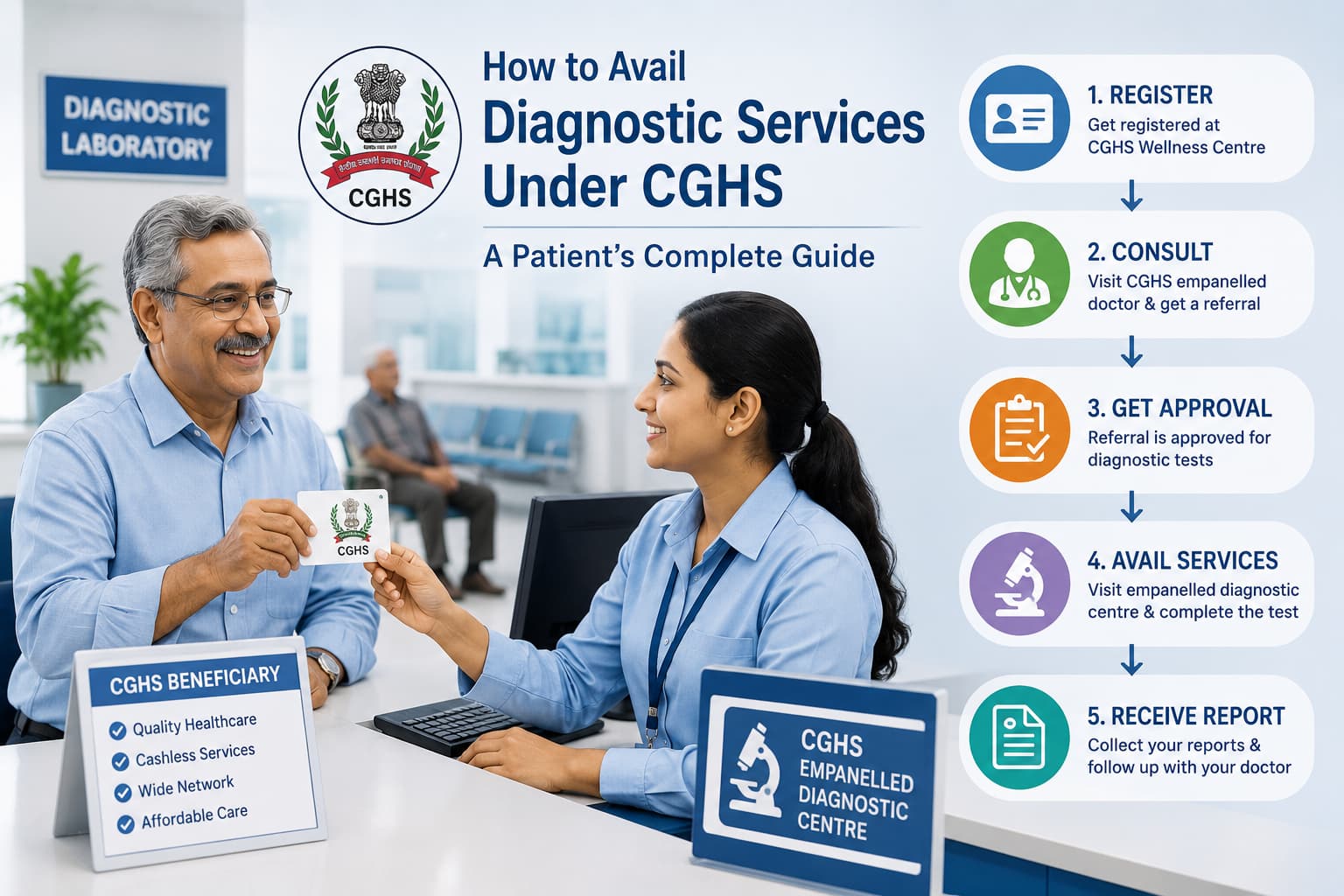
How to Avail Diagnostic Services Under CGHS
Healthcare professionals frequently encounter questions from beneficiaries about how to avail diagnostic services under CGHS.
Below is the step-by-step process followed by CGHS beneficiaries.
1. Confirm CGHS Eligibility and Registration
Before learning how to avail diagnostic services under CGHS, confirm that the patient is registered under the scheme.
The CGHS full form is “Central Government Health Scheme”. It is launched by the Government of India to deliver subsidised healthcare to:
- Central government employees.
- Pensioners.
- Freedom fighters.
- Members of Parliament.
- Certain autonomous body employees.
Many beneficiaries also ask about CGHS rules for pensioners. Pensioners receive diagnostic services similar to those of active employees when treatment occurs through authorised facilities.
Each beneficiary receives a CGHS card, which functions as identification during consultations, tests, and hospital admissions.
2. Obtain a referral from a CGHS Doctor
The next stage in how to avail diagnostic services under CGHS involves consultation with a CGHS wellness centre doctor.
The doctor evaluates the patient and writes a referral for the required tests. The referral mentions:
- Type of diagnostic test
- Recommended diagnostic centre (if applicable)
- Medical justification
Without a referral, most CGHS diagnostic services are not approved for cashless testing.
Pathology laboratories interacting with CGHS beneficiaries should verify the referral slip before processing samples.
3. Select an Empanelled Diagnostic Laboratory
The referral directs patients to approved diagnostic facilities. These centres are empanelled under the CGHS empanelment for medical labs.
Such centres follow government-approved pricing and reporting standards.
| Facility Type | Role in CGHS System |
|---|---|
| CGHS Wellness Centre Labs | Basic tests |
| Empanelled Private Diagnostic Centres | Advanced tests and imaging |
| Non-empanelled Labs | Used only under special conditions |
Healthcare professionals should direct patients to CGHS-approved diagnostic centres within the approved network.
4. Book Tests Through CGHS Online
Digital services simplify access to testing.
Patients searching for how to access diagnostic services under CGHS increasingly use digital portals for appointments.
Through the CGHS health services online, beneficiaries can:
- Schedule consultations.
- Access the CGHS online booking for diagnostics.
- Check the empanelled laboratories.
- Track referrals and approvals.
5. Visit the Diagnostic Centre with Required Documents
Patients should carry proper documents during testing.
Anyone researching how to avail diagnostic services under CGHS should bring the following.
- CGHS card.
- Referral slip issued by a CGHS doctor.
- Government ID.
- Previous medical records (if required).
Diagnostic centres verify documentation before performing tests under the CGHS panel.
Proper documentation also protects laboratories from claim rejection during billing.
6. Testing and Reporting Process
After documentation verification, the diagnostic centre performs the investigation.
Pathology laboratories conducting diagnostic services under CGHS follow defined reporting.
- Accurate patient identification
- Standardised test protocols
- Timely report delivery
- Digital record maintenance
7. Reimbursement for Non-Empanelled Testing
Patients sometimes undergo tests outside the CGHS network due to location limitations or urgent medical situations.
In such cases, CGHS reimbursement rules apply.
A reimbursement claim requires submission of:
- Original diagnostic bills
- Test reports
- Doctor prescription
- CGHS card copy
The reimbursement amount follows government-approved diagnostic rates.
Healthcare facilities should inform patients that reimbursement approval depends on compliance with CGHS guidelines.
8. Emergency Situations and Diagnostic Tests
Emergency care follows a separate protocol under CGHS.
During emergencies, patients may undergo diagnostic testing at nearby hospitals or laboratories. The hospital must issue an emergency certificate from the CGHS, confirming the urgent nature of treatment.
After discharge, the patient submits documents for reimbursement.
Emergency claims are valid under CGHS rules for treatment in private hospitals as well, if the situation qualifies.
Preventive Health Checkups Under CGHS
Preventive care also exists within the CGHS guidelines.
Beneficiaries searching for how to avail a CGHS health checkup should first consult their CGHS doctor. Preventive health checkups depend on eligibility criteria.
- Age group
- Medical history
- CGHS policy provisions
The doctor may recommend a health screening package through an empanelled diagnostic centre.
Common Challenges for CGHS Beneficiaries
Patients sometimes experience confusion when learning how to avail of diagnostic services under CGHS.
Healthcare professionals frequently report issues such as:
- Missing referral documentation.
- Lack of awareness about empanelled centres.
- Reimbursement delays.
- Limited access in smaller cities.
- Confusion around CGHS rules for pensioners.
Pathology centres that educate patients about the process experience smoother operations and reduced administrative disputes.
How Pathology Labs Can Improve CGHS Patient Experience
Laboratories interacting with CGHS beneficiaries can improve service delivery through structured operational practices.
- Maintain updated lists of CGHS-approved tests.
- Train front-desk teams on CGHS documentation checks.
- Integrate laboratory information systems for billing accuracy.
- Display empanelment details clearly in reception areas.
- Maintain coordination with CGHS wellness centres.
As CGHS's digital infrastructure expands, integration with CGHS's health services online platforms will become increasingly relevant.
Final Thoughts
India’s public healthcare ecosystem relies heavily on structured schemes such as CGHS. Diagnostic testing forms a major component of patient care within the program.
For pathologists, lab administrators, and healthcare professionals, familiarity with accessing diagnostic services under CGHS simplifies patient interactions and ensures compliance with government frameworks.
As digital healthcare expands and laboratory networks grow across India, seamless integration between CGHS systems and diagnostic providers will shape the future of pathology labs in India.
Clear communication, proper documentation, and adherence to CGHS policies are the foundation for efficient diagnostic service delivery.
Related - How CGHS Empanelment Improves Access to Affordable Healthcare
Get Started at ₹1!
Try Flabs for a full month for just ₹1.
Follow us on