For pathologists and healthcare professionals, the Flabs laboratory ecosystem continues to accelerate diagnostic precision. One area where accuracy and turnaround time directly influence clinical decisions is the serum beta hCG test. It is a quantitative marker in pregnancy confirmation, viability assessment and oncologic evaluation.
This diagnostic parameter is indispensable in routine pathology, IVF operations and emergency settings where rapid interpretation guides timely interventions.
Understanding the Serum Beta hCG Test
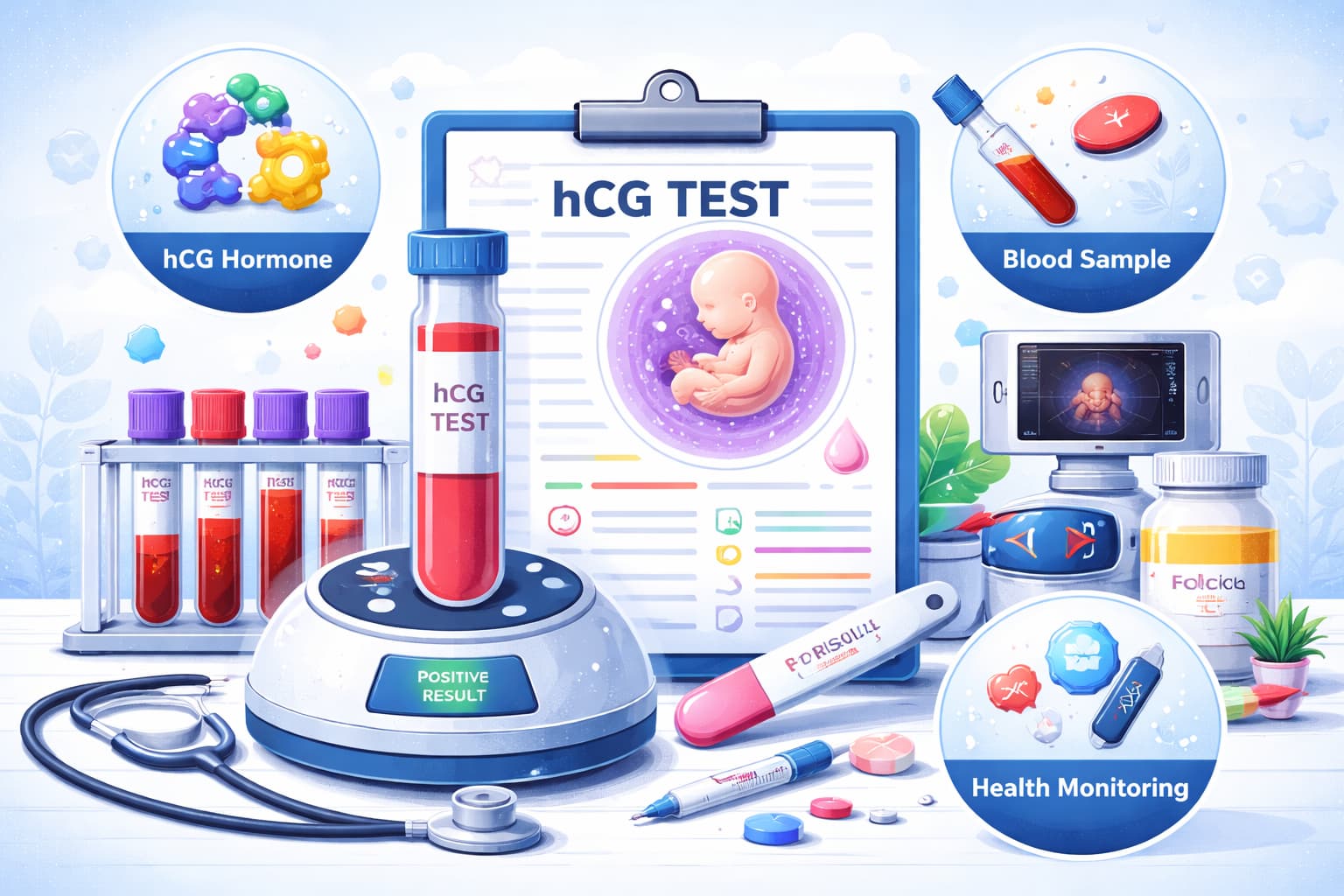
The serum beta hCG test measures the beta subunit of human chorionic gonadotropin. It is a hormone secreted by placental trophoblast cells shortly after embryo implantation.
Its predictable biochemical behaviour, early rise in maternal circulation and measurable quantitative shifts across gestational weeks make it a robust clinical marker.
The hormone sustains early gestation by maintaining progesterone production through corpus luteum signalling. Quantitative serum assays provide reproducible values far superior to urine-based methods. It enables precise monitoring across serial time points.
Biological Basis and Clinical Rationale
The beta subunit is reliably detectable in serum soon after implantation, when concentrations climb rapidly. They double roughly every 48-72 hours during the initial weeks.
This kinetic profile underpins clinical interpretation. Quantitative measurement empowers clinicians to assess pregnancy, identify abnormalities, track fertility treatment and evaluate malignancies producing hCG.
Test Modalities and Their Clinical Roles
Qualitative Beta hCG
- Provides a binary positive/negative outcome.
- Suited for quick confirmation but lacks value in viability or progression assessment.
Quantitative Beta hCG (beta hCG quantitative serum test)
- Provides exact concentration values.
- Essential for trend analysis, gestational dating, IVF monitoring and detection of pathological conditions.
Diagnostic Applications Across Specialties
Pregnancy-Related Care
- Confirmation of early pregnancy even before missed menses.
- Gestational dating, based on correlation with expected reference ranges.
- Monitoring IVF implantation, where the hCG beta total pregnancy serum test enables early detection of successful embryo attachment.
- Assessing miscarriage risk through serial values.
- Detection of ectopic and molar pregnancies, when values diverge from expected doubling patterns.
Oncology and Other Use Cases
- Serves as a tumour marker in germ cell tumours and trophoblastic malignancies.
- Assesses persistent hCG secretion after pregnancy loss or treatment.
- Investigates unexplained elevations from pituitary or malignant sources.
Reference Ranges and Expected Patterns
Non-pregnant individuals measure ≤5 mIU/mL, with slightly elevated values in postmenopausal patients. During pregnancy, concentrations rise exponentially until peaking near week 10.
| Gestational Week | Expected Range (mIU/mL) |
|---|---|
| 3–4 | 5 – 426 |
| 4–5 | 19 – 7,340 |
| 5–6 | 1,080 – 56,500 |
| 6–7 | 7,650 – 229,000 |
| 7–8 | 76,000 – 565,000 |
| 9–12 | 25,700 – 288,000 |
| 13–16 | 13,300 – 254,000 |
| 17–24 | 4,060 – 165,400 |
| 25–40 | 3,640 – 117,000 |
Principles of Interpretation for Pathologists
Serial testing is indispensable. A single measurement cannot determine viability. Clinical interpretation hinges on correlation with symptoms and ultrasound imaging.
Patterns Suggestive of Specific Conditions
- Healthy intrauterine pregnancy: Values rise in alignment with expected doubling rates.
- Ectopic pregnancy: Slow rises, plateaus or minimal changes.
- Blighted ovum or early loss: Declining or erratic values.
- Multiple gestation: Higher-than-expected values.
- Molar pregnancy: Very high concentrations with disproportionate rise.
- Hook effect: Falsely low results in extremely high levels; dilution resolves this.
The serum beta hCG test positive result should always be contextualised with chronology, symptoms and assay characteristics.
Procedure and Preparation
The serum beta hCG test procedure involves a straightforward venous blood draw. Quantitative assays provide reliable early detection far earlier than urine tests.
- No fasting required; queries about serum beta hCG test on empty stomach or fasting for serum beta hCG test can be answered with: not necessary.
- Medication disclosure is essential. Fertility treatments containing hCG skew interpretation.
- For IVF, appropriate serum beta hCG test time is 9–14 days post-transfer.
Factors Influencing Results
- Early testing before implantation.
- Multiple gestations causing elevated values.
- Tumour-derived hCG production.
- Persistent hCG from a recent pregnancy.
- Pituitary secretion in perimenopausal women.
- Laboratory assay characteristics.
- High-dose hook effect requiring dilution.
Special Considerations in IVF and Oncology
IVF Monitoring
The hCG beta specific serum test is essential for monitoring implantation. Serial evaluations guide early counselling and treatment. Deviations from expected rise may indicate non-viable implantation or early loss.
Cancer Surveillance
In germ cell and trophoblastic cancers, hCG trends serve as a disease activity marker. Persistent or rising levels in non-pregnant patients warrant comprehensive oncologic investigation.
Follow-Up Strategy for Abnormal Results
What if quantitative results fall outside expected patterns?
- Repeat testing at 48-hour intervals.
- Integrate transvaginal ultrasound findings.
- Initiate further evaluation for ectopic risk, trophoblastic disease or malignancy.
- After miscarriage or treatment, track values until baseline.
Improving Diagnostic Flow Using AI-Powered Laboratory Infrastructure
Pathology operations surrounding the serum beta hCG test report demand speed, accuracy and traceability. The ecosystem provided by Flabs incorporates AI-driven modules that strengthen report quality and turnaround reliability.
- AI Interpretation: Automatically generates structured clinical insights based on quantitative values and reference intervals.
- AI Test Suggestion: Recommends follow-up investigations when abnormal hCG patterns appear.
- AI Flagger: Highlights critical shifts in serial Beta hCG values.
- AI Smart Report: Produces consistent, standardised outputs for all hormone assays.
Operational Enablers for Pathology Labs
- TAT Management: Real-time tracking ensures reports remain within TAT with accurate display of delays.
- Lab Finance Management: Automated invoicing and precise record handling.
- Multiple Referral Management: Streamlined commission management across clinicians and centers.
- Bulk Actions: Bulk Registration, Approval, Report Sharing and Invoicing to accelerate high-volume operations.
- Quality Control (QC): Automated checks maintain reporting integrity for hormone assays.
- AI Voice Reporting: Converts dictated findings into structured text.
- Customised Patient & Test Details: Flexible formatting for serum hormone panels.
- Dynamic QR Codes & Barcodes: Ensures traceability and secure access to reports.
- Interpretation Customisation: Aligns reporting language with lab-specific standards.
- Digital Signatures: Multi-doctor endorsements organised by department.
This infrastructure ensures every serum beta hCG test level is accurately processed, interpreted and delivered with reliability.
Practical Pointers for Healthcare Professionals
When to Order the Test
- Suspected early pregnancy.
- Pelvic pain or bleeding.
- IVF protocol monitoring.
- Suspected trophoblastic disease.
- Evaluation of germ cell tumours.
- Investigating unexplained hCG elevation.
What to Communicate to Patients
- No fasting needed.
- Medication history disclosure.
- Possible need for repeat testing.
- Importance of correlation with ultrasound.
Also check - HCG Levels in Ectopic Pregnancy
Summary
The serum beta hCG test is an important test of reproductive and oncologic diagnostics. It has measurable kinetics, high sensitivity and utility across complex clinical contexts.
Quantitative interpretation, especially when paired with AI-enhanced laboratory systems, elevates diagnostic reliability and operational efficiency.
From pregnancy confirmation to malignancy assessment, the test's value lies ultimately in accurate measurement, consistent trend analysis and effortless lab-clinical communication.
Also check -Neutrophils Blood Test: Purpose and Normal Values
Get Started at ₹1!
Try Flabs for a full month for just ₹1.
Follow us on