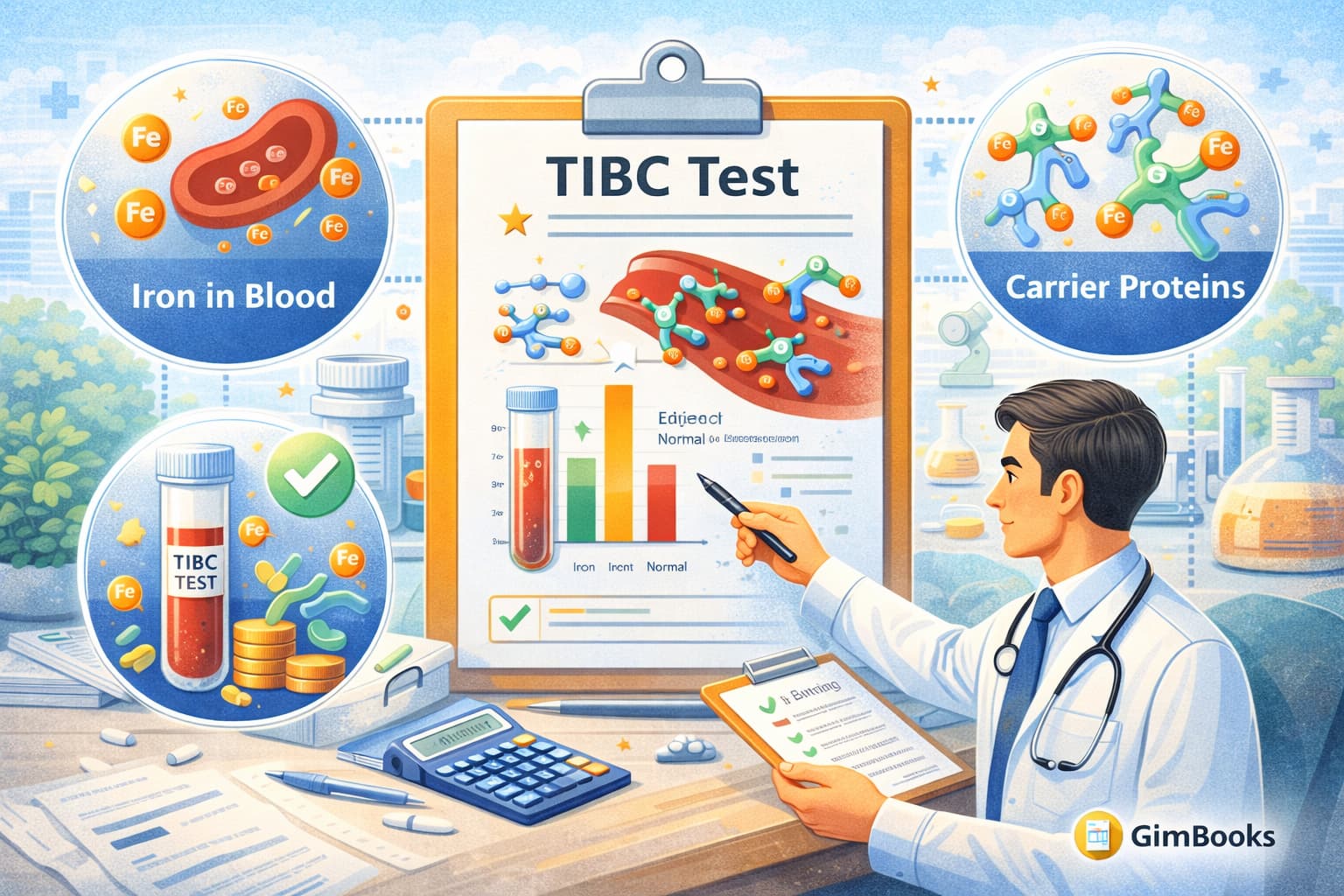
Iron transport is central to red cell production, tissue oxygenation, and metabolic stability. When iron status fluctuates, transferrin adjusts its binding capacity. Transferrin is the main iron-binding protein in the blood. Measuring this capacity provides critical clinical insight.
The TIBC test quantifies how much iron transferrin can bind in circulation. It reveals a structured view of disturbances in iron metabolism, including deficiency, overload, and inflammatory shifts.
What the TIBC Test Measures
A TIBC test evaluates the blood’s capacity to bind iron to transferrin. Since transferrin availability rises or falls according to iron stores and systemic conditions, the measurement reveals patterns not visible through serum iron alone.
The assessment becomes even more informative when interpreted with ferritin, serum iron, and transferrin saturation.
Core Parameters Assessed
- Transferrin iron-binding capacity.
- Relationship between circulating iron and transport proteins.
- Iron availability in relation to marrow demands.
- Iron-binding changes influenced by systemic disease.
Integrated Interpretation
The iron and TIBC blood test panel provides a more complete status when results are reviewed collectively.
- Serum iron reflects circulating iron at the moment of sampling.
- TIBC reflects binding capacity.
- Transferrin saturation indicates the percentage of iron-occupied binding sites.
TIBC Test Full Form and Clinical Relevance
The TIBC test full form is Total Iron-Binding Capacity. In clinical practice, it quantifies iron-binding sites available on transferrin. For pathologists, the parameter anchors differential diagnosis. It identifies whether iron deficiency, chronic inflammation, or iron overload is present.
Since iron is required for haemoglobin synthesis, effective erythropoiesis, muscle stability, bone marrow function, and organ performance, identifying abnormal transport dynamics is essential.
Normal Reference Values
| Parameter | Males | Females |
|---|---|---|
| Serum Iron | 50–150 mcg/dL | 35–145 mcg/dL |
| TIBC | 171–505 mcg/dL | 149–492 mcg/dL |
| Iron Saturation | 20–50% | 15–45% |
General TIBC test range for adults: 240-450 mcg/dL.
Values outside this interval require correlation with CBC, ferritin, inflammatory markers, and clinical history.
TIBC Blood Test Interpretation
The clinical significance of the TIBC blood test lies in its ability to provide a directional clue. Whether binding capacity is elevated, reduced, or balanced.
High TIBC
A TIBC blood test with a high result strongly aligns with states where transferrin increases to compensate for insufficient iron.
- Iron-deficiency anaemia.
- Maternal physiological changes in late pregnancy.
Low TIBC
Reduced capacity indicates limited transferrin availability or saturation due to iron excess or systemic conditions.
- Hemochromatosis and other overload states.
- Chronic inflammatory disorders.
- Liver compromise (e.g., cirrhosis).
- Malnutrition or hypoproteinemia.
- Hemolytic, pernicious, or sickle cell anaemia.
Normal TIBC
A normal value suggests stable iron transport and balanced stores. It provides ferritin and transferrin saturation also fall within expected limits.
When the Test Is Recommended
- Fatigue, weakness, pallor, or suggestive anemia symptoms.
- Abnormal iron indices identified during routine testing.
- Chronic disease monitoring where inflammation influences iron handling.
- Suspected iron overload disorders.
- Adjusting iron therapy or evaluating supplementation needs.
The test’s value lies not in isolation but in longitudinal assessment and pattern recognition.
Preparation
- Fast for 8-12 hours before specimen collection.
- Disclose supplements, iron intake, or medications that may influence readings.
- Be aware that ACTH, hormonal contraception, and fluorides may alter values.
- Morning sample collection stabilizes variability.
- Medication adjustment should follow provider instructions only.
Sample Collection
A blood collection procedure for this test is straightforward.
- Venous draw from the antecubital region.
- Laboratory analysis includes TIBC, serum iron, and transferrin saturation.
- Results turn-around occurs within 24–48 hours depending on lab workflow.
For laboratories using automation, digital tracking, or integrated LIS systems, such analysis becomes even faster and more consistent.
Factors Affecting the Results
- Recent iron-rich food intake.
- Iron supplementation.
- Hormonal contraceptives.
- Infection or systemic inflammation.
- Kidney function impairment.
- Liver dysfunction.
Managing Abnormal Test Results
A structured clinical plan depends on whether TIBC is elevated or reduced.
Elevated TIBC (Iron Deficiency)
Management focuses on restoring iron availability.
- Oral or parenteral iron supplementation.
- Nutritional adjustments emphasizing red meat, legumes, fortified cereals, and leafy greens.
Reduced TIBC
- Managing liver disease or inflammatory conditions.
- Iron reduction therapy in overload (phlebotomy or chelation).
- Nutritional support in protein deficiency.
Risks with the Procedure
- Local discomfort
- Bruising or transient throbbing
- Rare outcomes include hematoma, fainting, infection, or repeated puncture sites
Overall procedural safety is high. There are no downstream complications directly attributable to the TIBC lab test procedure itself.
Benefits of the TIBC Test
- Detects iron imbalance early.
- Strengthens differential diagnosis of anaemia.
- Supports personalised therapy decisions.
- A stable parameter for trend analysis.
- Clarity in inflammation-driven anemia versus true deficiency.
These advantages make the test indispensable across primary care, hematology, gastroenterology, and obstetric practice.
TIBC Test for Inflammation
Inflammation drives iron sequestration, reducing circulating iron and limiting transferrin production.
As a result, the TIBC test for inflammation reveals low binding capacity, which is a hallmark of anemia of chronic disease. This profile helps differentiate true deficiency from inflammatory redistribution.
Strengthening Laboratory Efficiency with Flabs LIS
Laboratories performing high volumes of iron studies benefit from precise workflow automation. Flabs provides an AI-powered LIS ecosystem designed to optimise every stage of diagnostic processing.
Core Capabilities
- AI Interpretation, AI Test Suggestion, and AI Flagger for instant decision support.
- AI Smart Report and AI Voice Reporting for accurate, polished reporting with voice-to-text structuring.
- Real-time TAT Management with live tracking of every sample.
- Fully automated finance and referral management.
- Bulk operations (registration, report download, approval, and sharing across WhatsApp/SMS/email).
- Quality Control (QC) automation ensuring every TIBC, ferritin, or CBC report meets regulatory standards.
- Customizable patient details, interpretive fields, doctor signatures, barcodes, and dynamic QR codes.
- End-to-end security with tamper-proof digital report access.
For pathologists, this structure ensures smooth coordination, accurate traceability, and consistent compliance. They're major factors when managing high-throughput anemia profiles that rely on repeat measurements, including the TIBC test.
Final Takeaway
The TIBC test is central to iron metabolism assessment. It provides reliable clarity when integrated with serum iron, ferritin, and transferrin saturation. Its diagnostic value, low procedural risk, and predictive significance make it indispensable for clinicians evaluating anemia, monitoring chronic disease, or screening for iron overload.
With AI-driven laboratory systems like Flabs LIS, pathologists gain even sharper control over TIBC reporting, quality assurance, and turnaround optimization. It strengthens accuracy and operational efficiency across pathology labs.
Also check - Serum Beta hCG Test: Pregnancy & Health Insights
Get Started at ₹1!
Try Flabs for a full month for just ₹1.
Follow us on