An autopsy is a systematic medical examination of a deceased body conducted to determine the cause of death, evaluate disease processes, and document pathological findings. The procedure combines external inspection with internal dissection and ancillary investigations such as histopathology and toxicology.
Within pathology practice, autopsy work supports diagnostic accuracy, medical audit, teaching, and medicolegal documentation. For pathologists and healthcare professionals, familiarity with the types of autopsy, associated techniques, and reporting standards supports professional accountability and scientific rigour.
The sections below outline the major classifications, technical approaches, and operational considerations relevant to modern pathology services.
Classification of the Types of Autopsy
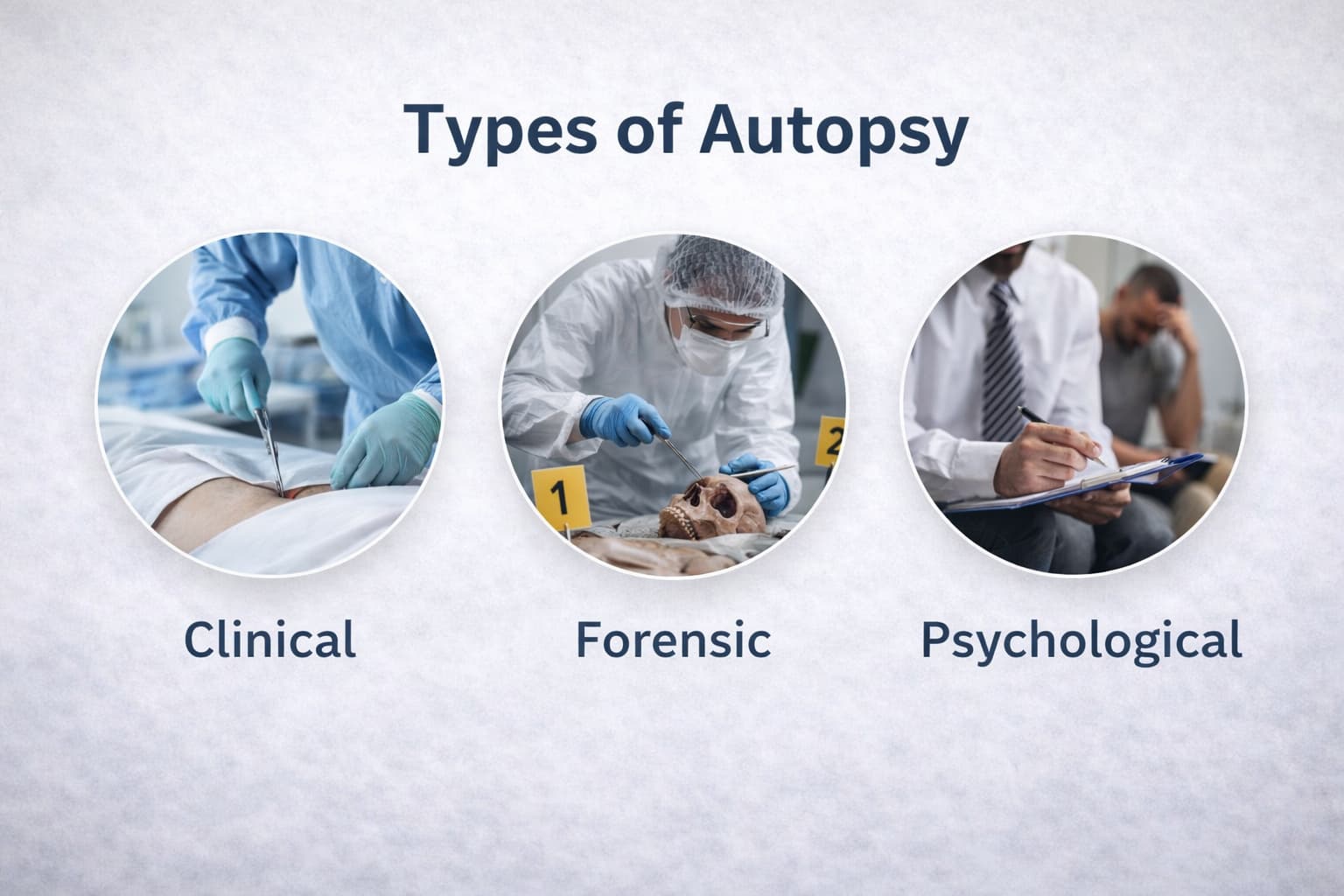
In professional practice, autopsies are classified by purpose, authority, and scope of examination. The three most-discussed categories are clinical autopsy, forensic autopsy, and psychological autopsy.
| Type | Authorising Authority | Primary Purpose | Practice Setting |
|---|---|---|---|
| Clinical Autopsy | Next of kin or legal representative | Correlation of clinical findings with pathological changes, disease evaluation, and academic review | Teaching hospitals, tertiary care centres, and pathology departments |
| Forensic Autopsy | Judicial or law enforcement authority | Determination of cause and manner of death for legal investigation | Government hospitals, forensic medicine units, and medicolegal facilities |
| Psychological Autopsy | Legal, insurance, or investigative bodies | Reconstruction of mental state and behavioural context preceding death | Forensic psychiatry units, legal investigations, and research settings |
Clinical Autopsy
Clinical autopsy is also described as a hospital or pathological autopsy. It is performed with consent from the next of kin. The primary aim is to correlate clinical diagnoses with pathological findings. Among the types of autopsy in pathology, the clinical variant serves quality assurance, medical education, and research.
Pathologists examine organ systems selectively or comprehensively, depending on the clinical question. The autopsy table is prepared to allow ergonomic access, controlled fluid drainage, and specimen integrity. Tissue samples proceed to histopathology laboratories for microscopic evaluation.
From an operational perspective, turnaround time for clinical autopsy reports ranges from preliminary findings within 24 to 72 hours to final reports after histology and special stains.
Forensic Autopsy
Forensic autopsy falls under the authority of law enforcement or judicial systems. Among the types of autopsy in forensic medicine, the scope extends beyond disease correlation into the determination of the manner and cause of death for legal purposes.
External examination documents injuries, traces evidence, and identifies features. Internal dissection follows structured protocols. Which among the types of incision is required plays a significant role here.
Forensic autopsies generate detailed types of autopsy reports designed for medicolegal scrutiny. Chain of custody documentation, photographic records, and toxicology data form integral components.
Psychological Autopsy
Psychological autopsy represents a specialised evaluative process rather than a physical dissection.
The method reconstructs the mental state of a deceased individual through structured interviews, medical records, and circumstantial analysis. Psychological autopsy finds application in equivocal deaths, suspected suicides, and insurance investigations.
The process aligns with forensic frameworks, with no incision or autopsy table involved. Documentation standards mirror medicolegal expectations.
Types of Autopsy Techniques
There are several types of autopsy techniques used across the three categories. The type of technique influences yield, efficiency, and documentation quality.
Complete Autopsy: A complete examination includes external inspection, evaluation of the cranial cavity, thoracic and abdominal organ dissection, and ancillary testing. The approach aligns with academic and teaching hospitals where comprehensive pathology review remains a priority.
Limited or Partial Autopsy: In selected cases, consent or investigative focus restricts examination to specific organs or systems. Such types of autopsy examinations require precise documentation.
Minimally Invasive and Virtual Techniques: Advances in imaging introduced post-mortem CT and MRI as adjuncts. These methods complement classical techniques, e.g., in pediatric and culturally sensitive contexts.
Types of Autopsy Cuts and Incisions
The types of autopsy cuts determine exposure, cosmetic outcome, and procedural efficiency.
| Incision Type | Description | Primary Use Case |
|---|---|---|
| I-shaped incision | Vertical cut from chin to pubis | Rapid access, limited exposure |
| Y-shaped incision | Bilateral cuts from the shoulders meeting at the sternum | Standard forensic and clinical work |
| Modified Y incision | Extended behind the ears and down the chest | Detailed neck and facial examination |
Depending on the institutional protocols, examiner preference, and investigative requirements, a technique is selected. In forensic settings, the type of incision supports courtroom presentation and photographic documentation.
Regulatory Context
The types of autopsy in India are governed by the Code of Criminal Procedure and state regulations. Medico-legal autopsies dominate public hospital workloads, conducted without family consent under legal mandate. Clinical autopsies require informed consent and appear less frequently due to cultural and logistical factors.
Pathology labs in India handling autopsy specimens balance resource constraints with reporting standards.
Digital workflows increasingly support documentation, archiving, and interdepartmental communication.
Documentation, Reporting, and Turnaround Time
Across all different types of autopsy, the quality of reporting reflects professional diligence. Types of autopsy reports share common elements: identification data, clinical history, external findings, internal findings, ancillary investigations, and final opinion.
Turnaround time is yet another important metric.
Preliminary findings support immediate clinical or legal needs, while final reports incorporate histology and toxicology. Any delays lead to interpretive and administrative challenges
Final Thoughts
Autopsy practice continues to anchor pathology as a diagnostic and academic discipline. Clinical, forensic, and psychological autopsies each serve distinct mandates while sharing foundational principles of systematic examination and precise reporting.
Mastery of types of autopsy techniques, incision strategies, and documentation standards sustains professional credibility.
For laboratories seeking operational consistency alongside scientific rigour, digital infrastructure now forms part of routine quality assurance. Pathologists and healthcare professionals must always work towards improving the efficiency of their operations.
Also check - Autopsy and Biopsy: How They Differ and When They're Used
Get Started at ₹1!
Try Flabs for a full month for just ₹1.
Follow us on