Pain that arrives like a lightning strike in a toe or ankle can leave patients searching for answers. Gout may be suspected, yet its symptoms overlap with other inflammatory disorders. Pathologists and clinicians face the challenge of pinpointing the trigger early, before recurrent flares cause irreversible joint issues.
A uric acid test brings clarity by showing how the body is handling purine metabolism and waste elimination. When interpreted within a structured pathology procedure, the test becomes a dependable tool for shaping timely decisions.
Why the Uric Acid Test Matters in Gout
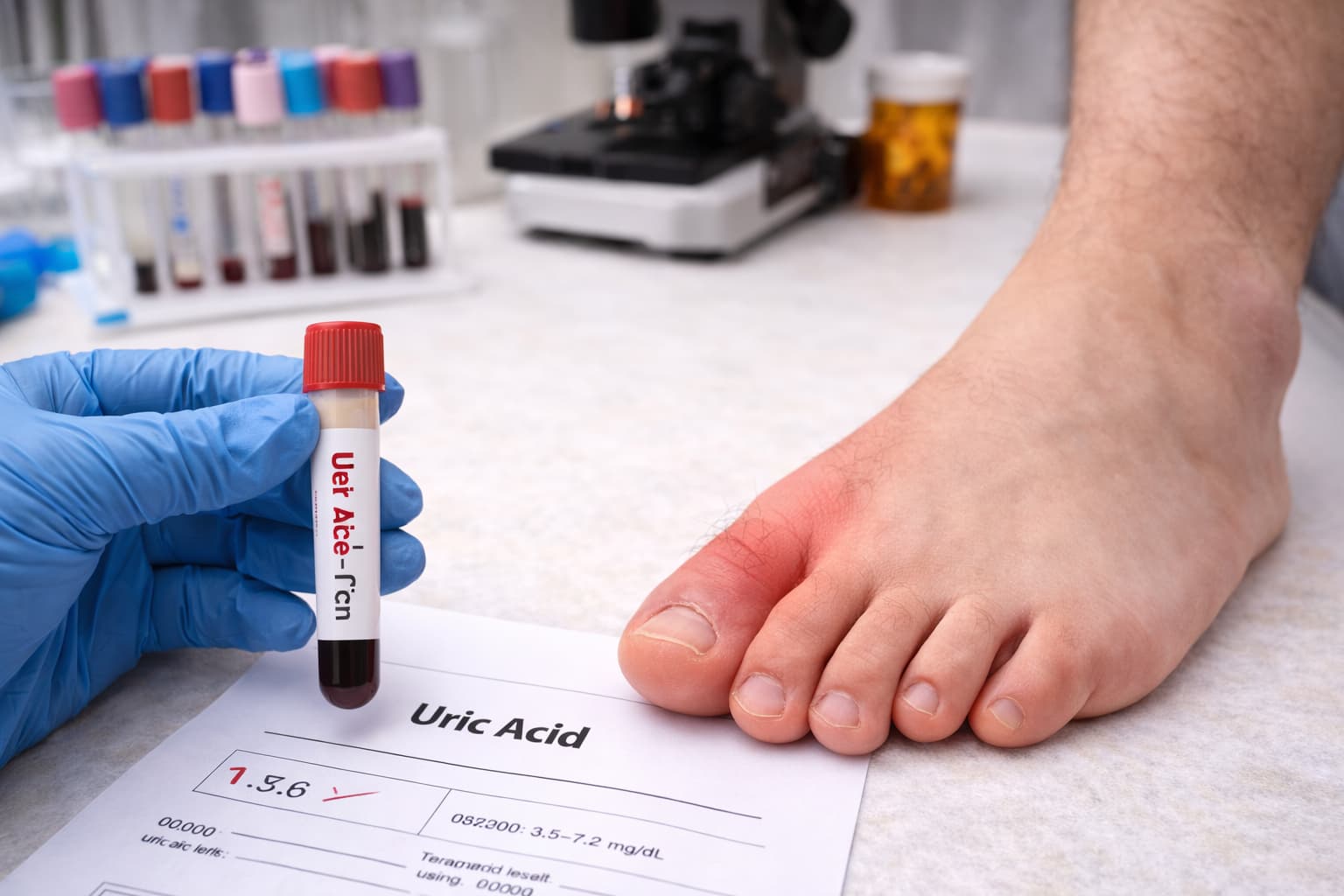
Uric acid forms when purines break down. Most of it is filtered by the kidneys. When production increases or excretion slows, serum levels rise. Excess uric acid crystallises in joints and tissues.
Those needle-like crystals ignite sudden swelling, heat, and sharp pain. Although the big toe is a common site, hands, knees, elbows, wrists, ankles, and feet can be affected.
A uric acid blood test or serum uric acid test captures how much uric acid circulates at a given moment.
Elevated concentrations (hyperuricemia) point toward gout risk, kidney strain, or metabolic disturbances. Low levels (hypouricemia) may signal liver issues, medication effects, or rare metabolic conditions.
What the Uric Acid Test Measures
A serum uric acid test evaluates how the body produces and clears uric acid. Testing can be done with:
- A standard blood draw.
- A 24-hour urine collection.
- Point-of-care devices using a uric acid test kit.
Some labs include uric acid in kidney function test panels to provide a wider view of renal excretion efficiency.
Normal Ranges for Interpretation
| Group | Uric Acid Blood Test Normal Range |
|---|---|
| Men | 3.4–7.0 mg/dL |
| Women | 2.4–6.0 mg/dL |
| Children | 2.0–5.5 mg/dL |
| 24-hour Urine | 250–750 mg/day |
Who Should Receive a Uric Acid Test?
- Individuals experiencing sudden joint pain, particularly when the flare appears abruptly and settles on its own.
- Patients with unexplained swelling or warmth around a joint, especially if redness returns in cycles.
- Those reporting repeated discomfort in the toe, foot, ankle, or similar weight-bearing joints.
- People with obesity, kidney concerns, or broader metabolic issues who require periodic assessment of uric acid trends.
- Anyone under evaluation for suspected hyperuricemia.
Preparation
Some labs request short fasting to avoid variation from recent meals, while others accept non-fasting samples. Patients might be advised to avoid high-purine foods such as red meat or seafood beforehand. Hydration supports more stable values.
Medication disclosure is also important because diuretics, aspirin, niacin, and chemotherapy agents can alter concentrations.
The Uric Acid Test Procedure
For a serum test, the blood collection procedure follows standard phlebotomy steps: identify the patient, prepare the venipuncture site, collect the sample, label immediately, and transport for processing.
Turnaround time varies, yet many labs complete results within hours.
A uric acid test procedure performed at home uses a finger-prick sampling method and a handheld meter.
Factors That Influence Uric Acid Levels
- Dietary purine load
- Hydration status
- Kidney filtration efficiency
- Endocrine conditions such as diabetes
- Alcohol intake
- Exposure to lead
- Medication profiles
When Levels Come Back High: Hyperuricemia
Values above 6 mg/dL for women or 7 mg/dL for men suggest excess uric acid. Gout remains the primary concern. Yet the differential diagnosis is broader. Kidney disease may reduce excretion.
Dehydration can temporarily increase levels. Oncology treatments can elevate uric acid due to rapid cell turnover. Lifestyle patterns, including high-purine or high-alcohol intake, add another layer.
Management approaches vary. Dietary modifications, increased water intake, weight management strategies, and uric acid–lowering drugs are used for managment of the condition. Repeat testing is also used.
When Levels Are Low: Hypouricemia
While less common, very low uric acid levels may point to liver dysfunction, genetic metabolic disorders, HIV, or nutrient deficiencies. Certain medications lower uric acid as an unintended effect.
Integrating Lab Efficiency With Flabs LIS
As uric acid testing volume expands, laboratories look for ways to optimise processes. Flabs Pathology Software introduces an AI-powered LIS platform designed to streamline routine tasks that support tests such as uric acid, renal panels, or metabolic profiles.
How Flabs Enhances the Test Efficiency
- Smooth operational flow: Patient registration, automated analysis routing, and QR-coded uric acid test reports reduce manual steps. WhatsApp integration sends notifications without additional staff workload.
- Better patient experience: Individuals log in through their phone number to view or download reports anytime. It strengthens engagement for chronic conditions like gout.
- Effortless user journey: The interface is intuitive for pathologists, technicians, and clinicians.
- Flexibility for labs of all sizes: From small centres to expanding diagnostic hubs, the platform scales easily.
- Data security: Secure backups, disaster-recovery options, and adherence to industry security standards safeguard patient information.
For labs processing large batches of serum uric acid tests or managing varied panels, consistent, accurate reporting becomes smoother with an LIS.
Pathologists evaluating multiple parameters gain structured reporting, while administrators receive operational consistency. Gout management relies on dependable data, and Flabs strengthens the environment in which that data is produced.
Test Price in India
For patients in India, the serum uric acid test price in India generally falls in a low-to-moderate bracket. Current market listings place individual serum uric acid tests roughly between ₹100 and ₹300 per sample.
Charges vary with city, lab category, and whether home sample collection is included. Prices also shift when uric acid is bundled within kidney function or wellness panels, or when promotional packages and seasonal discounts are applied.
For transparent communication, many labs display tariffs, add-on home-collection fees, and expected turnaround time on their patient-facing platforms or portals.
Looking Ahead
The uric acid test is a dependable marker for detecting gout risk and monitoring progression. Its interpretation grows even stronger when paired with structured lab processes, reporting, and patient follow-up. Digital platforms such as Flabs Pathology Software support that ecosystem in a regulatory way.
Gout may present dramatically, yet its management benefits from steady measurement and clinical data. Laboratories that refine their uric acid testing procedure deliver a smoother diagnosis for long-term disease control.
If you’re seeking to modernise the digital workflow of your lab, you can start a 5-day free trial of Flabs, requiring only basic contact details. Moreover, there’s a free hands-on demo that lets teams see how reporting, LIMS operations, and patient interaction come together on one platform.
Also check -
Gram Staining Procedure: Identifying Bacteria in the Lab
Get Started at ₹1!
Try Flabs for a full month for just ₹1.
Follow us on