A growing demand for faster decisions in emergency rooms, outpatient systems, and primary care has turned attention to the POCT blood test. Clinicians face delays, staffing gaps, and rising patient loads, which slow down diagnosis and treatment. Those delays create frustration for healthcare teams and anxiety for patients.
A faster diagnostic enablement brings clarity back into the workflow. That’s where point-of-care diagnostics step in, providing quicker answers right at the moment a clinical question needs resolution.
What POCT Really Means
Before exploring deeper, a quick refresher— POCT full form: Point of Care Testing.
A concise point of care testing definition: diagnostic tests performed outside a central lab by trained healthcare professionals, using compact POC testing devices designed for rapid results.
In day-to-day medicine, POCT places diagnostic capability in outpatient clinics, GP rooms, emergency departments, ambulances, and sometimes patient homes. The intent is immediate decision-making. Clinicians gain access to real-time data without waiting for central lab queues.
POCT Blood Tests for Rapid Diagnosis
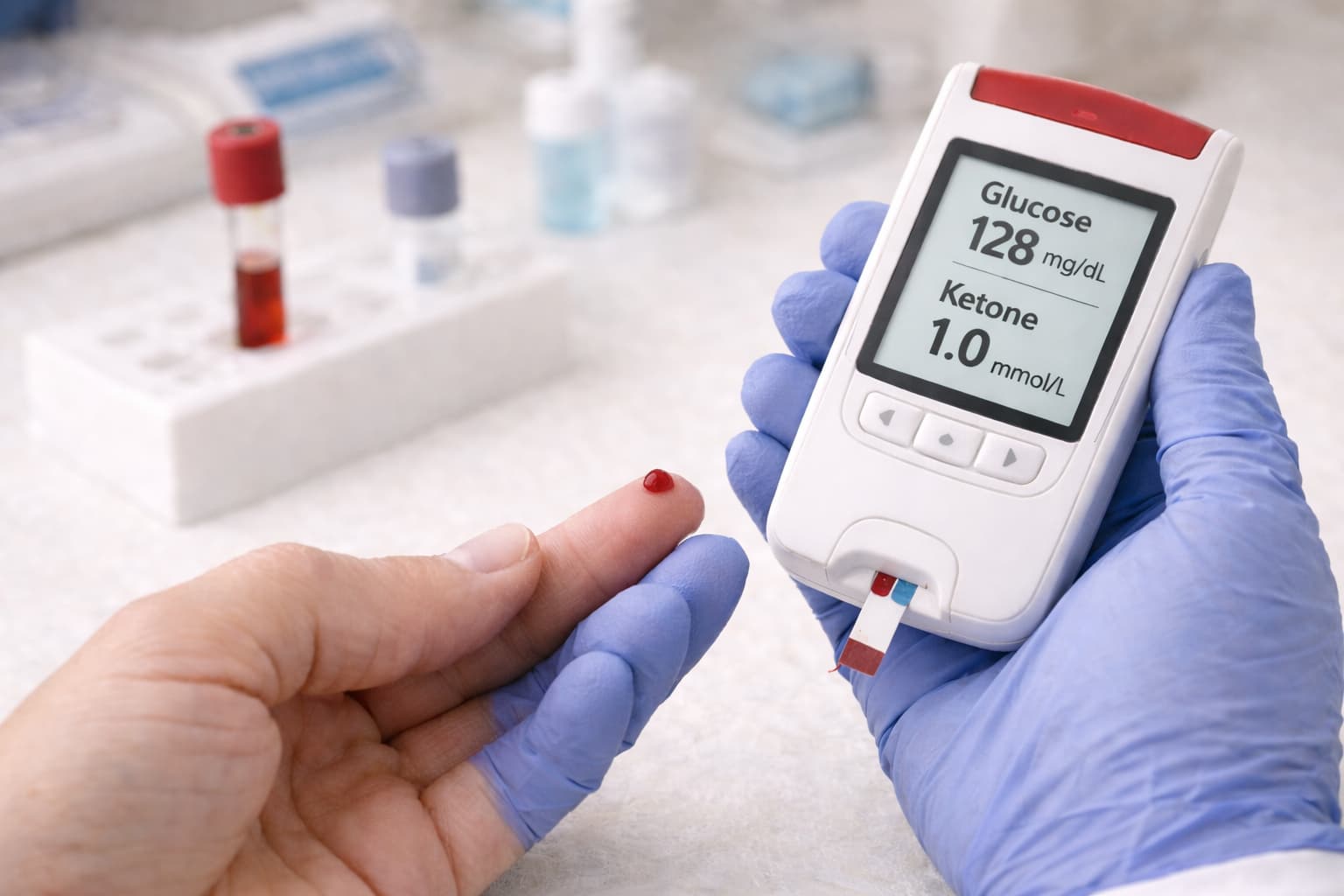
The POCT blood test accelerates diagnostics across a wide range of clinical scenarios. Results appear in minutes, reducing turnaround time and enabling “Test & Treat” action without disrupting workflow.
Advantages
- Rapid triage decisions during acute presentations.
- Portability that supports rural and remote care.
- Minimal sample volume requirements.
- Tests that align with long-term disease monitoring and chronic care.
Core Clinical Applications and Their Impact
POCT spans routine, acute, and advanced diagnostics. Below is a structured view of common use cases and outcomes.
1. Routine Monitoring for Chronic Disease
Glucose, INR, HbA1c, Lipids, ACR—each test supports day-to-day disease management for diabetes, cardiovascular risk, or renal function. Instant feedback improves dosing decisions for insulin or Warfarin. By reducing dependency on central labs, routine follow-up becomes smoother for both clinicians and patients.
2. Acute and Triage Scenarios
- Troponin for myocardial injury assessment.
- NT-proBNP for heart failure evaluation.
- C-reactive protein (CRP) to distinguish viral from bacterial respiratory issues.
3. Critical Care and Real-Time Intervention
POCT devices for blood gases and electrolytes allow rapid stabilisation of critically ill patients. Intensive care teams use these results for ventilator adjustments, fluid management, and metabolic correction.
4. Future-Focused Technologies
Advances in microfluidics, miniaturisation, and lab-on-chip platforms are expanding the reach of POCT. Emerging molecular assays, portable PCR equipment, and aptasensor-based tools point toward earlier cancer detection and broader infectious disease screening.
Accuracy and Operational Limitations
Despite its benefits, POCT carries operational risks that clinicians should be aware of.
- Accuracy variability may arise from environmental factors, device handling, or calibration issues.
- Cost concerns persist because POCT systems require consumables, training, and maintenance.
- Quality control gaps remain, since not all settings operate under regulated performance standards or central lab oversight.
- Record-keeping errors appear when results are entered manually into EMRs due to limited system integration.
These gaps show the growing need for laboratory-grade informatics systems that unify POCT data with routine workflows.
How POCT Speeds Up Diagnosis
The value of POCT becomes clearer when you examine the entire workflow from sample to decision.
1. Reduced Sample Handling
POCT removes transportation delays. The blood collection procedure is carried out near the patient, and the analyser processes the sample immediately.
2. Lightweight Device Architecture
Portable POC testing devices use cartridges or microfluidic chambers, minimising prep time and supporting rapid deployment.
3. Real-time Clinical Decision Support
Short turnaround time transforms patient management. Treatments like chest pain evaluation or sepsis screening gain precision.
4. Workload Redistribution
With POCT, central labs gain breathing space for high-complexity tasks, while frontline teams use near-patient diagnostics to maintain continuity.
POCT Blood Tests vs. Lab Testing
| Parameter | POCT Blood Test | Central Laboratory |
|---|---|---|
| Result Time | Minutes | Hours or longer |
| Location | Near-patient | Dedicated lab setting |
| Personnel | Clinicians, nurses, trained operators | Laboratory scientists |
| Workflow | Integrated within consultation | Batch-based processing |
| Best Use Cases | Acute care, triage, chronic disease monitoring | High-volume, specialised panels |
| Data Entry | May need manual entry | Automated and system-integrated |
Why LIS Determines POCT Success
POCT programs fail when data is fragmented. Without automated record capture, consistent QC, or seamless integration across care settings, the diagnostic chain weakens. Healthcare organisations now evaluate POCT not only by device performance but by digital readiness.
A modern LIS becomes fundamental for:
- Accurate QC documentation.
- Automated report formatting.
- Linking POCT output to patient records.
- Managing multi-site operations.
- Supporting regulatory compliance.
- Reducing transcription errors.
This is where an advanced SaaS platform creates measurable operational gains.
How Flabs LIS Enhances POCT Adoption
As POCT expands across community settings and multi-site facilities, pathology teams lean toward tools that unify data streams. Flabs Pathology Software, an AI-powered LIS, fits naturally into that direction and aligns with the pace of POCT workflows.
1. Streamlined Lab Operations
Flabs automates patient registration, reduces repetitive tasks, and generates QR-coded reports that clinicians can share instantly. Integrated WhatsApp communication eliminates manual reminders and accelerates patient follow-up. When POCT results need to move fast, reduced administrative drag matters.
2. Smooth Patient Experience
Patients log in through a mobile-friendly portal using their phone number to retrieve reports. Long-term monitoring tests such as HbA1c or Lipids pair well with this model, since individuals can re-access previous values without contacting the lab.
3. Interface Designed for Busy Labs
A clean, intuitive UI reduces onboarding time for technicians and doctors. POCT programs expand smoothly when supported by software that doesn’t demand hours of training.
4. Scalable for Multi-Centres
As diagnostic networks add new collection centres, reliability becomes vital. Flabs supports expansion without forcing labs to rebuild data structures. That matters for POCT environments that operate across clinics, community diagnostic centres, and outreach programs.
5. Data Privacy and Backups
Secure backups and adherence to industry-standard regulations give providers confidence during audits. Patients remain linked to the originating lab, strengthening accountability.
If you’re a pathology lab considering scaling and capability, Start a 5-Day Free Trial of Flabs Pathology Software by entering basic details, viz., name, email, lab name, and previous software.
For labs evaluating POCT infrastructure, a short trial introduces automation benefits immediately.
POCT Blood Testing in the Future
Healthcare systems are moving closer to decentralised diagnostics, including the growth of Community Diagnostic Centres (CDCs). These centres combine imaging, basic biochemistry, and near-patient tests like D-dimer or NT-proBNP under one framework. Successful adoption relies on workforce training, appropriate funding, and modern IT systems that ensure secure electronic transfer of POCT results.
A well-implemented POCT strategy strengthens antimicrobial stewardship and improves access to chronic care monitoring. Combined with a robust LIS like Flabs, programs scale more predictably and maintain data accuracy across decentralised locations.
Final Thoughts
The POCT blood test hastens turnaround times in medical labs by supplying rapid, near-patient answers at the moment they matter most. From acute care to chronic disease management, the speed and portability of POCT reduce delays and create smoother patient journeys. As technology advances, POCT continues to move toward broader clinical adoption.
With the right digital backbone, such as Flabs Pathology Software, POCT programs gain the connectivity and operational clarity required for long-term success.
Also check - Hydrolysis Test: Procedure and Applications in Microbiology
Get Started at ₹1!
Try Flabs for a full month for just ₹1.
Follow us on