
Vacutainer colour coding helps phlebotomists and laboratory professionals choose the correct blood collection tube for different diagnostic tests. Each tube colour generally corresponds to a specific additive—such as EDTA, sodium citrate, heparin, a clot activator or a separator gel—which determines how the blood sample is preserved and processed.
For example, a lavender or purple-top tube containing EDTA is commonly used for a complete blood count (CBC), while a light blue-top tube containing sodium citrate is used for coagulation tests such as PT/INR. Grey-top tubes are commonly used for glucose testing, black-top citrate tubes may be used for ESR by the Westergren method, and serum separator tubes (SST) are commonly used for tests such as liver function, lipid and thyroid profiles.
Using the correct tube, additive and collection procedure helps maintain specimen quality and reduces the risk of unsuitable or rejected samples. Because tube colours and additives can vary between manufacturers and laboratory protocols, staff should always follow their laboratory's validated collection instructions.
This guide explains the major vacutainer colour codes, additives, common test uses and tube-selection considerations for routine laboratory blood collection.
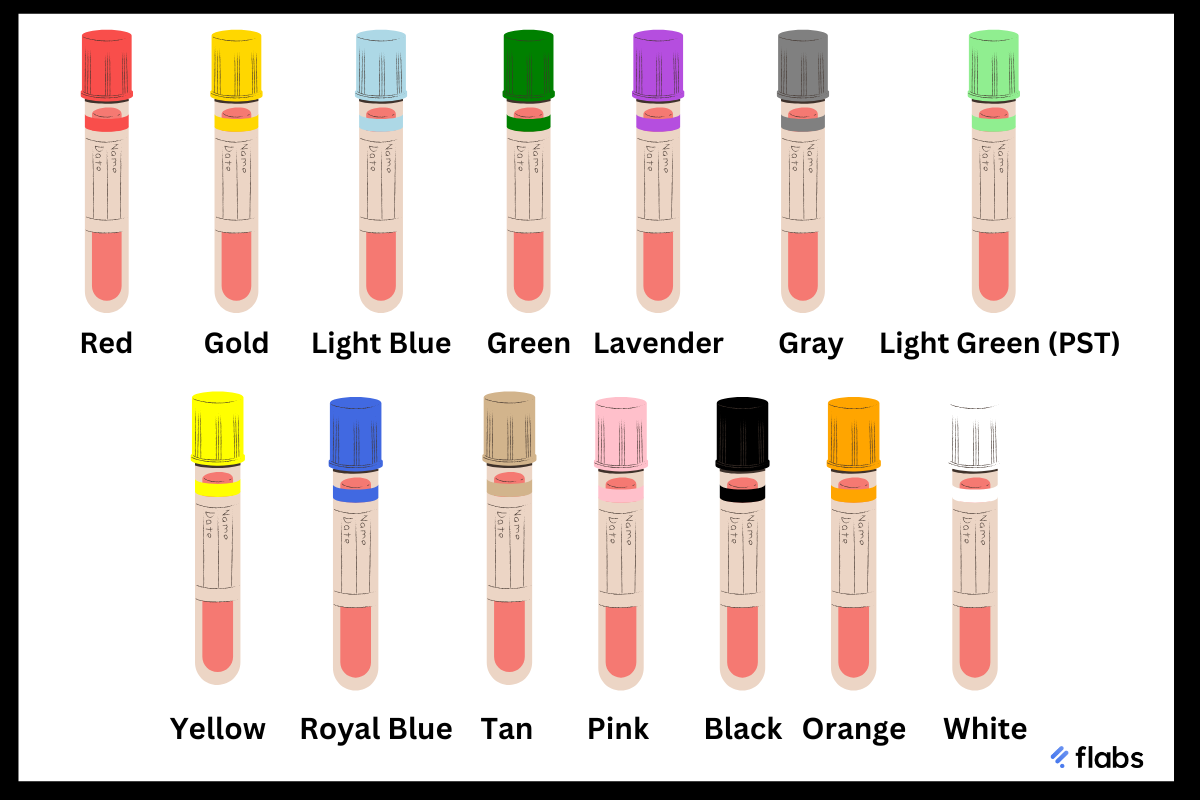
What are Vacutainer Blood Test Tubes?
Vacutainer blood test tubes are sterile, sealed collection tubes used to draw and transport blood specimens for laboratory analysis. Each tube contains specific additives (anticoagulants, clot activators, or gel separators) designed to preserve the sample and enable accurate testing across a wide range of diagnostic needs.
Importance of Blood Collection Tube Colors
Color coding on blood collection tubes is essential for clinical accuracy and patient safety. The colored caps indicate the type of additive inside the tube, which determines how the blood sample is processed and which tests can be performed. Correct tube selection prevents sample rejection, reduces lab errors, and ensures faster turnaround times for results.
Significance of Color-Coded Tubes
Color‑coded tubes streamline the blood collection process for phlebotomists and laboratory staff by communicating tube function at a glance. This standardized system reduces misidentification, improves workflow in high‑volume settings, and supports compliance with global laboratory standards such as CLSI (Clinical and Laboratory Standards Institute).
Blood Collection Tube Colour Coding Table
| Test | Recommended Tube Colour | Common Additive |
|---|---|---|
| CBC (Complete Blood Count) | Purple/Lavender | EDTA |
| ESR | Black Tube (Westergren Method) | Sodium Citrate |
| PT/INR | Light Blue | Sodium Citrate |
| LFT (Liver Function Test) | Yellow SST / Gold SST | Clot Activator + Gel |
| FBS (Fasting Blood Sugar) | Grey | Sodium Fluoride |
| RBS (Random Blood Sugar) | Grey | Sodium Fluoride |
| HbA1c | Purple/Lavender | EDTA |
| Serum Biochemistry | Red or Yellow SST | Clot Activator |
| Lipid Profile | Yellow SST | Clot Activator + Gel |
| Thyroid Profile | Yellow SST | Clot Activator + Gel |
Understanding What Blood Tube Colors Are For Which Test
Each tube color corresponds to specific tests based on the additive it contains. For example:
Light Blue tubes are used for coagulation studies like PT/INR.
Lavender (Purple) tubes are typically used for complete blood counts (CBC).
Gold (SST) and Red are preferred for chemistry panels and serology.
This organized approach ensures that the collected sample remains stable and analyzable for its intended purpose
Vacutainer Colour Coding and Functionality
| Colour Coding of Vacutainer | Additive | Common Uses |
|---|---|---|
| Red | No additive (sometimes a clot activator) | Serum chemistry tests, serology, blood bank testing |
| Gold (SST) | Serum separator tube with clot activator and gel | Serum chemistry tests, serology |
| Light Blue | Sodium citrate | Coagulation tests (e.g., PT, PTT, INR) |
| Green | Heparin (sodium or lithium) | Plasma chemistry tests, blood gas analysis |
| Lavender (Purple) | EDTA (Ethylenediaminetetraacetic acid) | Haematology tests (e.g., CBC, blood smears) |
| Gray | Potassium oxalate and sodium fluoride | Glucose testing, blood alcohol levels, lactate |
| Light Green (PST) | Plasma separator tube with lithium heparin and gel | Plasma chemistry tests |
| Yellow | ACD (Acid-citrate-dextrose) or SPS (Sodium polyanethol sulfonate) | Blood cultures (SPS), genetic and DNA testing (ACD) |
| Royal Blue | Trace element-free | Trace element testing (e.g., zinc, copper, lead), toxicology |
| Tan | EDTA | Lead testing |
| Pink | EDTA | Blood bank testing (e.g., crossmatching) |
| Black | Sodium citrate | Westergren sedimentation rate (ESR) |
| Orange | Thrombin-based clot activator | STAT serum chemistry tests (for rapid clotting) |
| White (PPT) | Plasma preparation tube with K2EDTA and gel | Molecular diagnostic tests (e.g., PCR) |
Red
Red-top vacutainer tubes are among the most commonly used blood collection tubes in clinical settings. They usually collect whole blood specimens intended for serum separation. They can contain a clot activator, silica particles or a gel separator, which facilitate the clotting process– serum is separated from the cellular components of the blood.
Red vacutainer uses include chemistry panels, therapeutic drug monitoring, and hormone analyses also.
Red Vacutainer Uses
Red vacutainer tubes generally contain no anticoagulant or may contain a clot activator depending on the manufacturer. They are commonly used for:
- Serum chemistry testing
- Serology investigations
- Immunology testing
- Hormone analysis
These tubes allow blood to clot before serum separation.
Gold (SST)
The vacutainer colour coding of Gold-top for test tubes indicates their usage in efficient serum separation and sampling. These tubes contain a gel barrier that clearly separates the serum from the clot and cellular components upon centrifugation. It also prevents remixing of the serum and cellular components during transportation and handling.
SST tubes are useful in various clinical chemistry tests, including metabolic panels, liver function tests, and therapeutic drug monitoring. They are ubiquitous in settings where rapid serum separation and analysis are required.
Light Blue
The tubes contain sodium citrate. They are made for coagulation and clotting tests. Sodium citrate is an anticoagulant, which binds to calcium ions present in the blood to prevent the normal clotting process.
Which tube colour is used for PT/INR testing?
PT (Prothrombin Time) and INR (International Normalized Ratio) tests are collected in light blue vacutainer tubes containing sodium citrate anticoagulant. These tubes are specifically designed for coagulation studies and require accurate blood-to-additive ratios for reliable results.
Sodium citrate tubes are vital for accurate measurement. Doctors use them for prothrombin time (PT). They are also used for activated partial thromboplastin time (aPTT) and other coagulation tests. They aid in diagnosing bleeding disorders, liver diseases, and clotting issues. These tubes need centrifugation and plasma separation before conducting coagulation tests.
Green
Green-top colour coding of vacutainers indicates presence of the anticoagulant lithium heparin. It prevents blood clotting by binding to antithrombin III and enhancing its ability to inhibit clotting factors. Laboratories use lithium-heparin tubes in plasma chemistry panels. They also use them in drug monitoring and immunoassays.
Lavender (Purple)
Tubes containing the anticoagulant EDTA (ethylenediaminetetraacetic acid) with vacutainer colour coding of Lavender are primarily used for haematological tests and analyses. EDTA chelates calcium ions, preventing blood clotting and preserving cellular components.
What is the Purple Vacutainer used for?
Purple or lavender vacutainer tubes contain EDTA anticoagulant, which helps preserve blood cells for hematology testing. These tubes are primarily used for:
- Complete Blood Count (CBC)
- Hemoglobin testing
- HbA1c analysis
- Blood grouping procedures
- Cell morphology examinations
When users search for "CBC tube color" or "CBC test vial colour," the correct answer is typically the purple or lavender EDTA tube.
They are also used in complete blood counts (CBC), white blood cell differentials, blood typing, and tests requiring whole blood or cellular analysis. EDTA also stabilises genetic material, making these tubes suitable for molecular diagnostics. However, inadequate mixing in Lavender tubes can lead to clotting or inaccurate cell counts, while over-mixing can cause hemolysis or cell damage. So proper mixing is paramount.
Gray
Gray-top blood collection tubes are used in glucose testing and monitoring. They contain sodium fluoride, which inhibits glycolysis, and potassium oxalate, an anticoagulant. Together, they preserve glucose levels in the blood sample for accurate measurements. When using tubes with Gray vacutainer colour coding, prompt mixing and processing is crucial to prevent glycolysis and obtain reliable glucose test results.
Light Green (PST)
Light green (PST) vacutainer tubes contain lithium heparin and a gel separator, used for plasma testing. They prevent blood clotting and quickly separate plasma from cells, making them ideal for chemistry tests. When handling PST tubes with vacutainer colour coding of Light Green, it is important to avoid shaking to prevent hemolysis and centrifuge promptly. Proper temperature conditions are also mandatory to preserve samples.
Yellow
Tubes with Yellow vacutainer colour coding contain acid citrate dextrose (ACD) as an anticoagulant, used for blood culture collection. They maintain sample integrity for microbiological analysis, so it is important to handle tubes gently to avoid contamination. They are inverted gently to mix the ACD with blood. Prompt transportation and storage at recommended temperatures are common prescriptions for yellow vacutainer tubes.
What does a Yellow Vacutainer contain?
A yellow vacutainer typically contains a clot activator and serum separator gel (SST). After centrifugation, the gel forms a barrier between serum and blood cells, helping preserve sample quality. Yellow tubes are commonly used for liver function tests (LFT), lipid profiles, thyroid testing, hormone assays, and routine biochemistry investigations.
In many laboratories, the yellow SST tube is among the most frequently used vacutainers because it supports a wide range of serum-based diagnostic tests.
Royal Blue
Royal blue vacutainer tubes are specialised blood collection tubes used primarily for trace element, toxicology, and nutritional studies. They are designed to prevent contamination of the sample, ensuring accurate results. These tubes typically contain either no additive (plain) or a clot activator for serum collection. The royal blue tubes are used for tests requiring metal-free blood samples.
Tan
Tan vacutainer tubes are specialised for lead testing. They can minimise contamination and ensure accurate lead level measurement in blood. The additive is EDTA working as an anticoagulant. Tan blood collection tubes are essential for environmental and occupational health assessments.
Pink
Pink vacutainer tubes are common in blood bank and transfusion services. These tubes contain EDTA (ethylenediaminetetraacetic acid) as an anticoagulant that preserves the sample for testing.
The vacutainer colour coding of Pink indicates that the tube is designed specifically for compatibility testing, cross-matching, and blood typing. Pink blood collection tubes facilitate safe blood transfusions by verifying donor-recipient compatibility and preventing adverse reactions.
Black
Black vacutainer tubes are used primarily for erythrocyte sedimentation rate (ESR) tests, which measure the rate at which red blood cells settle in a period of one hour. These tubes contain sodium citrate as an anticoagulant, maintaining the blood in a fluid state suitable for accurate ESR measurement.
The black vacutainer colour coding signifies their specific use for ESR testing, to diagnose and monitor inflammatory conditions, infections, and autoimmune diseases. Accurate ESR results help assess disease severity and treatment efficacy, where Black tubes play a crucial role.
Orange
Orange vacutainer tubes are used for rapid serum testing, typically in emergency situations. These tubes contain a thrombin-based clot activator, which accelerates the clotting process, allowing for quick serum separation. STAT (immediate) chemistry tests are time-sensitive, which is possible only with blood collection tubes with Orange vacutainer colour coding.
White (PPT)
White vacutainer tubes or plasma preparation tubes (PPT), are designed for molecular diagnostics and polymerase chain reaction (PCR) testing. The white stopper indicates their use for specialised testing, such as viral load and genetic testing.
ESR Blood Collection Tubes
ESR (Erythrocyte Sedimentation Rate) testing commonly uses a black-top tube containing sodium citrate when performed using the Westergren method. Laboratory protocols may vary, so healthcare professionals should always follow local testing guidelines and manufacturer recommendations.
Conclusion
Blood sampling is one of the crucial functions of medical and diagnostic laboratories. To serve the intended purpose, handling collection, storage and transportation have a significant role to play. In that connection, vacutainer colour coding is the centre of all these activities.
Get Started at ₹1!
Try Flabs for a full month for just ₹1.
Follow us on